
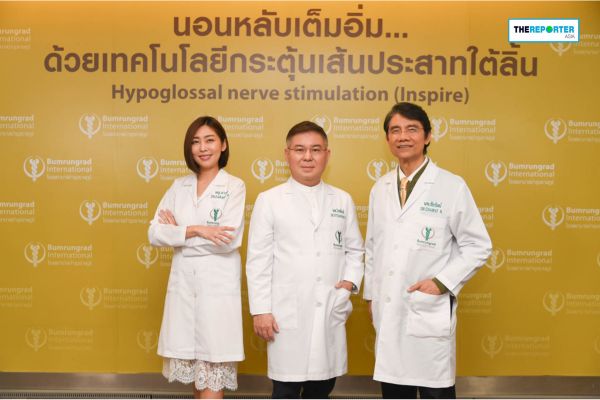
Bumrungrad International Hospital is cementing its position as a global healthcare leader by introducing Hypoglossal Nerve Stimulation (HNS), a cutting-edge, FDA-approved technology for Obstructive Sleep Apnea (OSA). This innovative implant offers a new lease on life for patients who cannot tolerate conventional CPAP therapy. Backed by a world-class, specially trained multidisciplinary medical team, the therapy promises to significantly enhance patient quality of life and bolster Thailand’s medical tourism sector.
BANGKOK, THAILAND – In a landmark move set to redefine the treatment landscape for sleep disorders, Bumrungrad International Hospital has officially launched its Hypoglossal Nerve Stimulation (HNS) program. Obstructive Sleep Apnea (OSA) is not merely a sleep issue, but a silent global health threat. According to The Lancet Respiratory Medicine, an estimated 936 million people worldwide were affected by OSA in 2019. This pioneering therapy, also known as “Inspire,” marks a significant milestone in Thai medicine, offering a powerful new solution for individuals suffering from the condition.
The introduction of HNS therapy underscores Bumrungrad’s commitment to investing in state-of-the-art medical innovations. The technology was first approved by the U.S. Food and Drug Administration (US FDA) in 2014 and has since been used to treat over 100,000 patients across the United States, Europe, and leading Asian nations like Japan and Singapore, demonstrating its global acceptance and safety.
Following its certification by the Thai Food and Drug Administration (TFDA) in 2024, the first procedure in Thailand was performed in July 2025. Bumrungrad International Hospital has already achieved satisfactory results in its initial patients, thanks to its expert team of multidisciplinary specialists experienced in comprehensive diagnosis and treatment.
The Silent Epidemic: Understanding the Dangers of Obstructive Sleep Apnea
While often dismissed as simple snoring, OSA is a serious medical condition with potentially devastating long-term health consequences. In Thailand, it is estimated that 20-30% of middle-aged men and 10-15% of women may have this condition without being aware of it.
Darakul Pornsriniyom, MD, a Neurology and Sleep Medicine Specialist at Bumrungrad International Hospital, explains the mechanism and impact of the disorder. “Sleep apnea is caused by the muscles in the upper airway relaxing during sleep, depriving the body of oxygen and forcing the brain to periodically wake up. This makes for poor sleep and negatively impacts quality of life in many ways, including feeling tired and drowsy during the day, decreased work efficiency and memory, and mood swings. Also, it increases the risk of accidents caused by falling asleep while driving. Loud snoring can also disrupt relationships.”
Over the long term, the condition severely increases the risk of developing chronic diseases. These include diabetes, high blood pressure, and heart diseases such as arrhythmias, heart failure, and coronary artery disease. Furthermore, it elevates the risk of stroke, Alzheimer’s disease, certain cancers, and sexual dysfunction. Dr. Pornsriniyom advises, “If you notice symptoms such as unusually loud snoring, shortness of breath, or waking up feeling unrefreshed, a sleep test is highly recommended to assess the severity of the condition, and you should seek treatment promptly before it leads to serious health problems.”
HNS: A Cutting-Edge Solution for CPAP Intolerance
For decades, the primary treatment for OSA has been the Continuous Positive Airway Pressure (CPAP) machine, which is currently the most effective treatment available. However, as Chairat Neruntarat, MD, Professor and Otolaryngology and Sleep Otolaryngology Specialist at Bumrungrad, notes, patient compliance is a major challenge. “Some patients are unable to tolerate CPAP use due to discomfort from wearing the mask or other limitations. So, ‘HNS’ is a treatment option that fills this gap.”
The efficacy of HNS is supported by robust clinical evidence. Professor Neruntarat highlights the results of a landmark clinical study, “The results of a landmark clinical trial, the STAR Trial (Stimulation Therapy for Apnea Reduction), published in The New England Journal of Medicine, confirmed the HNS treatment reduced the number of apnea episodes from an average of 29.3 to just 9 per hour.”
“Also, it improved or stabilized daytime sleepiness over the long term. There was also a less than 2% severe complication rate and a 2% removal rate within two years. Furthermore, more than 90% of patients’ partners reported a significant reduction in snoring.”
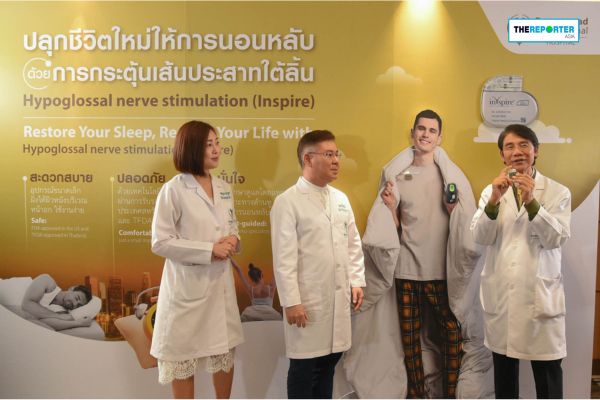
Bumrungrad’s Expertise: A Foundation of Experience and Readiness
The successful implementation of an HNS program demands a highly specialized and coordinated approach, a challenge for which Bumrungrad International Hospital is exceptionally prepared.
Vitchaphan Hemrungrojn, MD, an Otolaryngology Specialist at Bumrungrad with over a decade of experience, commented on the hospital’s readiness. “The success of this innovative treatment relies on a highly skilled and experienced team of specialists—including sleep medicine physicians, neurologists, otolaryngologists, and anesthesiologists, working alongside a multidisciplinary team specializing in sleep medicine and hypoglossal nerve stimulation. All individuals must undergo specialized training to ensure a precise, holistic treatment, from screening and diagnosis to surgery and long-term follow-up.”
The HNS implantation procedure takes approximately 2-3 hours. It involves placing three main components under the skin: a pulse generator in the upper right chest, a sensing lead in the rib cage to detect breathing, and a stimulation lead under the tongue nerves. The incisions are small, only 2-5 centimeters, and most patients can return home within one day, with a recovery period of approximately 2-4 weeks. Following surgery, patients are scheduled for a one-month evaluation to activate the device, with specialists adjusting stimulation settings to ensure optimal, long-term results. The hospital’s team of doctors works collaboratively to monitor each patient’s progress and develop an appropriate, individualized care plan.
From a long-term investment perspective, the HNS device is designed for durability. The battery has an impressive lifespan of approximately 11 years, after which it can be replaced through a simple procedure. The total cost for the HNS implantation is approximately 1.6-1.7 million THB, representing a significant, long-term investment in restoring quality of life, sleep, and overall health.
“Bumrungrad International Hospital is now ready to treat snoring and sleep apnea with HNS, which is poised to become a mainstay option for patients unable to use CPAP machines. It caters to the lifestyles of those seeking convenience, as it’s an implantable device that operates quietly. It’s easily controlled with a portable remote, allowing patients to live a normal life, even while traveling abroad. We believe HNS will play an increasingly important role in the treatment of moderate to severe sleep apnea and help prevent further serious health problems,” concluded Professor Neruntarat.
#Bumrungrad #HNSTherapy #SleepApnea #OSA #MedicalInnovation #CPAPAlternative #ThailandHealthcare #MedicalTourism #SleepHealth #InspireSleep #HealthcareTechnology