
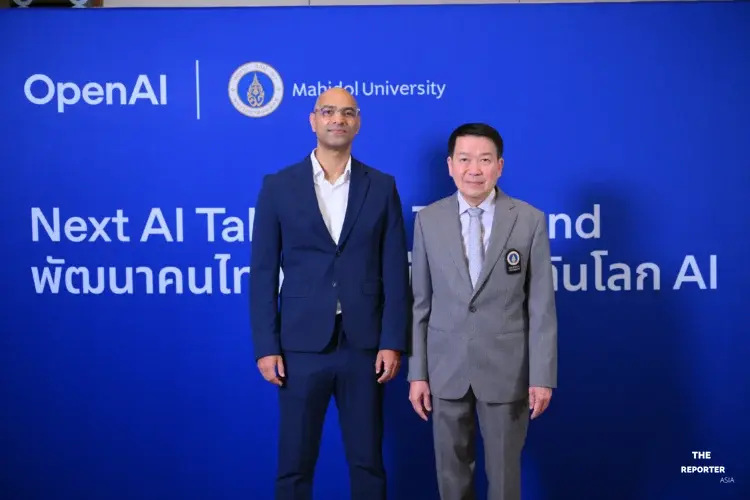
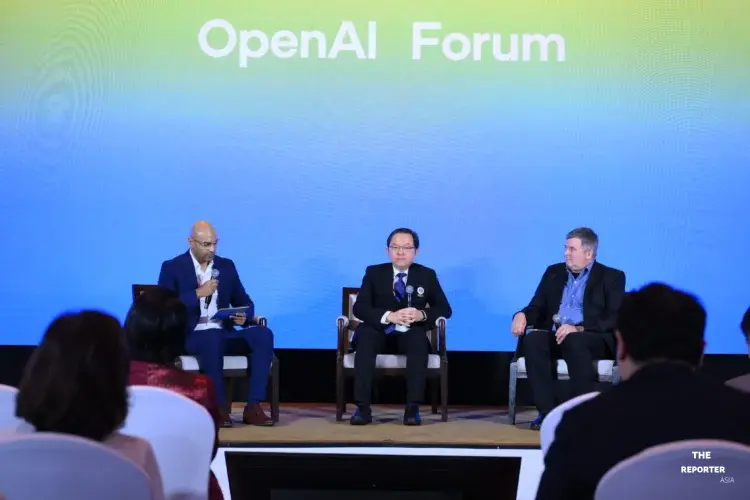
Mahidol University and OpenAI have announced the official launch of the ChatGPT Edu platform across all campuses, marking Mahidol as the first higher education institution in Thailand to implement the enterprise-grade AI system university-wide. Revealed at the Mahidol x OpenAI Symposium: Next AI Talent for Thailand in Bangkok, the collaboration aims to merge medical, public health, and research expertise with artificial intelligence to cultivate AI-Native graduates and support the nation’s burgeoning MedTech startup ecosystem.
Closing the Generative AI Capability Gap
The rollout addresses the global and domestic shortage of Generative AI talent. According to Mr. Deeps De Silva, Go-to-Market Director for Education at OpenAI, Thailand currently ranks among the top 20 countries globally for weekly active users of ChatGPT and Codex. Statistics indicate that the most active ChatGPT users in Thailand fall within the 18–24 age demographic, primarily utilizing the platform for creative media, writing, communication, and education.
“The goal of the collaboration is to solve the shortage of Generative AI personnel by creating AI-Native graduates ready to compete in the global labor market,” Mr. Deeps De Silva noted. He added that advanced AI users demonstrate capabilities up to seven times greater than basic users, emphasizing the need to bridge the current capability gap. To achieve this, OpenAI and its strategic partner, Fellow Intelligence, will provide offline and online training, facilitate use-case development, and support student participation in global Hackathons and Build Days.
Professor Piyamitr Sritara, MD, President of Mahidol University, stated that introducing ChatGPT Edu is a crucial milestone to assist faculty, students, and researchers in advancing medicine, research, and public health. He emphasized that personnel will collaboratively evaluate the benefits, limitations, and necessary support to serve as a model for other Thai institutions, maintaining that humans must always apply judgment and responsibility when using AI.
Hyper-Personalized Learning and Enterprise Security
The ChatGPT Edu platform is designed specifically for educational institutions, featuring enterprise-grade security and data protection standards. Institutional data and research content will not be used to train OpenAI’s models. The platform also supports Custom GPTs, instructional plugins, and offers a higher message quota than standard versions.
Currently, 20% of conversations on ChatGPT relate to learning, with users increasingly leveraging voice modes as personal tutors and image models like Images 2.6 to simplify complex subjects. Furthermore, AI Agents are being utilized to assist instructors and students in systematic weekly academic planning. Consequently, OpenAI plans to work with Mahidol’s teaching experts to redesign curricula and assessments. This initiative aims to foster hyper-personalized learning environments where educators can tailor content to individual student preferences even within large classes, such as gamifying lessons or converting materials into audio formats.
Associate Professor Cherdchai Nopmaneejumruslers, MD, Vice President for Information Technology and Digital Transformation at Mahidol University, noted that artificial intelligence will play a significant role in promoting personal medicine, personal health coaching, and overall well-being. He stressed that the university remains committed to empathy education, creativity, and responsible system usage.
Medical Innovations and MedTech Startup Incubation
To accelerate frontier research, OpenAI is preparing to grant Mahidol University researchers access to Rosalind, an advanced life sciences AI model designed to expedite scientific discoveries and medical research. Practical clinical applications are already in development, as demonstrated at the symposium. Ms. Monrada Chewawan, a 5th-year student in the joint MD-Master of Engineering (Biomedical Engineering) program at Ramathibodi Hospital, showcased the use of ChatGPT as a personal assistant for clinical analytical training and generating synthetic data for medical imaging research.
Additionally, Mr. Supakorn Thawornwong, a graduate student at Mahidol’s Faculty of Engineering, presented the Mednacea AI Knowledge Platform, an AI assistant for querying medical research with real-time citations, analytics dashboards, and data exploration suites. Dr. Piyarit Ittichaiwong, co-director of the SICAT lab at the Faculty of Medicine Siriraj Hospital, introduced the Connect Human AI Atlas, an interactive 3D Thai anatomy learning tool combining actual CT and MRI scans with MONAI technology.
The partnership also aims to forge an Emerging Talent Pathway, empowering non-technical students to use AI models to build products and launch startups without relying on technical co-founders. OpenAI projects that Mahidol University will become a vital incubator for the next generation of builders, particularly in MedTech startups, which are expected to attract significant venture capital (VC) investment into Thailand’s innovation ecosystem and economy.
#Mahidol #OpenAI #ChatGPTEdu #MedTech #TheReporterAsia