
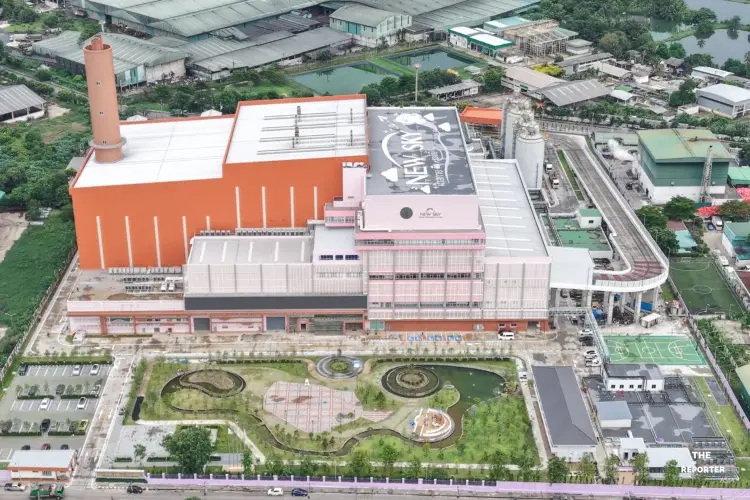
TheReporterAsia — In a major breakthrough for Bangkok’s municipal solid waste crisis, where the capital generates nearly 10,000 tonnes of trash daily, NewSky Energy (Bangkok) Co., Ltd. (NewSky) has officially commenced full commercial operations at its flagship Onnut Waste-to-Energy Facility. Representing an investment exceeding THB 6 billion, the project transforms at least 1,000 tonnes of municipal solid waste per day (with a maximum daily processing capacity of 1,600 tonnes) into approximately 35 megawatts (MW) of clean electricity. The facility operates as a 100% enclosed, odor-free system designed to replace decades of open landfilling and community odor grievances.
Navigating a 4-Year Bureaucratic Journey to Win Community Trust
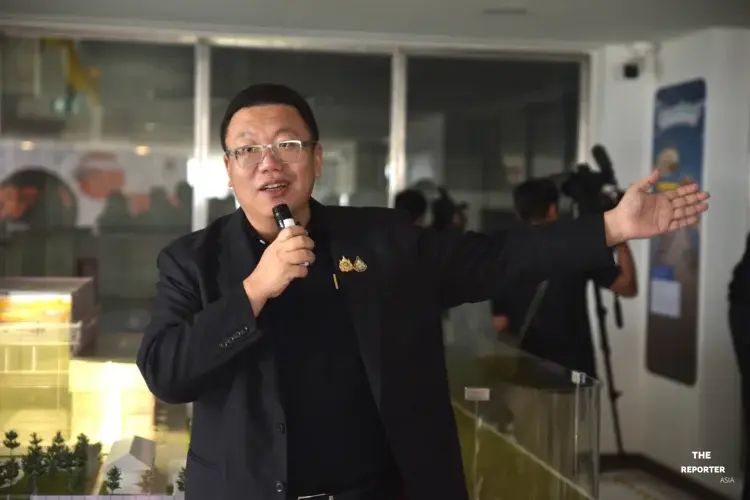
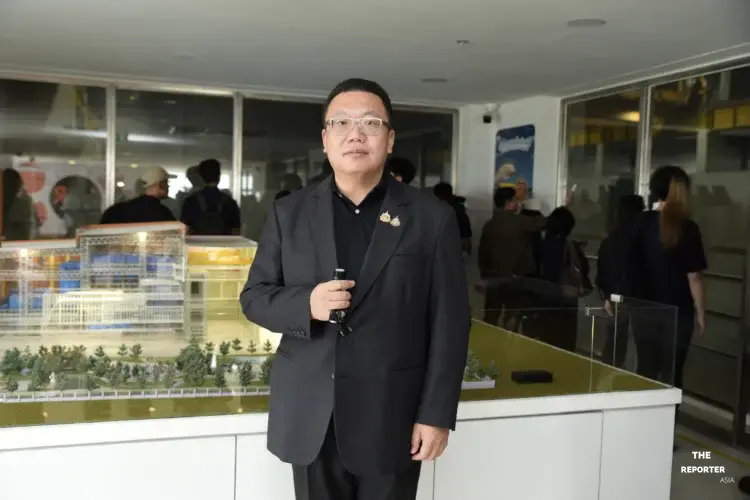
Speaking in an in-depth media briefing, Mr. He Ning, Chief Executive Officer of NewSky Energy (Bangkok) Co., Ltd., revealed that while NewSky was awarded the concession and signed the agreement with the Bangkok Metropolitan Administration (BMA) on December 27, 2019, navigating the complex regulatory process required four full years. The timeline involved waiting for Feed-in Tariff (FiT) notifications, finalizing Power Purchase Agreements (PPA) with EGAT via the Metropolitan Electricity Authority (MEA), and securing Code of Practice (COP/EIA) approvals before construction could officially begin on February 19, 2024.
“Many asked why we did not construct earlier. Without full regulatory permits and approvals, construction was simply not permitted. It took four years to finalize paperwork, but actual construction was completed in just over a year. During 2020, community pushback was fierce, with protest banners erected across local neighborhoods. Rather than retreating, we conducted nearly 40 small-group meetings and hosted a 1,100-attendee public hearing at BITEC Bangna. Crucially, we chartered buses for community leaders to tour our Nong Khaem 1 plant, which has operated safely for over a decade. Once residents experienced firsthand that a modern waste-to-energy plant could operate with zero smell, their skepticism turned into strong support,” said Mr. He Ning.
Today, surrounding perceptions have shifted dramatically. Local residents have openly voiced relief that the project improves local environmental hygiene and lifts property values. A luxury residential estate by AP (Thailand) PCL, situated less than 300 meters from the facility with homes priced between THB 8–10 million, has achieved over 90% in sales, reflecting robust private-sector and consumer confidence in living alongside the advanced green facility.
Inside the Engineering: Negative Pressure, 1,100°C Incineration, and Zero Discharge
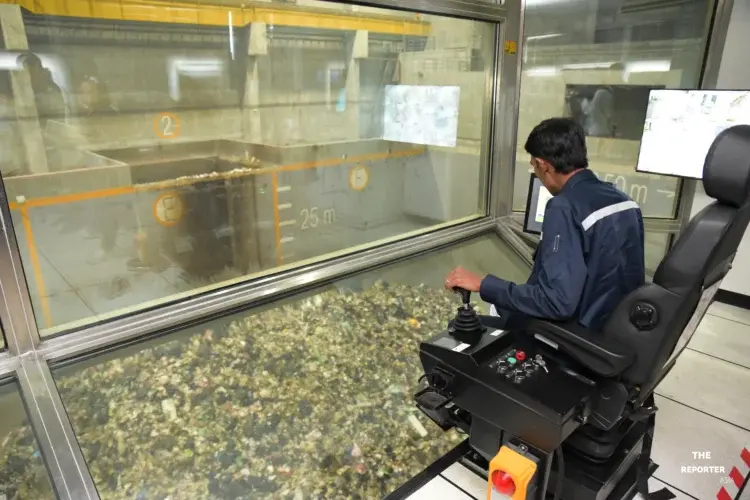
Spanning 29.19 rai, the Onnut facility features Thailand’s largest enclosed waste storage bunker, with a capacity of 24,000 tonnes. Municipal waste collected by BMA trucks is discharged into this sealed bunker and stored for 3 to 5 days to undergo natural fermentation and bio-drying, reducing initial moisture content from over 60% down to approximately 35%. Overhead automated cranes then feed the processed waste into dual mechanical stoker-type incinerators.
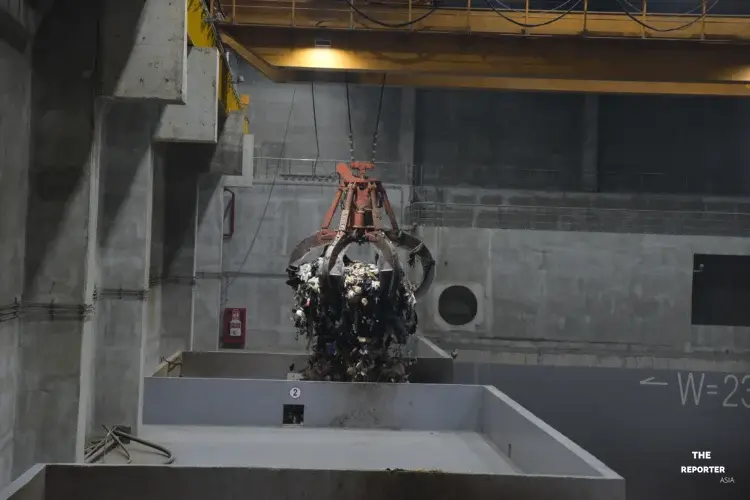
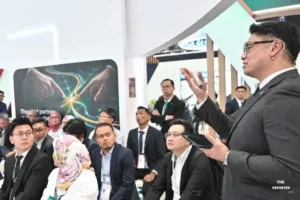
To address the site’s primary historical pain point—odor—the entire receiving hall and bunker operate under continuous Negative Pressure (Negative Pressure System) 24 hours a day. By keeping internal atmospheric pressure lower than external levels, ambient outside air is drawn inward, preventing odor escape. During public demonstrations, dry ice smoke released near opened bunker doors was visibly pulled entirely inward. The odorous air is extracted and ducted directly into the combustion chamber as primary combustion air, where thermal oxidation at 850°C to 1,100°C with a minimum two-second residence time completely decomposes odor molecules and hazardous dioxins.
The combustion process achieves a volume reduction exceeding 90% and a weight reduction above 80%. For every 1,000 tonnes of waste processed, remaining total ash (both bottom and fly ash) accounts for under 15% (approximately 150 tonnes). Non-hazardous bottom ash is recovered for transformation into paving bricks and construction aggregates, while all leachate and plant wastewater undergo biological, MBR, RO, and DTRO treatments for full internal recycling, achieving 100% Zero Liquid Discharge.
Exceeding Thai and Singapore Standards: AI-Powered E-Nose and PTFE Filtration
Addressing stringent emission controls, Mr. He Ning highlighted that NewSky installed an Electronic Nose (E-Nose) sensor array integrated with artificial intelligence (AI), utilizing equipment imported from Germany (AirSense / SCG technology). Positioned strategically across four key zones—including waste dumping gates and property boundaries—the system digitizes airborne volatile organic compounds into an “Odor Fingerprint”.
“Our AI immediately differentiates whether an odor stems from household waste, wastewater, rubber, or illegal outdoor wire-burning activities in the district. These findings are transmitted live to the BMA Environment Department. Given that Onnut has accumulated waste for over 40 years across diverse operators, this AI system provides scientific proof and accountability,” Mr. He Ning emphasized.
On flue-gas purification, Mr. He Ning refuted misconceptions regarding industrial laxity in Thailand:
“Our Onnut facility operates under standards that are stricter than Singapore’s regulations and the 77 municipal plants in China. While Thai regulations cap stack particulate emissions at 70 ppm, Onnut is engineered to a design limit of 50 ppm, and our real-time continuous emissions monitoring systems (CEMS) maintain operations at an ultra-low 1 to 3 ppm.
This performance is enabled by an industrial PTFE (Polytetrafluoroethylene) fiber bag filter house, costing over THB 4 million per set and capable of withstanding temperatures up to 350°C. Coupled with hydrated lime and activated carbon injection, the system captures sub-micron particulates down to 0.1 microns with an efficiency of 99.9%, effectively immobilizing heavy metals and dioxins before clean exhaust is released.”
Over 95% Thai Workforce, Community Governance, and THB 25-Million Philanthropy
Reinforcing its long-term social compact, NewSky employs a workforce comprising more than 95% Thai personnel across operational, administrative, and engineering roles, with Chinese technical specialists serving primarily during training and commissioning phases. The company engages continuously with 119 communities within a 5-kilometer radius, maintaining a dedicated tripartite Line communication group and an on-call response team committed to addressing any community inquiry within 30 minutes during daytime operations.
Following an earlier THB 3,000,000 direct contribution to BMA Governor Chadchart Sittipunt for metropolitan flood-relief operations, NewSky and its philanthropic arm, the “Rak Kan Rao Tham Dai Foundation” (chaired by M.R. Sukhumbhand Paribatra), are slated to donate high-level emergency ambulances, mobile health examination vans, and multi-purpose rescue vehicles valued at over THB 25 million to the BMA, Mae Hong Son, Phayao, the Thai Red Cross Society, and Phramongkutklao Hospital on November 19.
Concurrently, NewSky has launched its on-site Waste Management Learning Center, welcoming public institutions, academia, and industry leaders to study modern Waste-to-Energy processes firsthand through interactive 3D modeling and live operational walkthroughs, anchoring Onnut as a cornerstone for Southeast Asia’s circular urban economy.