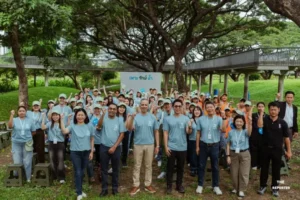

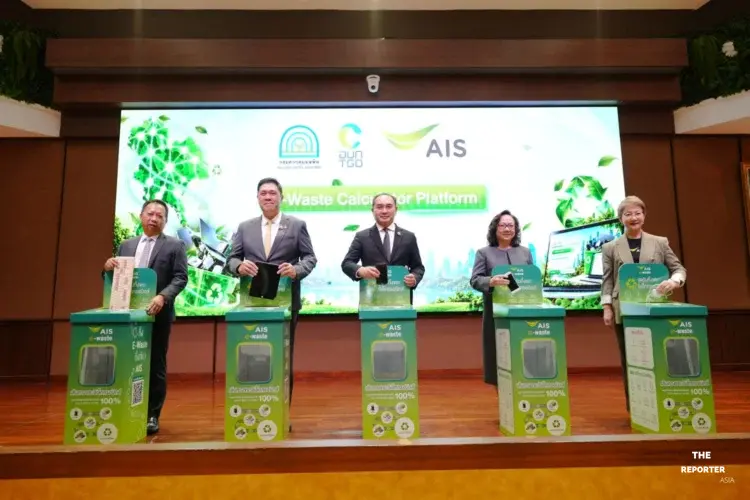
Advanced Info Service Public Company Limited (AIS), in partnership with the Pollution Control Department (PCD) and the Thailand Greenhouse Gas Management Organization (TGO), has officially unveiled the E-Waste Calculator Platform. The initiative marks Thailand’s first unified nationwide measurement system designed to standardize electronic waste accounting against international calculation principles.
The platform addresses a critical environmental challenge: Thailand generates roughly 700,000 tons of electronic waste each year, yet less than 1% enters certified treatment and recycling systems. By integrating cross-sector data, the tool enables public and private entities to systematically log collection metrics, assess environmental footprints, and evaluate greenhouse gas (GHG) reductions.
Turning Collection Data into Measurable Climate Action
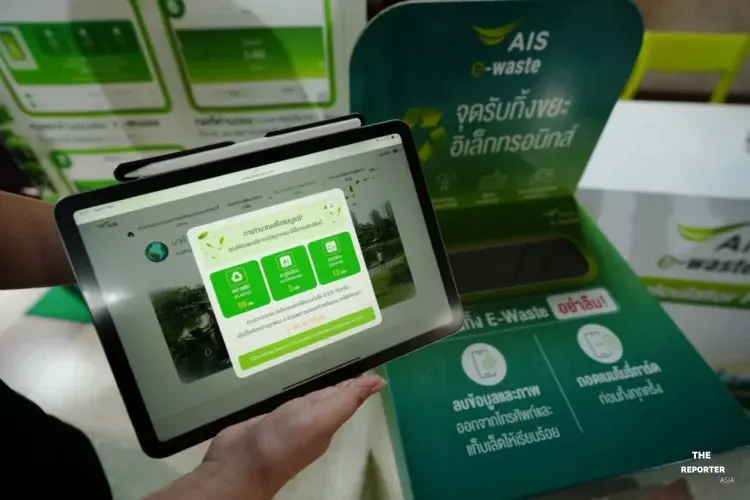
The digital platform allows organizations to record specific types and volumes of gathered e-waste via a dedicated portal https://sustainability.ais.co.th/th/sustainability-projects/e-waste-calculator/overview . Using standardized baseline formulas, the system computes net GHG emission reductions and exports verifiable reports in PDF and Excel formats for ESG compliance and annual sustainability disclosures.
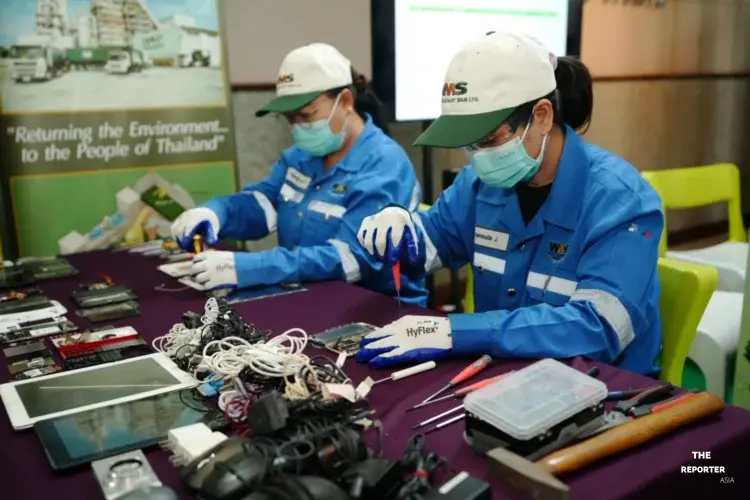
The tri-party collaboration leverages the distinct strengths of each entity:
-
AIS provides the digital architecture and its established take-back network under the “Thais Say No to E-Waste” campaign, which has deployed more than 3,200 drop points across 280 partner organizations, gathering over 1.3 million devices (288,346 kg) to date.
-
The Pollution Control Department (PCD) integrates regulatory expertise, supporting end-of-life mobile collection pipelines and aligning data with the forthcoming Waste Electrical and Electronic Equipment (WEEE) Management Act and Extended Producer Responsibility (EPR) mandates.
-
TGO establishes formal calculation methodologies under Thailand’s Low Emission Support Scheme (LESS), with plans to introduce future T-VER carbon credit mechanisms for certified e-waste recycling.
Public-Private Leadership on Circular Economy
Mr. Prasert Sirinapaporn, Deputy Permanent Secretary of the Ministry of Natural Resources and Environment, highlighted the strategic policy shift:
“The Ministry places great importance on strengthening Thailand’s e-waste management system—from take-back and sorting to proper recycling or disposal. We are advancing the draft WEEE Management Act based on Extended Producer Responsibility, while actively engaging voluntary private sector cooperation to turn policy into community-level action.”
Ms. Kantima Lerlertyuttitham, Deputy CEO and Chief Corporate Officer at AIS, emphasized the role of transparent data:
“Sustainable e-waste management goes beyond collection; it requires reliable data and clear measurement standards to demonstrate tangible environmental outcomes. Technology delivers real value when it turns the intention to protect the environment into verifiable impact.”
Dr. Surin Worakijthamrong, Director General of the PCD, noted that centralizing e-waste metrics through the platform will help local administrative bodies curb illegal dumping and hazardous dismantling. Meanwhile, Mr. Narkorn Takkavirapat, Executive Director of TGO, affirmed that standardized assessment parameters under LESS will ensure transparent, verifiable climate reporting while opening doors for material recovery.
A Blueprint for Regional Adoption
Beyond domestic waste tracking, the consortium aims to position Thailand as an ASEAN knowledge hub and regional benchmark for digital e-waste governance. Thai enterprises, state agencies, and educational institutions are invited to register on the platform to benchmark their sustainability performance and accelerate circular economy integration.