


In a landmark policy shift, Thailand is set to introduce Qualified Refundable Tax Credits (QRTC) and bolster support for deep-tech startups, a strategic overhaul designed to maintain its competitive edge and attract high-quality foreign investment amidst the new global tax landscape dictated by the OECD’s Pillar Two framework.
BANGKOK, Thailand – The Thailand Board of Investment (BOI) today announced a significant pivot in the nation’s investment promotion strategy, signaling a proactive adaptation to the enforcement of the Organisation for Economic Co-operation and Development’s (OECD) Global Minimum Tax (GMT). In a move aimed at reassuring global investors, Thailand’s Commission on the National Competitiveness Enhancement for Targeted Industries Policies has approved crucial amendments to its core investment law, paving the way for the introduction of Qualified Refundable Tax Credits (QRTC).
The commission, for which the BOI serves as the secretariat, will now forward the proposed amendments to the National Competitiveness Enhancement for Targeted Industries Act of B.E. 2560 (2017) to the Thai Cabinet for final approval before they enter the legislative process. Concurrently, the Revenue Department is tasked with adjusting tax regulations to facilitate the implementation of these changes, ensuring full compliance with the OECD’s QRTC framework.
This policy evolution is a direct response to the GMT, or Pillar Two, which came into effect on January 1, 2025. The GMT mandates a minimum 15% tax on multinational companies with a consolidated group revenue exceeding €750 million. This new global standard has profound implications for countries like Thailand that have traditionally relied on tax-based incentives, such as tax holidays, to attract Foreign Direct Investment (FDI). The BOI estimates that approximately 1,500 companies operating in Thailand, comprising around 100 Thai corporations and a majority of foreign enterprises, are likely to be impacted by these new global tax rules.
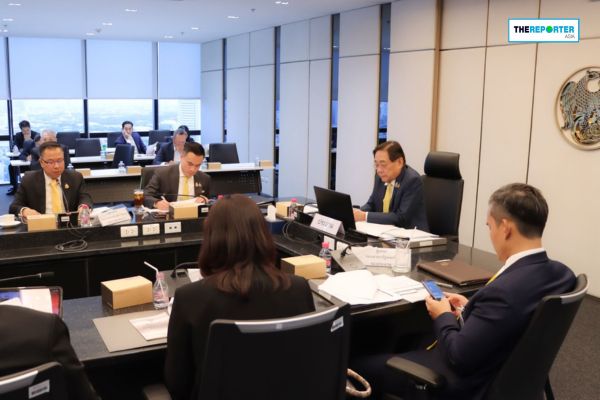
Mr. Narit Therdsteerasukdi, Secretary General of the BOI, emphasized the strategic importance of this transition following a commission meeting chaired by Deputy Prime Minister and Minister of Finance, Mr. Pichai Chunhavajira.
“These changes to the legislative and regulatory framework are significant steps in building confidence from global investors,” stated Mr. Narit. “The new global tax competition rules present a significant opportunity to attract quality investments to enhance our R&D capabilities, develop a qualified workforce, and creating an ecosystem conducive for tech investment in the country.”
Understanding the QRTC: A New Generation of Incentives
The introduction of QRTC marks a sophisticated shift from reducing a company’s tax rate to providing direct, tangible financial support for specific, value-adding activities. Under the OECD’s Pillar Two rules, traditional tax incentives can be nullified, as companies would still be required to pay a “top-up tax” in their home country to meet the 15% minimum.
The QRTC mechanism cleverly circumvents this issue. As defined by the OECD, these credits are treated as income for the purpose of calculating the Pillar Two tax base. This means they do not lower the company’s effective tax rate (ETR) in a way that triggers the top-up tax. Instead, they function as a direct subsidy.
Promoted companies will be able to earn these tax credits by investing in key strategic areas targeted by the government. These include:
- Research and Development (R&D): Encouraging innovation and the creation of proprietary technology within Thailand.
- Advanced Skills Development: Investing in training and upskilling the Thai workforce to meet the demands of high-tech industries.
- Production Efficiency Improvement: Promoting the adoption of automation, robotics, and smart factory solutions.
- Sustainable Investment: Supporting projects aligned with green and circular economy principles.
These credits offer significant flexibility. Companies can use them to deduct against various tax liabilities. Crucially, if a company has remaining credits after settling its tax obligations, it can claim a cash refund from the government. This cash-back option provides vital liquidity that can be reinvested into business development, a feature particularly attractive for capital-intensive operations.
“QRTC in the current global tax environment will be an effective tool to mitigate the impact of the effective tax rate (ETR),” Mr. Narit added, highlighting the technical advantage of the new system.
Bolstering the Startup Ecosystem with Deep Tech Focus
In a complementary strategic move, the Commission also approved a revision of measures designed to cultivate a vibrant and innovative startup ecosystem. The revised policy sharpens its focus on high-potential, early-stage startups—from Pre-Series A to Series A funding rounds—that are developing “deep tech.”
This initiative specifically targets sectors where Thailand possesses strong potential and aims to build a technology-driven economy. The prioritized deep-tech fields include:
- Agriculture and Food Technology
- Biotechnology
- Robotics and Automation
- Artificial Intelligence (AI) Technology
- Medical Technology
- Green Industries
Under the revised measures, qualified Thai startups demonstrating high growth potential will be eligible for substantial financial backing. They may receive cash support of up to 20 million baht (approximately USD 620,000) in the form of matching funds. This matching fund model is designed to de-risk private investment and encourage venture capitalists to inject capital into promising local enterprises, thereby accelerating their growth trajectory.
This dual-pronged strategy—revamping incentives for large multinational corporations while simultaneously nurturing homegrown innovation—underscores a holistic vision for Thailand’s economic future. The policy aims to not only retain and attract large-scale investment in the face of global regulatory changes but also to build a resilient, competitive, and sustainable economy driven by technology and innovation from the ground up.
As Thailand navigates this new era of global economic policy, the successful and swift implementation of these legislative and regulatory changes will be critical. The move positions the nation to compete not just on cost, but on the quality, innovation, and sustainability of the investments it attracts, aligning its national development goals with the evolving expectations of global business.
#ThailandEconomy #BOI #Investment #OECD #GlobalTax #QRTC #FDI #DeepTech #Startups #AsiaBusiness #EconomicPolicy #Thailand40