

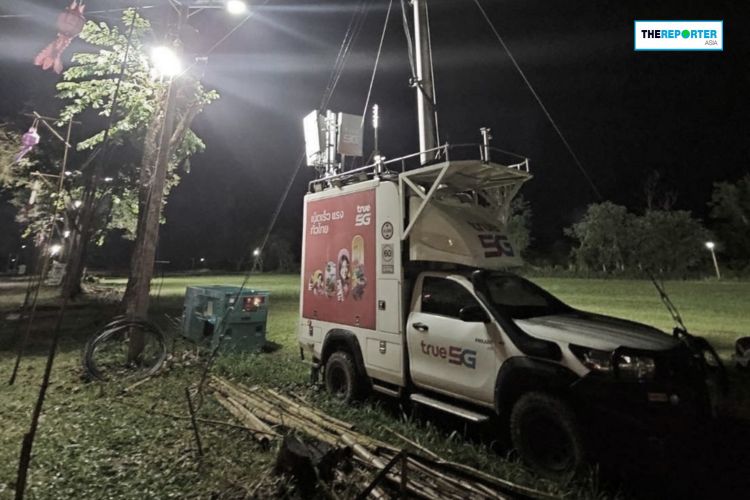
True Corporation Plc. is executing a large-scale emergency response plan as Typhoon “Kalmaegi” approaches, threatening significant economic disruption across Thailand. The storm, forecast to bring heavy rainfall, flash floods, and runoff between November 7 and 9, 2025, has triggered a major mobilization from the telecommunications giant.
Bangkok, Thailand – In a critical move to safeguard national infrastructure and ensure business continuity, True is collaborating closely with the Department of Disaster Prevention and Mitigation (DDPM) and the National Broadcasting and Telecommunications Commission (NBTC). The primary objective is to maintain uninterrupted mobile and home-internet services, which are vital for emergency services, government coordination, and corporate operations during a crisis.
This comprehensive strategy involves the deployment of 24/7 network teams across 66 provinces identified as at-risk by the DDPM.
Safeguarding Economic Arteries: A Focus on Business Continuity
From a business perspective, True’s operation is a significant exercise in risk management and asset protection. The potential for widespread power cuts and infrastructure damage presents a direct threat to economic activity. True’s response is multi-faceted, focusing on technological resilience and rapid-response logistics.
Advanced Monitoring and Infrastructure Hardening At the heart of the operation is True’s Business and Network Intelligence Center (BNIC). This command center is providing 24-hour, real-time oversight, crucially integrated with AI systems to monitor network health and predict potential failure points.
To preemptively counter the primary threat of power loss, True has implemented several key measures:
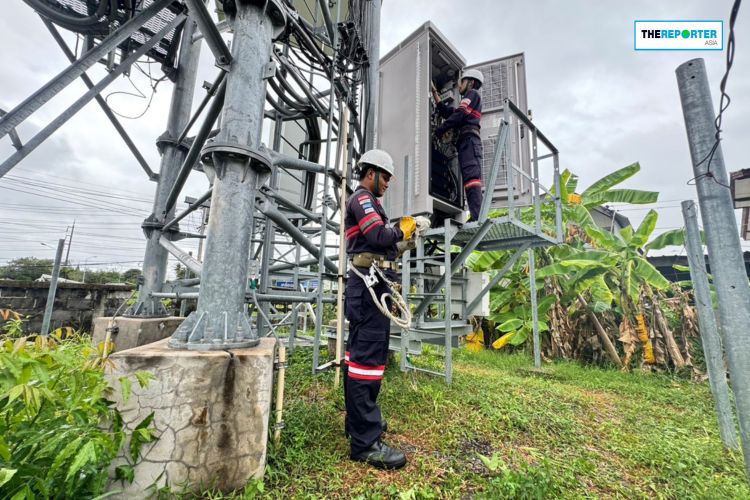
- Power Redundancy: Deploying power generators, extensive fuel reserves, and backup batteries to base stations in high-risk zones. This is designed explicitly to prevent service outages if the main grid fails due to flood-related power cuts.
- Proactive Inspections: Field engineers have been dispatched to inspect critical base stations ahead of the storm’s landfall.
- Equipment Stockpiling: The company has stockpiled spare equipment and dispatched emergency repair teams to ensure continuous network operation can be maintained.
Rapid Deployment Logistics True has also prepared a significant fleet of mobile assets to address immediate service disruptions:
- Mobile Coverage: Cell-on-Wheels (COW) units have been readied for rapid deployment to critical locations and to reinforce signals where fixed infrastructure may be compromised.
- All-Terrain Access: Recognizing the challenge of flash floods, the company has prepared 4WD vehicles and flat-bottom boats to allow repair teams to reach flooded zones.
Public-Private Partnership in Crisis Response
This event underscores a critical public-private partnership model. True Corporation is leveraging its network not only for commercial continuity but also as a vital public safety tool.
The company is supporting official government efforts by transmitting alerts via the Cell Broadcast Service (CBS) and SMS. This ensures that timely communications reach residents in high-risk areas. Under this arrangement, the DDPM acts as the authorized government agency overseeing all official warning messages and content formats.
True continues to work closely with both the NBTC on telecommunication measures and with other government and private organizations to support broader disaster relief efforts. The company has reaffirmed its commitment to mitigating hardships and safeguarding public communication throughout the crisis.
Nationwide Operational Footprint
The scale of the deployment reflects the widespread threat posed by Typhoon “Kalmaegi.” The 66 at-risk provinces, as identified by the DDPM on November 6, 2025, span nearly every region of the nation.
The operational areas include:
- Northern Region (17 provinces): Including Mae Hong Son, Chiang Mai, Lamphun, Lampang, Phayao, Phrae, Nan, Uttaradit, Tak, Sukhothai, Kamphaeng Phet, Phitsanulok, Phichit, and others.
- Northeastern Region (20 provinces): Including Loei, Nong Khai, Bueng Kan, Nong Bua Lamphu, Udon Thani, Sakon Nakhon, Nakhon Phanom, Chaiyaphum, Khon Kaen, Maha Sarakham, Kalasin, Ubon Ratchathani, and others.
- Central and Eastern Regions (23 provinces): Including Kanchanaburi, Ratchaburi, Suphan Buri, Chainat, Sing Buri, Ang Thong, Ayutthaya, Lop Buri, Saraburi, Nakhon Nayok, Prachin Buri, Sa Kaeo, Chachoengsao, Chon Buri, Rayong, Chanthaburi, Trat, Pathum Thani, and others.
- Southern Region (5 provinces): Including Phang-nga, Phuket, Krabi, Trang, and Satun.
- Bangkok Metropolitan Region.
#TrueCorporation #TyphoonKalmaegi #BusinessContinuity #RiskManagement #Thailand #Telecommunications #Infrastructure #DisasterPreparedness #NBTC #DDPM #ThailandEconomy #CrisisManagement