
Saraburi Sandbox spearheads a landmark public-private partnership to implement a closed-loop school recycling system, targeting a 120-ton waste reduction and pioneering sustainable circular economy models nationwide.
Pioneering Environmental Education and Infrastructure
The Saraburi Sandbox initiative, serving as Thailand’s premier low-carbon city model, has officially launched the “Collecting Milk Packaging from School under Saraburi Sandbox Project.” This collaborative program bridges public governance with industry-leading corporate entities to address the surging volume of post-consumer waste within educational institutions. By targeting youth as the primary driving force, the project embeds eco-responsible behavioral frameworks into the academic curriculum. Through structured waste segregation, the program systematically intercepts recyclable materials before they reach municipal landfills, aligning education with regional decarbonization.
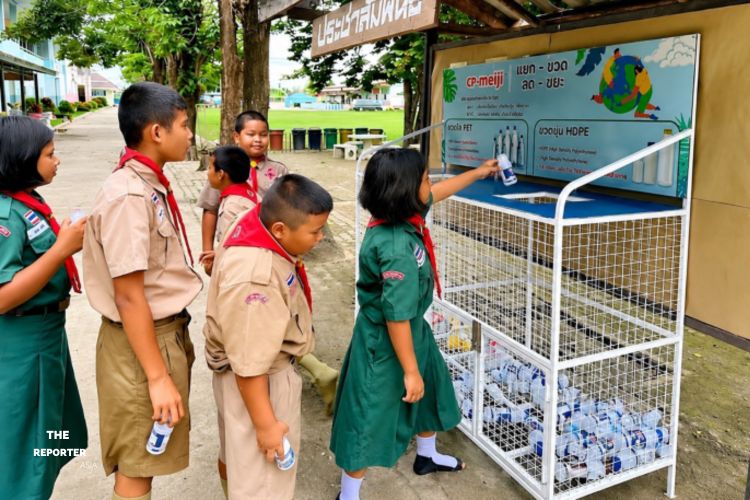
Initially piloting across 20 model schools within Saraburi Province, the collaboration introduces an end-to-end framework managing milk pouches, cartons, and plastic bottles. The operational roadmap leverages schools as upstream mechanisms, transforming academic grounds into highly efficient collection points. This structure ensures that every piece of discarded packaging is thoroughly cleaned, sorted, and routed directly into dedicated industrial recycling streams, preventing environmental leakage. The program provides a practical blueprint for environmental stewardship, educating younger generations on the tangible values of resource recovery.
This sweeping environmental framework responds directly to modern supply chains facing global raw material price volatilities. By converting localized plastic and paper waste back into valuable economic assets, the initiative effectively reduces reliance on virgin resources. It positions Saraburi as a national testing ground for large-scale waste mitigation, reinforcing Thailand’s broader circular economy objectives. The operational metrics established during this initial deployment will define future regulatory frameworks for sustainable provincial development.
Industrial Collaborations and Closed-Loop Take-Back Systems
A critical pillar of this project rests on the specialized recycling infrastructure and supply chain capabilities provided by SCG Chemicals (SCGC). Building upon their established nationwide sustainability campaigns, SCGC is integrating a highly advanced Take-Back System specifically tailored for academic institutions. This process collects post-consumer plastics from the pilot schools and delivers them directly to processing plants. The specialized logistical layout eliminates traditional inefficiencies in municipal waste management, demonstrating how targeted private logistics can optimize public ecological programs.
Through these technical capacities, collected plastic milk pouches are processed into high-quality Post-Consumer Recycled Resin (PCR). This premium recycled material is manufactured into durable upcycled chairs and returned back to the participating academic institutions. This closed-loop recycling model illustrates the circular economy by providing students with immediate, visible outcomes of their recycling efforts. The transformation of simple waste into functional school furniture underscores the tangible economic benefits of institutional circularity.
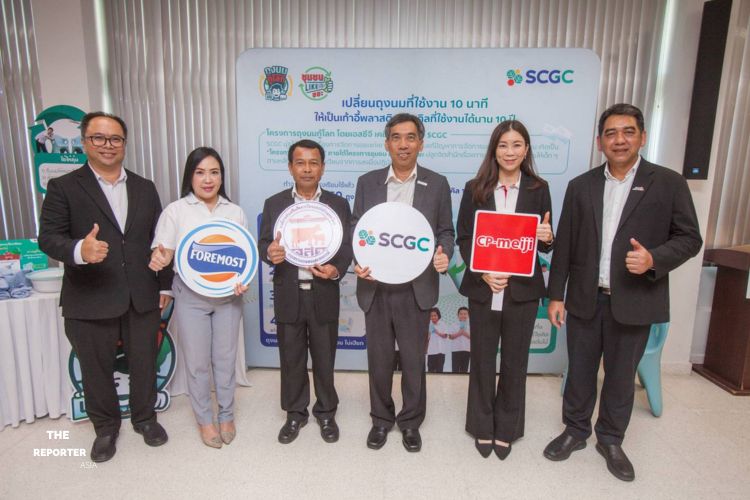
“Together with network partners, we will develop an efficient Take-Back System from schools to recycling facilities to create a Closed-loop Recycling system and prevent waste leakage into society and the environment.” — Dr. Suracha Udomsak, Chief Operations and Innovation Officer of SCGC
Corporate Alliances Driving Multi-Material Circular Solutions
The Dairy Farming Promotion Organization of Thailand (DPO), managing the Thai-Denmark brand, has integrated its specialized “Thai-Denmark for Sustainability” framework into this partnership. Recognizing its dual responsibility as a prominent state enterprise and producer of school milk products, DPO applies a Public-Private-People Partnership (PPPP) model to advance waste management inside schools. This strategic positioning addresses the growing financial pressures stemming from global resin market shifts and escalating production material costs. By transforming structural waste liabilities into useful assets, DPO establishes an accountable manufacturing model that minimizes post-consumer burdens.
Simultaneously, CP-MEIJI Co., Ltd. brings extensive operational data from its ongoing “CP-MEIJI Bottle Separation for Waste Reduction” campaign to optimize the sandbox. Operating under an “Enriching Life” sustainability mandate, the company has driven localized waste bank programs across schools adjacent to its production facilities. Their systematic integration of waste source-segregation has successfully diverted significant quantities of plastic from regional landfills while reducing carbon emissions. CP-MEIJI’s contribution to the Saraburi Sandbox Zero Waste School initiative expands these models to multiple regional organizations, securing long-term carbon reduction achievements.
FrieslandCampina (Thailand) PCL, the manufacturer of FOREMOST dairy products, joins the coalition with its corporate “Nourishing Thailand” commitment. The brand aligns its participation with a corporate global mandate to achieve fully circular packaging by 2050. Having deployed milk carton reclamation programs across dozens of schools nationwide, FOREMOST applies proven community-level collection mechanics to the sandbox framework. Their take-back networks ensure that complex multi-layered beverage cartons are properly processed, keeping materials productive and out of landfills.
Macroeconomic Impacts and Decarbonization Trajectories
The implementation of the Saraburi Sandbox school project generates strong environmental and economic benefits across the regional supply chain. By optimizing high-value waste streams at the source, the project lowers sorting costs for processing facilities. The steady supply of source-segregated post-consumer plastics and fibers provides local recycling plants with reliable raw materials. This stable resource loop reduces industry reliance on imported materials, protecting local manufacturers from global market fluctuations.
From a provincial management standpoint, this coordinated educational recycling network reduces the financial burdens of regional landfill management. Municipalities can reallocate capital from standard waste disposal toward developing smart city infrastructure and low-carbon technologies. The quantifiable reduction in greenhouse gas emissions supports Thailand’s broader international climate commitments and carbon neutrality targets. This initiative showcases how localized municipal programs can drive national environmental policy.
Furthermore, the program cultivates a sustainability-minded workforce and consumer base for the future. Teaching green practices early encourages youth to adopt responsible consumption habits that carry into adulthood. This cultural shift will likely accelerate market demand for eco-friendly products and circular business models across Thailand. Industries adopting sustainable practices early will enjoy competitive advantages in an increasingly green economy.
Future Scalability and Strategic Long-Term Objectives
Scheduled to commence in the first semester of the 2026 academic year, the project follows a clear timeline for performance evaluation. Comprehensive operational results and structural lessons learned will be compiled by the end of 2026 to assess the viability of the model. This review period allows stakeholders to refine logistics, enhance sorting protocols, and optimize the take-back mechanisms before broader deployment. The data collected will serve as a foundational guide for upgrading municipal waste systems across similar industrial provinces.
The ultimate goal of this initiative is to scale the collection model to every educational institution throughout Saraburi Province. Full-scale regional implementation is projected to divert up to 120 tons of used milk packaging waste from landfills annually. This substantial waste reduction will significantly lower regional greenhouse gas emissions and optimize resource use. The project establishes a functional template for sustainable resource management that can be replicated at provincial and national levels.
By connecting youth education, public administration, and private sector innovation, the Saraburi Sandbox project creates an effective circular ecosystem. The transition toward a low-carbon city relies on these structured, reproducible frameworks that turn waste liabilities into economic opportunities. As the 2026 academic year progresses, this initiative will provide valuable insights for Thailand’s green economic future.
#SaraburiSandbox #CircularEconomy #LowCarbonCity #Sustainability #GreenInnovation #SCGC #CPMeiji #Foremost #ThaiDenmark #EcoFriendly