
In a shifting geopolitical landscape, Thailand’s neutrality offers a powerful competitive edge for long-term economic growth.
Navigating Geopolitical Shifts as a Trusted Regional Hub
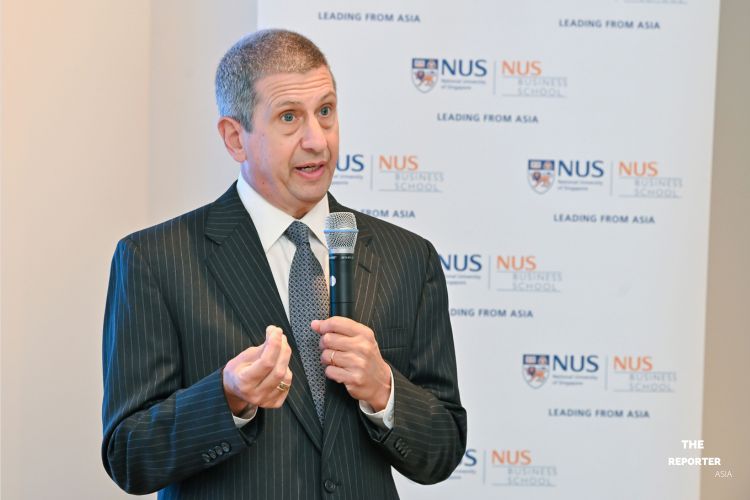
As global geopolitical tensions aggressively reshape international trade routes, supply chains, and foreign direct investment flows, Thailand finds itself standing at a critical economic crossroads. The long-standing reputation of the kingdom as a highly trusted, reliable, and strictly neutral partner within Southeast Asia is no longer just a diplomatic stance, but a core macroeconomic asset. According to Distinguished Professor Andrew K. Rose, Dean of NUS Business School, this deep-rooted international credibility is transforming into one of the country’s most formidable strategic advantages.
Economies that possess established international trust and stable regional relationships are becoming increasingly attractive to global multinational corporations. As enterprises worldwide actively re-evaluate their risk exposures and restructure where they invest, manufacture, and expand, Thailand offers a sanctuary of predictability. This foundation of neutrality allows the nation to buffer against the volatility of international trade decoupling while acting as a bridge between competing global economic blocs.
The current era of global economic fragmentation is forcing a massive redrawing of traditional logistics and supply maps. Decades of meticulous relationship-building across Asia and Western markets have provided Thailand with a resilient structural cushion. This historical diplomatic equilibrium ensures that even during intense periods of global economic uncertainty, the nation remains a preferred destination for long-term industrial and technological commitments.
“In a world where global alignments are shifting and supply chains are being redrawn, trust becomes a strategic asset. Thailand has spent decades building strong relationships across Asia and beyond. That foundation becomes more valuable in periods of uncertainty.” — Professor Andrew K. Rose, Dean of NUS Business School
Adversity as a Catalyst for Structural Repositioning
The current macroeconomic environment in Thailand presents near-term challenges that require immediate structural adjustments. According to the International Monetary Fund’s (IMF) World Economic Outlook published in April 2026, Thailand’s gross domestic product (GDP) growth is projected at 1.5 per cent for the year 2026. This conservative growth forecast reflects immediate systemic pressures, including escalating energy costs, softer demand from traditional long-haul tourism markets, and the disruptive onset of rapid artificial intelligence (AI) adoption across key domestic sectors.
However, historical economic patterns indicate that periods of intense market disruption often create the exact catalyst needed for long-term competitive repositioning. Rather than viewing the current lower growth projection as a permanent stagnation, forward-thinking institutions recognize it as an ideal window to pivot away from labor-intensive models. The economies that ultimately emerge stronger from global shifts are invariably those that choose to adapt the earliest to technological evolution.
Unlocking the next decade of sustained growth will depend heavily on the agility, leadership capabilities, and strategic vision of Thai business executives. Navigating this era of digital fragmentation requires moving past traditional wait-and-see approaches. By leveraging the current period of macroeconomic friction to overhaul legacy systems, Thai organizations can successfully capture emerging regional opportunities.
Balancing Rapid Technological Transformation with Human Capital
The acceleration of investments in artificial intelligence, digital transformation, and aggressive workforce reskilling is sweeping across Southeast Asia. This regional technological surge comes at a time when businesses are actively trying to insulate themselves against global fragmentation. However, the rapid deployment of these advanced technologies has introduced a new layer of organizational anxiety regarding over-reliance on automated systems.

A comprehensive 2026 study conducted by Milieu Insight, surveying 3,000 workers across six key Southeast Asian markets including Thailand, revealed a profound cultural shift in tech perception. The study highlighted that 53 per cent of surveyed employees ranked an over-dependence on AI as their primary modern concern. Strikingly, this fear of systemic over-reliance outpaced traditional worries such as data privacy violations and total job displacement.
This statistical insight highlights a critical mandate for corporate and institutional leadership within Thailand. Organizations must move beyond the simple procurement and deployment of new software and instead focus on guiding ethical and effective integration. Technology cannot function as a standalone remedy; it requires a highly skilled workforce capable of managing AI tools safely to maximize productivity without losing human oversight.
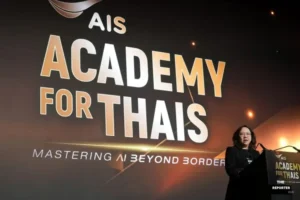
“This is not a wait-and-see moment. Thai businesses that invest early in leadership, digital capability and workforce resilience will be better positioned to compete regionally and internationally.” — Ms Usa Skulkerewathana, Senior Lecturer at NUS Business School
Cultivating Leadership to Secure Future Economic Growth
To effectively address these dual challenges of geopolitical re-alignment and rapid digitization, a simple policy-level response from government entities will not suffice. Both large domestic multinationals and small-to-medium enterprises (SMEs) must build proactive corporate adaptation strategies. The core engine powering Thailand’s future economic growth will be centered on targeted talent acquisition and sophisticated leadership development.
Shifting the corporate focus toward practical AI readiness ensures that technology serves as an operational amplifier rather than a disconnected disruption. Strengthening the talent pipeline enables Thai companies to remain competitive on both regional and international stages. By embedding resilience into the workforce, local businesses can withstand external economic shocks while expanding their footprints across the ASEAN trade block.
In this quest for professional excellence, Singapore’s established role as Asia’s primary financial and educational hub provides a natural gateway. Thai executives and professionals have spent decades utilizing global institutions like the NUS Business School to acquire benchmarked leadership training. Programs such as the Stanford–NUS Executive Programme, specialized MBAs, and MSc courses continue to see steady Thai enrollment, proving that local leaders are actively seeking the global exposure required to shape Thailand’s next chapter of growth.
#ThailandEconomy #TrustCapital #GlobalRealignment #NUSBusinessSchool #SupplyChain #AITransformation #ASEANBusiness #CorporateLeadership