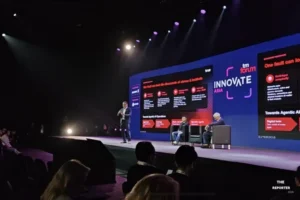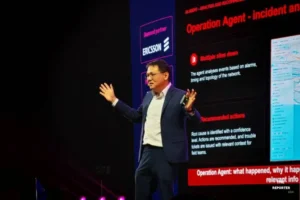

AIS has outlined its architectural roadmap for achieving Level 4 Autonomous Networks during a TM Forum panel discussion, detailing a strategic shift from single-domain automation to Cross-Domain and Multi-Vendor operations powered by Multi-Agent systems and Agent-to-Agent (A2A) standards.
Transitioning from Single-Domain to Cross-Domain Architecture
Speaking during a session moderated by George Glass, Chief Technology Officer (CTO) at TM Forum, Wasit Wattanasap, Executive Vice President and Head of Nationwide Operations and Support Business Unit at AIS, shared insights into building an evolving network architecture. As an active member of TM Forum, AIS has contributed to industry architecture white papers since 2022, following up with version two on architectures toward Level 4 in 2024, and collaborating with industry groups this year on version three of the Autonomous Network Architecture Level 4 white paper. According to Wasit, network architecture is not static and must continuously adapt as new technologies and concepts emerge.
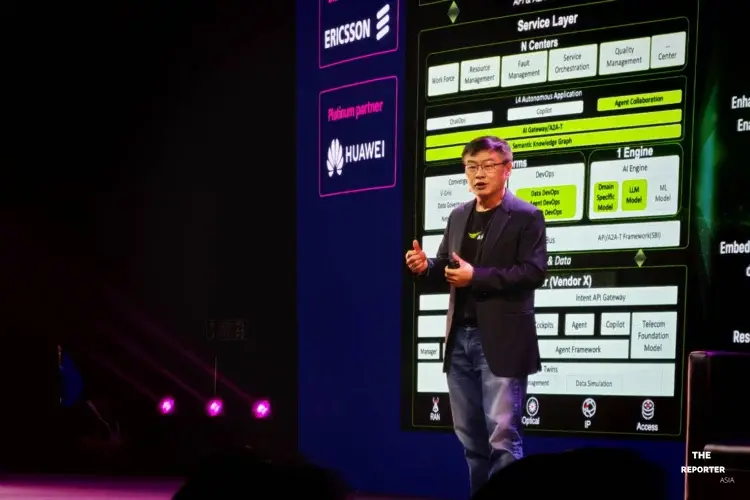
A core requirement for reaching higher autonomy levels is moving beyond Single Domain Autonomy—which already covers chatbots, on-site assistants, automated fault location, proactive protection, and energy-saving Green Networks—into Cross-Domain orchestration. Because real-world telecom infrastructure relies on Multi-Vendor equipment, AIS explicitly defines the boundaries of individual domains such as Radio Access Networks (RAN) and Transport networks. Rather than relying on hard coding, AIS strictly connects these domains through standardized API gateways to prevent architectural complexity and operational errors.
Unified Data Governance and Multi-Agent Collaboration
Technically, AIS embeds resource layers, agentic components, and Digital Twins within each individual domain while establishing an overarching service layer for cross-domain coordination. This service layer operates on two foundational platforms, starting with a centralized Data Governance Platform that unifies and normalizes data across diverse vendors. Wasit noted that establishing consistent data definitions and context is essential because identical information collected from different vendors often varies in format and meaning, which would otherwise prevent AI systems from accurately digesting data or identifying root causes. The second pillar comprises Data DevOps and AI Engines designed to execute Intent-Driven commands, which serve as the core operational mechanism for Level 4 networks.
Building upon this data foundation, AIS has deployed specialized AI Agents within single domains, including a Customer Complaint Handling Agent, a Network Optimization Agent, and a Change and Impact Evaluation Agent. These agents negotiate competing multi-target objectives, such as balancing energy conservation against network quality and customer usage demands. To enable seamless end-to-end workflows across domains, AIS, as a founding member of Open A, is developing Agent-to-Agent (A2A) context packages that define exactly what operational context is passed from one agent to another—such as escalating a customer complaint directly to network optimization and impact evaluation agents—without requiring full custom coding.
Driving Industry Transformation Through Four Core Pillars
Wasit emphasized that achieving Level 4 Autonomous Networks and advancing Agentic Operations cannot be accomplished by a single operator alone, calling for industry-wide collaboration built on four principles: Co-build, Co-work, Co-create, and Co-drive. Under Co-build, AIS focuses on developing intelligent network infrastructure alongside internal, societal, and industry-wide AI talent programs. Through Co-create and Co-work, the company collaborates with partners to establish shared platforms and open standards like A2A. Finally, Co-drive unites industry stakeholders with TM Forum serving as the benchmark to guide autonomous network maturity and operational transformation across the telecommunications sector.
#AIS #AutonomousNetwork #TMForum #AI #MultiAgent #Telecom #TechNews