
Lung cancer has evolved beyond a public health emergency to become a ticking economic time bomb for Thailand, imposing a colossal strain on the nation’s financial systems. Statistics reveal a grim reality: a new patient is diagnosed every hour. The crisis is compounded as risk factors expand beyond smoking to include a formidable new adversary—environmental pollution, specifically PM2.5 fine particulate matter. This has triggered a surge in treatment costs driven by high-value precision medicine, while a significant gap in early-stage screening remains a critical weakness, crippling both quality of life and the nation’s economic productivity.
Bangkok, Thailand – The global and national landscape of lung cancer has intensified into a full-blown crisis, with repercussions extending far beyond health to exert immense pressure on the economies of Thailand and the world, according to data presented by Colonel Assoc. Prof. Dr. Naiyarat Prasongsook, an oncologist at Phramongkutklao Hospital. Data from 2022 underscores Asia’s position as the epicenter of this epidemic, accounting for an astounding 1,566,355 cases, or 63.1% of the global total of 2,480,675 patients. Projections indicate a worrying upward trajectory, with forecasts suggesting a potential 269.4% increase in new cases across Asia in the coming years—a stark warning of the monumental economic and social burden that lies ahead.
For Thailand, the situation is particularly alarming. Lung cancer now ranks as the second leading cause of cancer-related mortality in the country. Annually, the nation registers 23,713 new lung cancer diagnoses, a figure that translates to a staggering 2.7 new cases every single hour. These are not mere statistics; they represent a direct and escalating economic cost that the nation must bear, encompassing exorbitant medical expenses, profound losses in labor productivity, and a diminished quality of life for its citizens.
Future outlooks paint an even bleaker picture. The number of new patients in Thailand is projected to climb from 23,500 in 2022 to 27,500 by 2025. Concurrently, fatalities are expected to rise from 19,900 to 23,500 within the same period. The near-parallel upward trajectory of new cases and deaths highlights the immense challenge in combating the disease and serves as a clear indicator of the relentlessly growing socioeconomic costs.
Deconstructing Risk: How PM2.5 Became an Economic Adversary
For decades, the primary culprits behind lung cancer have been widely understood to be smoking and secondhand smoke. The Global Burden of Disease 2019 study reaffirms that smoking remains the number one risk factor, responsible for 62% of all lung cancer deaths worldwide. However, a paradigm-shifting revelation with profound implications for public health economics and environmental policy has emerged: air pollution, specifically fine particulate matter PM2.5, is now the second leading cause of lung cancer, contributing to 15% of global deaths from the disease.
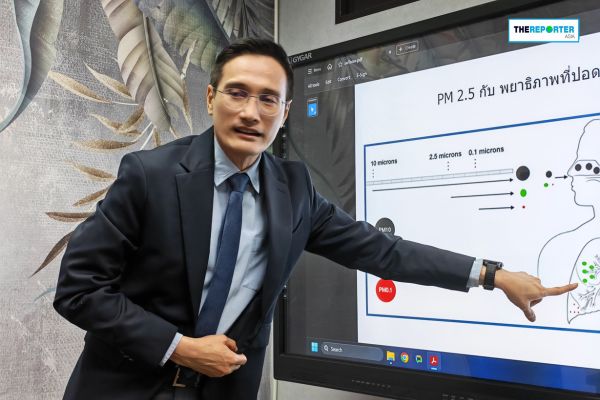
The microscopic size of PM2.5 particles allows them to bypass the body’s natural defenses and penetrate deep into the lungs, inflicting cellular damage and initiating disease. This discovery fundamentally alters the risk equation, shifting the focus from individual lifestyle choices to a systemic environmental and economic structural problem that demands collective action from all sectors.
Other contributing risk factors include secondhand smoke (5.8%), household pollution from solid fuels (4%), and occupational exposure to carcinogens like radon (4%). This diversification of risk factors underscores that the economic burden is no longer a matter of personal health choices alone but is intrinsically linked to national environmental and industrial policies.
The Diagnosis Deficit: The Invisible Cost of Detecting Disease Too Late
The single most critical factor determining treatment outcomes and, consequently, the economic cost of lung cancer is the stage at which the disease is detected. An analysis of the 5-year survival rate for non-small cell lung cancer patients reveals a dramatic and telling disparity. Patients diagnosed at the earliest stage (1A1) have an impressive 92% survival rate. This figure plummets catastrophically as the disease progresses, falling to less than 1% for those diagnosed at stage 4B.
Tragically, the data reveals a systemic failure in early detection. A staggering 57% of patients are diagnosed only after the cancer has metastasized to distant parts of the body, a stage where the 5-year survival rate is a mere 4.7%. In stark contrast, only 16% of patients are diagnosed at an early, localized stage, where the chance of survival is a much higher 56.3%.
This “diagnosis gap” represents a colossal, often unseen, cost to the economy, manifesting in lost human lives, squandered productivity, and exponentially higher healthcare expenditures for late-stage palliative care. A comparison of early-stage detection rates between Thailand and the United States reveals a significant disparity, highlighting a critical area for improvement in the Thai healthcare system.
The Economics of Treatment: Navigating the High-Cost Era of Precision Medicine
The evolution of lung cancer treatment has ushered in the age of Precision Medicine, a transformative approach that has reshaped the pharmaceutical market and created enormous economic value. Modern treatment protocols are highly complex and tailored to the specific stage of the disease. For stages 1 and 2, the primary intervention is surgery, often followed by adjuvant chemotherapy or radiation to minimize the risk of recurrence. Stage 3, where cancer cells have often spread to lymph nodes in the chest, requires a multi-modal approach combining chemotherapy, radiation, and immunotherapy.
The most significant and costly revolution, however, has occurred in the treatment of stage 4, or metastatic, lung cancer. While a cure is not yet possible at this stage, the goal shifts to alleviating symptoms and extending survival. The new standard of care has moved away from indiscriminate chemotherapy towards a highly personalized strategy. This begins with biomarker testing, a crucial process where a patient’s tumor tissue is analyzed to identify specific “driver mutations”—the genetic anomalies fueling the cancer.
This diagnostic step is paramount in designing the optimal treatment plan. Based on the identified biomarker, physicians can select from a portfolio of advanced therapeutic options:
- Chemotherapy: The long-standing standard of care, still utilized in specific cases.
- Targeted Therapy: These are revolutionary drugs engineered to attack cancer cells that harbor specific genetic mutations, such as EGFR, ALK, and BRAF. They are highly effective and generally have fewer side effects than traditional chemotherapy.
- Immunotherapy: This groundbreaking treatment modality works by stimulating the patient’s own immune system (T-cells) to recognize and destroy cancer cells.
While these innovations offer unprecedented hope and longer life for patients, they come at a significant financial cost, driving the overall economic burden of lung cancer to new heights and posing a major challenge for patients and healthcare payers alike.
The Imperative of Prevention and Screening
From a purely economic standpoint, prevention is the most cost-effective strategy. “Smoking cessation” remains the single most impactful measure to drastically reduce risk. This must be complemented by public health initiatives promoting healthy nutrition, adequate rest, and regular exercise.
However, for individuals already at high risk, “screening” is the essential tool to mitigate the immense economic losses associated with late-stage diagnosis. International guidelines, such as those from Medicare and the USPSTF, clearly define the target population for Low-Dose Computed Tomography (LDCT) Lung Cancer Screening: individuals aged 50-80 years who currently smoke or have quit within the past 15 years, and who have a smoking history of at least 20 pack-years.
This clear targeting allows for efficient resource allocation. In the Thai context, however, access to such screening remains limited and is not yet widely included as a benefit under the universal healthcare coverage scheme, creating a major bottleneck in the fight against the disease.
Conclusion: Public Health Investment is the Bedrock of Economic Sustainability
The lung cancer crisis in Thailand is a structural challenge that impacts the nation’s economy on every front—from the public health budget strained by an increasing patient load and expensive technologies, to the loss of productivity in the workforce, and the environmental costs linked to the PM2.5 problem. Therefore, investing in proactive prevention measures, developing an efficient and accessible mass screening system, and aggressively tackling the root causes of air pollution are not merely healthcare expenditures. They are urgent and essential investments in the long-term economic and social sustainability of the nation.
#LungCancer #HealthEconomics #PM25 #ThaiHealthcare #TargetedTherapy #PrecisionMedicine #EnvironmentalHealth #CancerAwareness #ThailandEconomy