

The blueprint for regional economic development in Thailand is undergoing a profound transformation. No longer solely defined by trade, tourism, or manufacturing output, the new battlefield for attracting investment and securing a high-value residential base is public health infrastructure. Chumphon, strategically positioned as the “Gateway to the South,” is at the epicenter of this challenge.
The province’s recent capital investment in a new Cardiovascular Center—a move intended to anchor its economic appeal—is facing a critical operational failure: a severe bottleneck in specialized medical personnel. This impasse threatens to stall its economic ambitions, prompting an urgent, high-level strategic alliance between private industry leader Philips (Thailand) and the nation’s top medical body, The Heart Association of Thailand, to unlock this critical constraint.
The ฿6.9 Billion Crisis: Thailand’s Cardiovascular Economic Burden
Before dissecting the solution in Chumphon, it is essential to understand the sheer scale of the national crisis this project addresses. Cardiovascular diseases (CVDs) are not merely a health issue; they are a profound economic liability. Globally, CVDs claim an estimated 17.9 million lives annually, but in Thailand, the cost is tangible and catastrophic.
According to Prof. Dr. Somnaporn Burod-gate Bunyaratvej Soongmuang, Vice President of The Heart Association of Thailand, the economic drain is staggering. “Cardiovascular disease is a deeply concerning national public health problem,” she stated, citing data from the Health Data Center (HDC) for 2025 which identifies over 260,000 cumulative CVD patients in the system.
This illness burden translates directly into a massive financial hemorrhage. Data from the Department of Medical Services reveals that Thailand spends an average of 6.9 billion THB (approximately $185 million USD) annually on medical expenses for heart disease patients alone. This figure represents a significant drain on public coffers and private wealth, diverting capital that could otherwise be used for productive investment.
This financial crisis is fatally compounded by a critical human resource deficit. “Thailand has only about 500–600 cardiologists,” Prof. Dr. Somnaporn explained. This scarcity is exacerbated by severe misallocation. “The vast majority are concentrated in major cities, leaving patients in many areas unable to access specialized services.”
For the business community, this translates into direct and indirect costs: higher insurance premiums, increased absenteeism, lost productivity from a workforce crippled by preventable diseases, and a fundamental lack of confidence in regional investment climates. If a province cannot guarantee basic, high-level medical care, it cannot hope to attract or retain the skilled talent and executive leadership needed to drive a modern economy.
The Chumphon Case Study: A Microcosm of a Macro Problem
This national crisis is perfectly encapsulated at Chumphon Khet Udomsakdi Hospital. The hospital’s leadership recognized the strategic necessity of cardiac care, but the reality of the specialist shortage has created a critical service delivery failure.
Dr. Patamaphan Anantapong, Director of Chumphon Khet Udomsakdi Hospital, laid out the urgent local problem. “The hospital recognizes the importance of public access to the health system… We are committed to upgrading cardiac care, but we have limited specialized medical personnel.”
The consequence is a logjam that renders capital investment inert. “We have over 50 patients requiring screening for heart disease,” she noted. This 50-patient backlog represents a critical failure point. These are 50 individuals, likely part of the local workforce, whose conditions are undiagnosed and worsening, risking acute events that are far more costly—both in human and financial terms—than preventative screening.
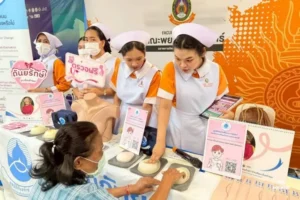
This is the impasse that the “Mobile Heart Meeting” (Karn Prachum Wichakarn Huajai Sanjorn) aims to break. This initiative, now in its 29th iteration by The Heart Association, is an established program for disseminating advanced medical knowledge to regional practitioners.
However, the Chumphon event represents a significant evolution. It has become a targeted, tactical intervention. It’s a powerful collaboration between The Heart Association of Thailand, the Thai Heart Foundation, the Thai Echocardiography Club, Chumphon Khet Udomsakdi Hospital, and, crucially, the technology and resource partner, Philips (Thailand) Ltd.
This project is the fourth iteration of a specific mobile screening initiative that has previously been deployed in Krabi, Sa Kaeo, and Mae Hong Son. Its goal is to directly intervene, clear the patient backlog, and ensure timely treatment.

The Strategic Pivot: From Temporary Relief to Sustainable Capacity Building
What elevates the Chumphon project from a simple CSR initiative to a strategic economic investment is its new, dual focus. This year’s mission is not just to “screen” patients; it is to “build” a self-sustaining local capability. This is the difference between giving a man a fish and teaching him to fish.
Previous models of medical outreach often involved specialists flying in, treating patients, and leaving—a solution that evaporates the moment the plane takes off. The Chumphon model tackles the problem at its root: the “software” of human capital.
Dr. Patamaphan, the hospital director, confirmed this vital shift. “In addition to screening patients, we are also organizing training for our local staff and medical students so that they can screen patients themselves in the long term.”
This approach transforms the project from a short-term fix into a permanent asset. Prof. Dr. Somnaporn elaborated on this upgraded strategy: “This year, we have elevated the project from just screening to integrating training for local medical personnel. The goal is to enhance and embed this knowledge within the community.”
The intervention is specific and practical: training medical students and existing staff in Chumphon to use high-end diagnostic equipment—specifically, echocardiography. This knowledge transfer is the most critical “unlock” for the province. It ensures that the millions invested in the new Cardiovascular Center will have trained operators, creating a sustainable return on investment for the hospital and the entire region. It directly addresses the 500-specialist shortage by upskilling the next tier of general practitioners and nurses, building a resilient healthcare ecosystem from the ground up.
The “Hardware” and “System”: Technology as the Enabler
This sustainable “software” (human training) is powered by cutting-edge “hardware” and “systems” provided by Philips. The ability to train locals is useless without the right tools, and the tools themselves are critical for diagnostic accuracy and efficiency.
1. The Hardware: 3D Echocardiography
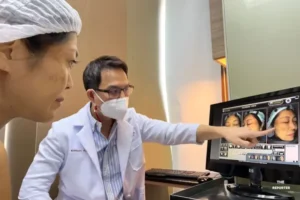
The core diagnostic tool deployed is Philips’ advanced 3D Echocardiography (ultrasound) machine. Prof. Dr. Somnaporn, a leading expert, highlighted its importance: “A highly effective method for screening heart disease is with 3D Echocardiography, which is being used in this project.”
For a business audience, this technology represents an efficiency multiplier. Unlike 2D scans, “this technology… allows doctors to see the heart’s structure, blood vessels, and blood flow realistically and in detailed in all dimensions.”
The economic benefit is twofold. First, it increases diagnostic accuracy, reducing misdiagnosis and the need for more invasive, expensive follow-up procedures. Second, it provides a clear, comprehensive picture faster, allowing the limited number of specialists to process more patients correctly, thereby increasing the productivity of the hospital’s most valuable assets.
2. The System: IntelliSpace Cardiovascular (ISCV)
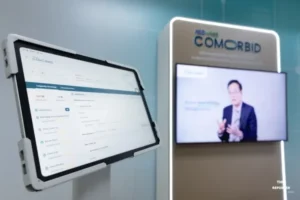
Perhaps even more significant for long-term strategy is the implementation of a data management system. The project utilizes ISCV (IntelliSpace Cardiovascular), a specialized software platform.
“This system is used to collect and process data from the screenings,” Prof. Dr. Somnaporn noted. Its function is “to manage data systematically and assist in the correct transfer of patient information.”
This is the digital backbone of a modern healthcare hub. For a business, this is analogous to an ERP system. The ISCV platform ensures data integrity, creates a standardized digital workflow, and, most importantly, allows for seamless data sharing. This “system” component means a scan taken in Chumphon can be digitally reviewed by a top specialist in Bangkok, effectively leveraging the scarce 500-specialist pool without requiring them to be physically present. It professionalizes the hospital’s operations, making it a reliable and scalable center for care.
The PPP Blueprint: A Vision for a “Health Hub” Economy
This project is a powerful case study in a new Public-Private Partnership (PPP) model, one that is essential for solving Thailand’s ฿6.9 billion healthcare liability.
Viroj Vithayaviroj, President and Managing Director of Philips (Thailand) Ltd., framed this as part of the company’s core mission. “As a leader in healthcare technology… we have continuously supported and worked with The Heart Association in implementing social projects for the past four years,” he stated.
This partnership, he explained, allows Philips to “bring mobile cardiac diagnostic technology to communities across the country.” The collaboration is not driven by philanthropy alone, but by a core business philosophy: “This project reflects Philips’ belief that innovation truly has value only when it can genuinely improve people’s quality of life.”
This holistic model—addressing Hardware (3D Echo), Software (local training), and System (ISCV data management)—is the only sustainable way to address the regional healthcare deficit. The government alone cannot solve the ฿6.9 billion problem; it requires strategic partnerships with private sector experts who can provide the technology and training.
The intervention in Chumphon is symbolic of a much larger economic prize. While 80% of CVD deaths are preventable, that prevention hinges on one thing: access. By unlocking the personnel bottleneck, this alliance is doing far more than saving the 50+ patients in the queue.
It is laying the foundation—in both human resources and digital infrastructure—to transform Chumphon from a “Gateway” to a “Health Hub.” A province with a proven, high-functioning cardiovascular center becomes a magnet for an aging society, a secure location for corporate relocations, and a trusted center for the entire Southern region. This partnership is a blueprint for building economic resilience, proving that investing in public health is the most powerful economic stimulus of all.
#EconomicNews #HealthEconomics #HealthcareInvestment #Chumphon #Philips #HeartAssociationofThailand #PublicPrivatePartnership #CVD #HealthcareInfrastructure #ThailandEconomy #HealthHub #ISCV #Echocardiography #SustainableDevelopment #CSR