
KDMS revolutionizes Thai healthcare with a 500-million-baht expansion, led by Dr. Tanapol Wangteeraprasert, positioning the “Specialized Hospital” model as the new medical megatrend to tackle the Super-Aged Society.
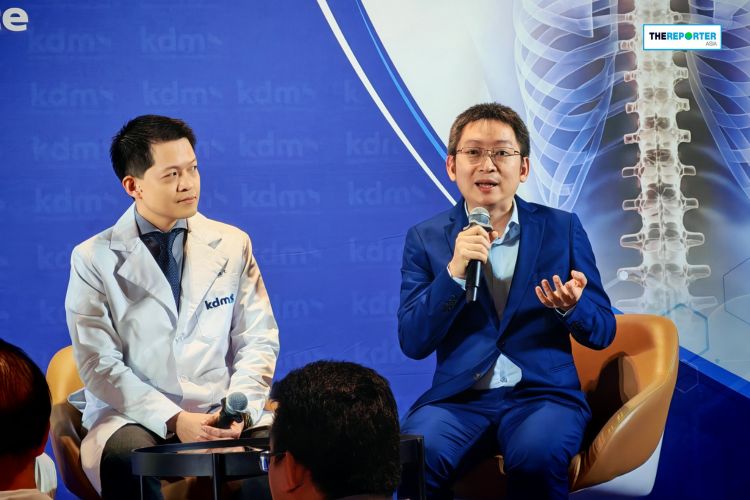
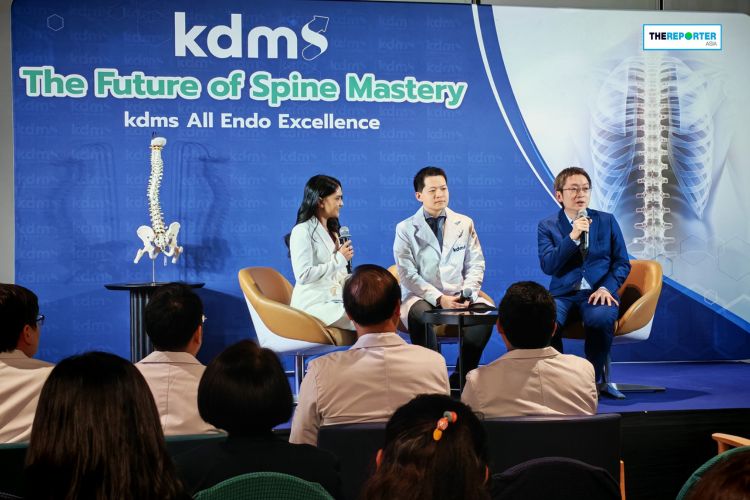
A pivotal shift is reshaping Thailand’s healthcare landscape as the “Specialized Hospital” model gains momentum, challenging the dominance of traditional general hospitals. Leading this transformation is Dr. Tanapol Wangteeraprasert, Managing Director of Khor Dee Mee Suk (KDMS) Hospital, who recently announced a bold strategic expansion during the “The Future of Spine by Master of KDMS” event.
With Thailand rapidly entering a “Super-Aged Society,” KDMS is positioning itself as a Center of Excellence (COE) for orthopedic care, benchmarking against global giants. The hospital confirmed a 500-million-baht investment to establish a new facility in the Ratchaphruek area (West Bangkok), aiming to capture the underserved market on the Thonburi side and solidify its status as a destination for advanced spine and joint treatment.
Specialized Hospital Strategy: The HSS Model of Asia
The global healthcare trajectory is moving decisively towards specialization, a vision championed by Dr. Tanapol. He draws parallels to the United States, where top-tier institutions like MD Anderson lead in cancer care and the Hospital for Special Surgery (HSS) dominates orthopedics. “In the future, patients will not just look for a hospital; they will look for the definitive expert in their specific ailment,” Dr. Tanapol explains.
KDMS adopts this “Specialized Hospital” model to create a distinct market position. Unlike general hospitals where orthopedic surgeons might handle a mix of trauma and general cases, KDMS aggregates super-specialists who focus exclusively on specific anatomical regions—spine, foot, knee, or hand. This high volume of specific cases allows doctors to refine their expertise to a level of mastery that is difficult to achieve in a generalist setting.
From an operational perspective, Dr. Korakot Thamphongsri, Hospital Director of KDMS, emphasizes that this focused approach allows for superior resource management. By eliminating unrelated departments like Pediatrics or OB/GYN, the hospital can direct all investments toward state-of-the-art orthopedic technologies and specialized nursing teams. This efficiency enables KDMS to implement a disruptive pricing strategy.
Dr. Tanapol notes that the hospital positions itself in the “sweet spot” between Tier 1 premium hospitals and Tier 2 facilities. With prices approximately 10-15% lower than luxury Tier 1 counterparts but offering superior specialized expertise, KDMS attracts a “Premium Mass” demographic—patients who demand high-quality outcomes without the exorbitant price tag of a six-star facility.
The expansion to Ratchaphruek is a calculated logistical move. Dr. Tanapol highlights that the current Ramintra Expressway location effectively serves East and Central Bangkok, but traffic congestion acts as a barrier for patients in the West. The new 500-million-baht facility aims to bridge this gap, ensuring that high-level specialized care is accessible across the Bangkok metropolitan region. This expansion is not merely about adding beds but about replicating a proven ecosystem where medical expertise and patient experience are perfectly aligned.
Innovating for the “Super-Aged” and Office Syndrome Economy
Thailand’s demographic shift is a double-edged sword, presenting both a crisis and a business opportunity. The rise of the “Super-Aged Society” guarantees a steady demand for degenerative disease treatments, while the younger workforce increasingly suffers from “Office Syndrome” and sports injuries. To address these complex needs, KDMS leverages cutting-edge technology to minimize economic loss from downtime. The “Future of Spine” event showcased the hospital’s leadership in Endoscopic Spine Surgery, led by two of Thailand’s most prominent thought leaders: Assoc. Prof. Dr. Gun Keorochana and Assoc. Prof. Dr. Ratthaloek Arunakul.
These two “Masters of KDMS” represent the pinnacle of minimally invasive spinal care. Assoc. Prof. Dr. Gun Keorochana is a renowned expert and instructor in Uniportal Endoscopic Surgery, while Assoc. Prof. Dr. Ratthaloek Arunakul specializes in the Biportal technique. Having both masters under one roof allows KDMS to offer highly personalized solutions that many general hospitals cannot match. This technology is a game-changer for the economy; it transforms major surgeries into day procedures. Patients experience significantly less pain, smaller incisions, and can often walk within 24 hours. This rapid recovery means patients return to the workforce faster, reducing the “indirect costs” of illness that often plague the economy.
Dr. Tanapol emphasizes that this technological edge is crucial for competing in the “Silver Economy.” Elderly patients, who are often higher-risk candidates for traditional open surgery, benefit immensely from the precision of robotic-assisted and endoscopic procedures. By minimizing surgical trauma, KDMS makes high-quality life-extending surgeries accessible to a demographic that might otherwise be deemed inoperable. This capability is a core driver of the hospital’s impressive 32% revenue growth in the past year, proving that the market rewards clinical excellence and safety above all else.
Building a Global Medical Hub through Education and Partnership
Beyond clinical services, KDMS aims to establish a legacy of knowledge. Dr. Tanapol and his executive team envision the hospital as an academic hub, or “Teaching Hospital,” that collaborates with international partners. By hosting advanced training workshops led by experts like Dr. Gun and Dr. Ratthaloek, the hospital attracts medical talent and fosters an environment of continuous learning. This commitment to education ensures that the hospital remains at the forefront of medical innovation, a critical factor in maintaining its status as a Center of Excellence over the next 3-5 years.
In the context of ASEAN, Dr. Tanapol asserts that Thailand is well-positioned to compete with regional heavyweights like Singapore and emerging rivals like Japan and South Korea. While Singapore may currently lead in cutting-edge research due to its ties with Western institutions, Thailand offers a superior “Value for Money” proposition.
The cost of complex orthopedic procedures in Thailand is significantly lower—often three times cheaper than in Singapore—without compromising on quality. This price advantage, combined with the “Thai Touch” in service, makes KDMS a prime candidate for international partnerships, particularly for foreign insurance companies and medical tourism agencies seeking high-quality, cost-effective providers for expatriates and medical travelers.
The executive team is open to foreign investment and collaboration, particularly in the areas of medical technology and specialized patient referrals. Although the current facility faces space constraints for segregating international wards, the new Ratchaphruek campus and future expansions are being designed with international standards in mind.
Dr. Tanapol is confident that by focusing on quality and specialized expertise, KDMS will naturally attract global partners who value ethical, outcome-driven healthcare. “We have good things here, but the world needs to know,” Dr. Tanapol concludes, signaling that KDMS is ready to step out of the shadows and claim its place as a leader in the Asia-Pacific healthcare sector.
#KDMS #DrTanapol #SpecializedHospital #HealthcareInvestment #MedicalHub #Orthopedics #SilverEconomy #EndoscopicSpine #DrGunKeorochana #DrRatthaloek #BusinessNews