

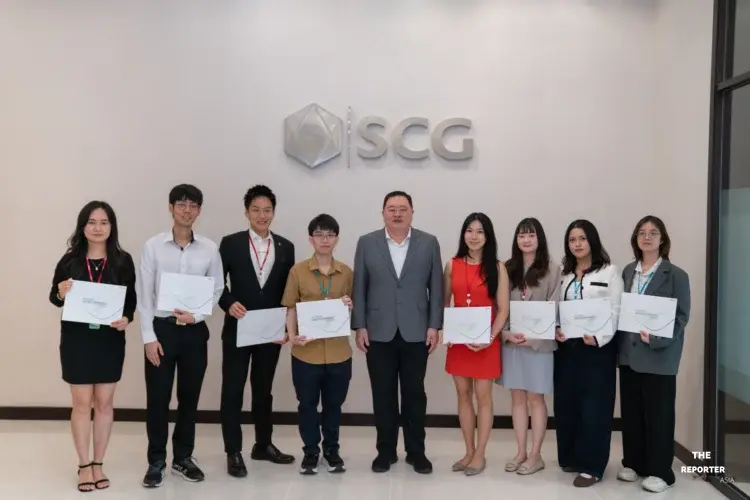
Behind the corporate walls of Thailand’s premier industrial giant, an aggressive cross-border talent initiative is quietly rewriting the rules of regional commerce, swapping legacy cement mixers for neural networks, clean technology ecosystems, and high-velocity international partnerships.
Bridging Two Titan Economies Through High-Impact Human Capital
The tectonic shifts rattling the modern global economy have permanently altered the trade dynamics between Southeast Asia and China. What once functioned primarily as a straightforward supply-chain corridor for primary goods and raw industrial components is evolving into a high-stakes arena defined by deep technology, artificial intelligence, and green energy innovation. Capital expenditures and advanced infrastructure are vital components in this race, yet leading industrial conglomerates are discovering that sophisticated technology alone cannot secure market leadership across borders. The true catalyst of regional dominance lies in cultivating elite, bicultural talent capable of translating cutting-edge capabilities across distinctly different corporate environments.
Within this demanding landscape, SCG has scaled its flagship China Excellent Internship Program (CEIP), transforming the initiative into an elite innovation incubator. The program convenes exceptional students from top-tier global institutions, including the China Europe International Business School (CEIBS), Tsinghua University, Zhejiang University, Harbin Engineering University, Wuhan University, and prestigious Thai institutions like Thammasat University. Far from a ceremonial exchange, this high-caliber cohort is directly integrated into strategic business units. Their mission is clear: break operational silos, bridge cross-border execution gaps, and spearhead the conglomerate’s expansion into fast-growing Asian markets.
This dynamic talent bridge addresses an urgent strategic imperative for both Thailand and China. As Chinese enterprises expand aggressively across ASEAN and regional powerhouses seek next-generation technological partnerships in mainland China, navigating complex market conditions requires more than pure commercial logic. It demands professionals who understand local regulatory friction, rapid go-to-market methodologies, and deep technical integration. By assembling top academic minds across engineering, business analytics, and international trade, SCG is building an agile human infrastructure designed to accelerate its regional transformation.
Dismantling Legacy Perceptions to Fuel the New S-Curve
For decades, the public identity of SCG was inextricably linked to traditional foundational industries: heavy building materials, cement, basic chemicals, and packaging. For top international graduates, walking into the enterprise frequently comes with standard corporate preconceptions. However, once inside the corporate campus, these dated perceptions quickly dissolve, replaced by the reality of an agile organization heavily committed to software platforms, autonomous systems, and advanced environmental engineering.
Haocheng Xu, an MBA candidate from the China Europe International Business School (CEIBS) working within the Corporate Innovation Office, experienced this shift firsthand while sourcing strategic market partnerships. “Before arriving, I assumed SCG was primarily a traditional player focused on base chemicals and cement manufacturing,” Xu reflected when evaluating the conglomerate’s commercial trajectory.
“Once integrated into the Corporate Innovation Office, I saw that the company is aggressively pursuing frontier opportunities across artificial intelligence, electric vehicle batteries, and clean energy, backed by a serious strategic commitment to the Chinese market.”
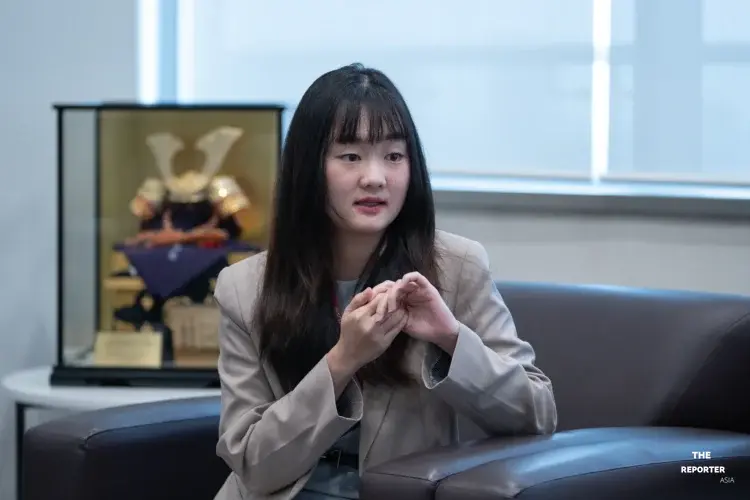
Beyond the breadth of its technical portfolio, the group’s internal mobility structure has fundamentally challenged the expectations of Gen Z professionals, who often view long-term corporate tenure with skepticism. Romanee Luo, an International Business Master’s candidate from Shanghai Jiao Tong University working in business development at ONEX, uncovered why professionals maintain decades-long careers at the company.
“Coming from our generation, it was hard to fathom why anyone would stay at a single company until retirement,” Luo observed. “After experiencing the environment, I realized that SCG continuously rotates talent into New S-Curve ventures and encourages constant reskilling, ensuring that people never hit a ceiling in their personal and professional growth.”
Real-World Deep-Tech Deployment Beats Classroom Theoretical Models
The true architectural distinction of the CEIP model is its complete rejection of passive, observational learning in favor of high-stakes project ownership. Interns are placed directly into operational trenches alongside core engineering and business units. Rather than running simulated exercises, they build proprietary enterprise software, deploy Computer Vision algorithms on active packaging assembly lines, evaluate advanced energy matrices, and negotiate business expansion strategies with mainland partners.
In the software and artificial intelligence division, Patthamon Charaschimpleekul from Harbin Engineering University took on the development of specialized Agentic AI frameworks within SCGC. Her hands-on testing revealed profound operational differences between global technology stacks. “Working hands-on with enterprise AI models highlights the distinct technical philosophies of different tech hubs,” Talapchotebun noted during systems evaluation.
“Chinese models demonstrate remarkable power in raw computation and mathematical efficiency, whereas Western models excel at unstructured data synthesis, holistic contextual understanding, and deep search queries.”
This hands-on dynamic was equally evident in physical operations, where Hejun Zhang, an electrical engineering student from Thammasat University, deployed Computer Vision models inside SCG Packaging’s industrial manufacturing facilities. The complex integration of code, sensory hardware, and production-line mechanics proved that real industrial value cannot be generated from textbooks alone. The real-time optimization of machinery demanded immediate, cross-disciplinary problem-solving, teaching young engineers how to bridge software algorithms with industrial mechanical operations under live factory conditions.
Synthesizing Cross-Cultural Velocity with Precision Engineering Standards
Operating across the Sino-Thai economic corridor requires balancing two contrasting business methodologies: the lightning speed of mainland tech hubs and the rigorous meticulousness of Thai corporate governance. Navigating this operational divide is essential for cross-border deal-making and regional joint ventures. The CEIP initiative serves as an active training ground where young executives master this balance, ensuring international initiatives move quickly without compromising structural stability.
Pimchanok Kallyanapradit, a Wuhan University graduate handling international commercial sales and business development at SCGC, experienced this dynamic directly while coordinating cross-border client accounts. “Mainland partners prioritize timing, market momentum, and rapid execution cycles above all else,” Kallyanapradit explained regarding multi-market deal flows.
“Conversely, Thai corporate culture emphasizes meticulous preparation, comprehensive risk management, and structural precision. Working directly in the middle forces you to synthesize both strengths, delivering high-velocity market entry without sacrificing quality standards.”
This synthesis extends from daily commercial negotiations into regional mergers, acquisitions, and technology licensing agreements. International business scholars discover that analytical models often fail when applied in cross-cultural negotiations without an understanding of human and institutional interests. By experiencing these complex trade interactions directly, young professionals learn to look beyond simple balance sheets, building the cultural agility required to navigate international business diplomacy.
Redefining Career Capital, Global Compensation, and Market Value
The economic discourse surrounding international business education is shifting, as the traditional prestige of Western degrees faces new market realities across Asia. Within elite academic circles in Beijing, Shanghai, and Bangkok, students are evaluating career trajectories through a broader lens of long-term capability and real-world market relevance. Academic credentials from elite institutions serve as proof of learning agility, but enduring commercial success is driven by hands-on execution and specialized domain expertise.
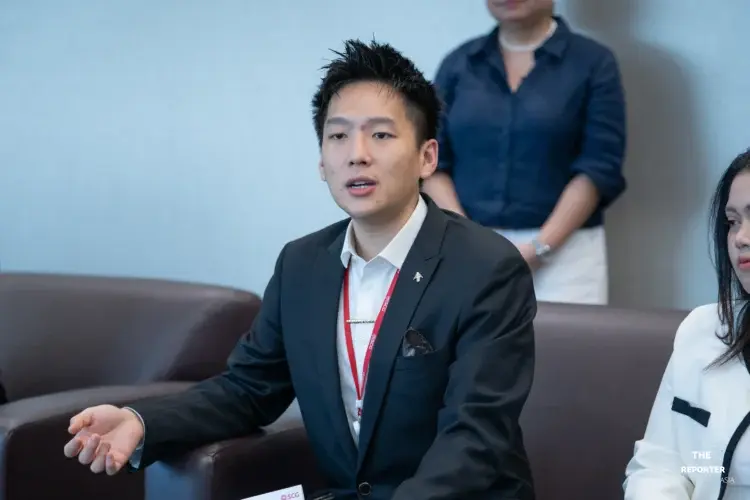
Haocheng Xu, who previously completed engineering studies in Germany at the Technical University of Munich before entering the CEIBS MBA program, highlighted this evolving perspective on global careers. “A degree from a prestigious university merely certifies your baseline capacity to acquire new knowledge,” Xu explained regarding career longevity.
“In real-world business, your value is determined entirely by tangible capabilities, domain expertise that others lack, and your ability to navigate the complex human dimensions of corporate partnerships.”
Furthermore, young professionals are adopting a more sophisticated equation for compensation, looking beyond nominal starting salaries to factor in living expenses, tax structures, career mobility, and overall job satisfaction. The rapid technological expansion of Asian markets has turned the region into a dynamic proving ground for high-impact careers. Gaining cross-border experience inside a modernizing multinational creates distinct career capital that traditional corporate paths cannot replicate.
Institutionalizing Innovation Through Strategic Human Infrastructure
The China Excellent Internship Program highlights a clear corporate reality: modern industrial competitiveness is built on continuous internal transformation and strategic talent acquisition. By replacing rigid organizational hierarchies with an open environment where young innovators can test ideas and challenge assumptions, SCG is positioning itself as a modern regional enterprise. The organization has built a system where emerging talents work side-by-side with senior leaders, transforming industrial operations from within.
A software engineering researcher from Zhejiang University working within digital development at SCGC captured the impact of this environment on the technical teams. “The defining strength of this organization is its open, empowering culture, which gives young professionals the autonomy to experiment, fail safely, and work directly with live enterprise technologies,” they noted regarding the internal atmosphere. This supportive framework gives early-career specialists the confidence to translate advanced computer science concepts into scalable business solutions.
As economic competition intensifies across Southeast Asia and China, sustainable growth will belong to organizations that unite elite human capital with technological innovation and cross-cultural execution. Initiatives like CEIP provide the blueprint for this regional future. By integrating cross-border talent directly into deep-tech ventures, advanced logistics, and sustainable materials, SCG is building the workforce needed to lead the next era of Asian industrial commerce.
#SCG, #ChinaInternship, #DeepTech, #TalentStrategy, #RegionalEconomy, #Innovation, #BusinessTransformation, #AI, #CrossBorderTrade, #ASEANBusiness, #IndustrialTech, #FutureOfWork