
A powerful coalition of public and private sector leaders, spearheaded by SCG, is intensifying its efforts to equip Thai Small and Medium-sized Enterprises (SMEs) for the global shift towards a green economy. Following a highly successful inaugural year, the launch of the Net Zero Accelerator Program 2026 (NZAP 2026) and Go Together Season 2 promises a more robust framework to enhance SME competitiveness and ensure their sustainable growth in an increasingly challenging market.
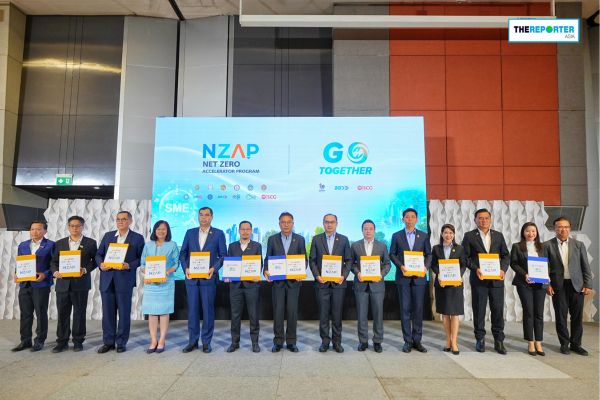
BANGKOK, Thailand – In a significant move to fortify the backbone of the Thai economy, SCG, in collaboration with government agencies, private sector partners, and an expanding network of allies, today announced the continuation and enhancement of two pivotal initiatives: the Net Zero Accelerator Program 2026 (NZAP 2026) and the Go Together project, Season 2. This strategic push aims to provide Thai entrepreneurs, particularly SMEs, with the critical tools, knowledge, and support needed to navigate global economic pressures and transition towards a low-carbon business model.
The announcement comes on the heels of a remarkably successful first phase, which saw more than 1,400 entrepreneurs from across the nation participate, far exceeding initial expectations. This overwhelming response is seen as a clear indicator of the readiness and willingness of Thai SMEs to embrace sustainable practices and contribute to a greener future. Building on this momentum, the renewed programs are designed to be more intensive, inclusive, and impactful, directly addressing the evolving needs of the business community under the guiding principle of “Inclusive Green Growth.”.
The Imperative for Transformation: Survival in a New Economic Era
SMEs are the lifeblood of the Thai economy, contributing over 35% of the nation’s GDP and employing more than 70% of the country’s workforce. However, this vital sector is currently at a critical juncture, facing a confluence of unprecedented challenges. These include rising operational costs, fierce market competition, the rapid pace of technological disruption, and, most pressingly, mounting pressure from global environmental standards and consumer expectations.
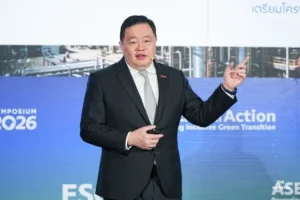
Dr. Chana Poomee, Assistant Vice President for Sustainability Management at SCG, articulated the gravity of the situation, stating, “SMEs are the heart of the Thai economy….. Yet, today they face multifaceted challenges, from high costs and intense competition to rapid technological changes and pressure from global environmental standards. Therefore, adaptation is no longer a choice, but the only path to survival for businesses.”.
This sentiment underscores the strategic importance of the NZAP and Go Together initiatives. They are not merely corporate social responsibility projects but essential mechanisms for future-proofing a sector that is indispensable to Thailand’s economic stability and prosperity. The successful transition to a low-carbon model is positioned as a direct pathway to enhanced competitiveness, opening up new markets and opportunities for businesses that can demonstrate their commitment to sustainability.
Building on Success: A More Intensive and Collaborative Second Phase
The remarkable outcomes of NZAP 2025 and the first season of Go Together have provided a strong foundation for the next phase. The initial programs successfully fostered a robust collaborative network and translated sustainability knowledge into practical, on-the-ground greenhouse gas reductions.
“The success of the first phase, with over 1,400 participants nationwide, reflects the readiness of SMEs to transition concretely to a low-carbon business model,” Dr. Poomee remarked. “Based on these clear results, we are moving forward in 2026 with a more intensive curriculum and the involvement of an even more diverse range of partners to expand opportunities and enhance the competitive capabilities of Thai SMEs for sustainable growth.”.
To meet the growing demand and deliver deeper value, the second phase of these programs has been significantly upgraded:
- Net Zero Accelerator Program 2026 (NZAP 2026): The core training curriculum has been extended from an 8-week to a more comprehensive 12-week program. This allows for a deeper exploration of complex topics such as carbon accounting, life cycle assessment, green technology implementation, and navigating sustainable finance.
- Go Together Season 2: This project will intensify its focus on practical application and empowerment. Participants will benefit from
real-world site visits to leading green industries, receive personalized consultations from subject-matter experts, and gain crucial access to cutting-edge technology and vital funding sources.
A key development in this second phase is the formal inclusion of new, high-impact government partners, including the
Department of Industrial Promotion (DIPROM) and the Office of Small and Medium Enterprises Promotion (OSMEP). Their involvement signals a stronger alignment of the program with national industrial policy and SME development strategies, promising more streamlined support for participating businesses.
A Unified Front: Government and Private Sector Synergy
The success of this national green transition hinges on the power of collaboration. Government agencies have been actively shaping policies and support measures to facilitate this shift for SMEs.
Ms.Natthiya Netayasubha, Director-General of the Department of Industrial Promotion (DIPROM), emphasized the department’s commitment to this cause. “DIPROM is advancing our ‘DIPROM Community: A Place of Giving’ policy through the ‘4 Gives, 1 Reform’ framework. We are encouraging entrepreneurs to adopt the Bio-Circular-Green (BCG) economy model to improve production processes and environmental management in line with Green Industry standards,” she stated. “This effort aims to transition Thai industry towards the new era of Industry 5.0, consistent with the policy of ‘Industrial Reform for a Modern, Clean, Convenient, and Transparent Economy.’”.
Concurrently, SCG is leveraging its industrial expertise and network to drive this change through a clear, three-pronged support strategy within the NZAP and Go Together frameworks:
- Empowerment through Technology: This involves the practical application of Artificial Intelligence (AI) and digital technologies to optimize efficiency and reduce waste. A key focus is also on upskilling the workforce to handle more complex, high-value tasks essential for the green economy of the future.
- Driving Alternative Energy Adoption: SCG is actively promoting the use of alternative energy sources within the business sector. This strategy offers a dual benefit: significantly reducing energy costs for SMEs while making a tangible impact on decarbonization efforts.
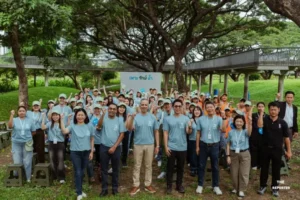
- Fostering Multi-Sectoral Participation: Believing that collaboration is the ultimate key to success, SCG is championing cooperative models. A prime example is the Saraburi Sandbox, a pioneering project that brought together government, private industry, and civil society to create a real-world testing ground for alternative energy and low-carbon technologies. The lessons learned from this successful model are now being scaled up for national implementation to drive the green economy forward.
As Thailand stands at a pivotal economic and environmental crossroads, this fortified alliance represents a proactive and decisive step forward. It is a commitment to ensuring that the nation’s economic engine—its SMEs—are not left behind, but are instead empowered to lead the charge towards a prosperous, competitive, and sustainable future.
Dr. Chana Poomee concluded with a call to action: “I believe that if all sectors collaborate and take serious action, we can overcome these challenges and collectively drive Thai SMEs toward strong, sustainable growth for the country’s future.”.
#ThaiSMEs #GreenEconomy #Sustainability #NetZero #SCG #GoTogether #NZAP #BusinessTransformation #InclusiveGreenGrowth #Thailand #DIPROM