

The global travel landscape experienced a seismic shift this week as the Market Hub Asia 2026 officially kicked off on the sun-drenched shores of Bali, Indonesia. This is not just another industry gathering; it is a high-stakes summit where the world’s most influential travel leaders have converged to dismantle the barriers of the past. Under the evocative theme “Unlocked,” the event serves as a clarion call for a new era of exploration, one where traditional boundaries are replaced by seamless, tech-driven experiences. The energy within the venue is palpable, as executives move beyond mere networking to engage in a radical reimagining of how we move across the globe in an age defined by rapid digital transformation.
Renowned moderator Asha Sumputh set the tone from the very first minute, challenging the audience to view Market Hub as a crucible for action rather than a place for passive observation. She highlighted a critical shift in traveler expectations, noting that the modern voyager no longer seeks cookie-cutter solutions but demands a journey that mirrors their personal values and digital lifestyle. This opening gambit effectively stripped away any lingering complacency, forcing attendees to confront the reality that the industry is at a point of no return. The “Unlocked” theme is thus a strategic mandate: adapt to the high-velocity changes of 2026 or risk becoming a footnote in the history of global commerce.
The sheer scale of innovation on display is exemplified by the seamless integration of Agentic AI throughout the event itself. Attendees are experiencing a world without language barriers, thanks to real-time, high-fidelity translation services powered by advanced AI algorithms integrated into the event application. This isn’t just a gimmick; it is a live demonstration of how technology can foster deeper human connections across diverse cultures. By facilitating intense, data-driven dialogues from the outset, Market Hub Asia 2026 is proving that the future of travel is not just about the destination, but about the sophisticated digital infrastructure that makes the journey possible.
The $11.7 Trillion Treasure: Why Global Tourism Is the Ultimate Economic Engine
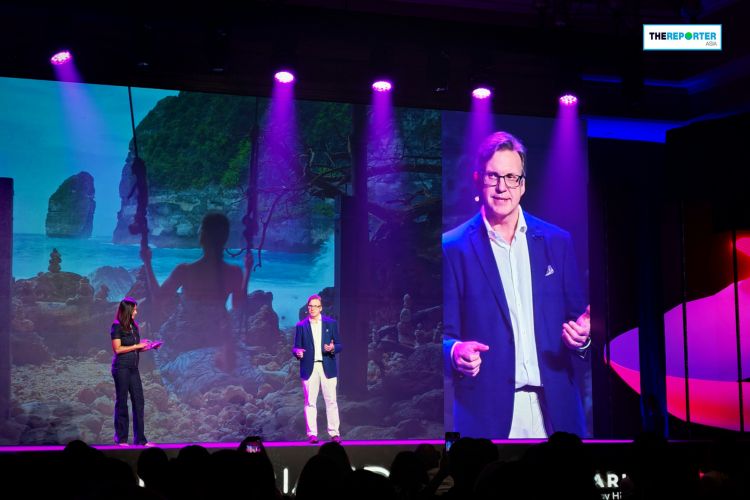
At the heart of the opening day’s revelations was a staggering economic disclosure by Brandon Brennan, Chief Finance Officer of HBX Group. The data revealed that the global tourism industry reached a colossal valuation of $11.7 trillion in 2025, representing a formidable 10% of the Global GDP. This figure underscores the industry’s role as a macro-economic titan, capable of influencing national policies and global trade balances alike. Despite the geopolitical headwinds and economic fluctuations that defined the past year, the sector demonstrated an incredible resilience, posting a 6.7% year-on-year growth rate that has silenced many skeptics.
The Asia-Pacific (APAC) region has emerged as the undisputed “Powerhouse” of this global expansion, leading the charge in both volume and innovation. Brennan emphasized that the world is no longer just looking at Asia as a destination, but as a pioneer that sets the gold standard for travel technology. For international partners, this represents a golden opportunity: the APAC market is more receptive to cutting-edge digital solutions than any other region. This trend aligns perfectly with global standards of efficiency, but with a localized agility that allows for faster deployment of new business models, making it the ideal laboratory for foreign investors and tech firms looking to scale.
What makes these figures even more compelling is the inherent elasticity of travel demand. Even when faced with rising operational costs and complex international regulations, the human desire to explore remains a constant that defies traditional economic cooling. The data presented at the summit acts as a strategic compass for entrepreneurs, pointing toward a future where the “Travel Treasure” is accessible to those who can master the art of data utilization. For businesses in regions like Thailand, this global surge is a signal to align local offerings with international expectations, ensuring they capture their share of this multi-trillion dollar pie through strategic cross-border partnerships.
The Bali Blueprint: A Masterclass in Becoming a Global Magnet
Bali’s success story was center stage as a primary case study, revealing that the island welcomed a staggering 7 million international tourists last year. A particularly eye-opening statistic showed that in July alone, the island hosted 700,000 visitors, marking an 11% increase compared to the previous year. This performance elevates Bali from a regional favorite to a Global Destination of the highest caliber. The island has managed to maintain its allure by balancing its rich cultural heritage with the logistical demands of a modern tourism hub, providing a blueprint that other Southeast Asian nations are eager to emulate.
“Bali has proven it is not just a regional player but a global magnet. With over 7 million international visitors and consistent 11% growth, this is a golden opportunity to unlock the potential of the Indonesian market and the wider APAC region.” — Brandon Brennan, CFO, HBX Group
The impact of Bali on Indonesia’s overall economic health cannot be overstated, as the island accounts for approximately 50% of the country’s total international arrivals, which topped 14 million last year. This concentration of success highlights the importance of “hero destinations” in driving national tourism agendas. For international stakeholders, Bali represents more than just a site for leisure; it is a high-traffic gateway for networking and brand exposure. The vibrancy of the local industry provides a fertile ground for creating professional ecosystems that bridge the gap between local hospitality and global service standards.
Beyond the raw data, the summit explored the unique management philosophy that has sustained Bali for centuries. Historically, the island organized its society not by physical borders, but by the flow of “Subak” or water management systems—the most precious resource. This ancient wisdom is now being integrated with 21st-century sustainability goals, creating a unique value proposition. This fusion of tradition and modernity is exactly what the global market is demanding, offering a significant lesson for foreign partners: success in the modern era requires a deep respect for local context combined with the efficiency of global technological standards.
Solving the Tech Crisis: How Agentic AI Will Heal a Fragmented Industry
A sobering reality check was delivered regarding the industry’s greatest internal threat: Technology Fragmentation. Research shared at the summit indicated that 28% of travel professionals identify fragmented systems as the primary barrier to operational efficiency. This “digital clutter” results in disjointed data, higher overhead costs, and a frustrating experience for the end-user. The industry is currently a patchwork of legacy systems and modern apps that often refuse to speak the same language, creating a bottleneck that prevents the “Unlocked” vision from being fully realized in the immediate term.
The proposed solution to this crisis is the rapid adoption of Agentic AI. Unlike standard AI that simply answers questions, Agentic AI acts as a proactive coordinator that can navigate complex systems to deliver a Seamless Integration. Experts at the Market Hub predict that by 2027, we will witness a total transformation where AI agents handle the “heavy lifting” of logistics, from inventory management to real-time pricing adjustments across multiple platforms. This shift is not just about convenience; it is a fundamental restructuring of the travel business model intended to eliminate the delays and redundancies that currently plague the sector.
However, the move toward total automation comes with a caveat: the “Human Touch” must remain the industry’s North Star. Brandon Brennan pointed out that while AI can optimize a schedule, it cannot replicate the genuine warmth of human hospitality that makes a trip memorable. The challenge for today’s leaders—and a warning for those entering the market—is to use AI to handle the mundane tasks so that human staff can focus on high-value, emotional interactions. This balance is where the next generation of travel leaders will be forged, requiring a regulatory environment that encourages innovation while protecting the labor standards and personal data of both workers and travelers.
The Personalization Paradox: Why 60% of Gen Z Feel “Invisible”
Perhaps the most provocative data point emerged from the Industry Trends 2026 report, which highlighted a massive gap in Personalization. Despite the wealth of data available, 60% of Gen Z travelers report that their travel experiences do not feel tailored to their specific needs. Even in mature markets like the United Kingdom, nearly 45% of travelers expressed dissatisfaction with the lack of bespoke service. This “Personalization Gap” represents a significant failure of current marketing strategies, which still rely heavily on broad demographics rather than individual behavior and real-time preferences.
This dissatisfaction among younger cohorts is not just a challenge; it is an immense business opportunity. Gen Z and Millennials are the primary drivers of the “experience economy,” and they are willing to pay a premium for brands that truly “see” them. For travel companies, the mandate is clear: move beyond generic packages and use AI-driven insights to create hyper-personalized itineraries. Every touchpoint, from the initial search to the post-trip feedback, must reflect a deep understanding of the individual’s identity. Companies that fail to close this gap will find themselves increasingly irrelevant in a market dominated by digital natives.
Ultimately, the shift toward personalization is the new global standard for the industry. Participants at Market Hub Asia 2026 were urged to “move the dial” immediately by applying these insights to their current operations. The goal is to move from a transaction-based model to a relationship-based model. By focusing on the values and meanings that Gen Z seeks—such as sustainability, authenticity, and digital fluidity—businesses can unlock a level of loyalty that was previously thought impossible. The “Unlocked” era is here, and it belongs to those who can combine the precision of a machine with the heart of a human.
#MarketHubAsia2026 #HBXGroup #TravelUnlocked #Bali2026 #TourismEconomy #AIinTravel #GenZTravel #GlobalTravelTrends #DataInsights #TravelPowerhouse