
Bangkok leads a revolutionary shift toward urban sustainability as SCG Chemicals (SCGC) deploys advanced recycling innovations to establish a closed-loop economy for plastic waste.
The collaboration between the public sector and private enterprises marks a vital turning point in urban environmental management, demonstrating how advanced technologies can convert municipal plastic waste into high-value resources. SCG Chemicals, widely recognized as SCGC, a regional leader in polymer innovations, has officially collaborated with the Bangkok Metropolitan Administration (BMA) to introduce a closed-loop system for plastic waste. By utilizing cutting-edge advanced recycling systems, this initiative aims to successfully mitigate urban waste challenges while promoting zero-waste principles across the capital.
Through this joint sustainability framework, SCGC has successfully manufactured and delivered a total of 10,500 high-quality, food-grade recycled food containers directly to the BMA. These modern packaging units are structurally indistinguishable from those made from virgin plastic resins, ensuring absolute safety, cleanliness, and non-toxic properties for direct food contact. The delivery emphasizes the practical implementation of circular economy models within high-density urban landscapes, showing that municipal plastic waste can be collected, processed, and reintroduced into the economic value chain safely.
This environmental milestone serves as an operational model for future megacity waste mitigation strategies, demonstrating how corporate technology and public policy align. The specialized food containers are scheduled to be deployed immediately for public service operations within Bangkok. Specifically, the BMA will utilize these eco-friendly containers to package royal-provided meals distributed to citizens paying their respects to Her Majesty Queen Sirikit The Queen Mother at the Dusit Maha Prasat Throne Hall.
Advanced Recycling Technology Driving Circular Economy
The technical foundation of this sustainability initiative relies on SCGC’s proprietary Advanced Recycling Technology, a chemical recycling methodology that breaks down hard-to-recycle post-consumer plastics. Unlike conventional mechanical recycling, which can degrade plastic properties over multiple cycles, this advanced technology alters the chemical structure of collected plastic waste. The process converts used food containers collected from various city-wide events into an ultra-pure chemical feedstock known as Circular Naphtha.
This Circular Naphtha serves as a direct substitute for fossil-based raw materials within traditional petrochemical production facilities. By channeling this circular feedstock through conventional manufacturing pipelines, SCGC produces high-quality Certified Circular Polyolefin resins. These specialized polymer resins are managed under the comprehensive SCGC GREEN POLYMER initiative, which focuses on developing eco-friendly packaging materials.
The resulting Certified Circular Polyolefin resins retain physical and chemical characteristics equivalent to virgin plastics. They comply with international health standards, making them fully safe for manufacturing direct-contact food packaging. This technological breakthrough ensures that urban plastic waste can be continuously recycled without losing quality, removing historical barriers to food-safe recycled plastic usage.
Public-Private Synergy for Urban Sustainability
The successful execution of this closed-loop model relies on the operational partnership established between SCGC and the Bangkok Metropolitan Administration. Both organizations collaborated to establish specialized source-separation and collection networks across multiple community events throughout Bangkok. By sorting post-consumer plastics at the source, the project secures clean, high-grade plastic waste streams necessary for advanced chemical processing.
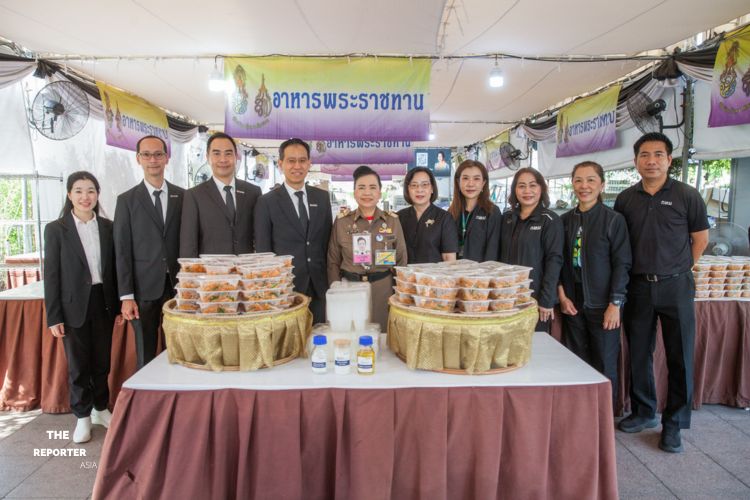
The official handover ceremony was led by Mr. Chartree Iamsophon, Chief Commercial Officer of SCG Chemicals (SCGC), who presented the recycled containers to top BMA officials. The presentation was received by Mr. Chadchart Sittipunt, Governor of Bangkok, alongside Mr. Sanon Wangsrangboon, Deputy Governor, and Mr. Pornphrom Vikitsreth, Adviser to the Governor. This high-level participation underscores the strategic importance that municipal leaders place on green industrial innovations.
Following the official receipt, the eco-friendly containers were allocated to the Social Development Department and the Royal Kitchen. The logistical distribution was managed through Ms. Orathai Sakunee, Deputy Director of the Office of Royal Household Supply Division under the Bureau of the Royal Household. This coordinated distribution network ensures that environmental innovations directly support significant civic and cultural functions.
Economic Impacts and Green Urban Development
From an economic perspective, this closed-loop system offers structural benefits by reducing city financial allocations for landfill management and traditional waste disposal. Transforming post-consumer plastic from a costly waste liability into a valuable manufacturing feedstock helps lower municipal carbon management costs. This practical economic model demonstrates how megacities can reduce environmental impacts while maintaining industrial and commercial productivity.
The project supports Bangkok’s green transition policies, which prioritize waste separation at the source and long-term landfill reduction. Integrating advanced recycling methodologies into municipal frameworks allows the BMA to accelerate its transition toward becoming a low-carbon city. This operational alignment matches SCGC’s long-term “Low Waste, Low Carbon” corporate strategy, which focuses on decoupling economic growth from resource consumption.
Additionally, this initiative builds on prior collaborative waste reduction milestones achieved by both organizations. SCGC previously utilized mechanical recycling technologies to process urban plastic waste into 150 durable, eco-friendly public chairs. Delivered earlier this year, those recycled public chairs continue to support various public activities throughout Bangkok, showing how diverse recycling methods can address different municipal needs.
#SCGC, #BangkokMetropolitanAdministration, #AdvancedRecycling, #CircularEconomy, #SCGCGreenPolymer, #Sustainability, #LowCarbonCity, #RecycledPackaging, #PlasticWasteManagement, #GreenInnovation