
In an era where environmental sustainability is no longer an option but a prerequisite for industrial survival, SCG Chemicals (SCGC) has once again demonstrated its leadership in the green economy. By aligning its corporate DNA with the national agenda, the company recently reinforced its strategic partnership with the Ministry of Natural Resources and Environment (MNRE) to champion “Nature Positive” mangrove restoration. This collaboration marks a significant milestone in Thailand’s journey toward carbon neutrality and ecological resilience, positioning the private sector as a primary engine for environmental regeneration.
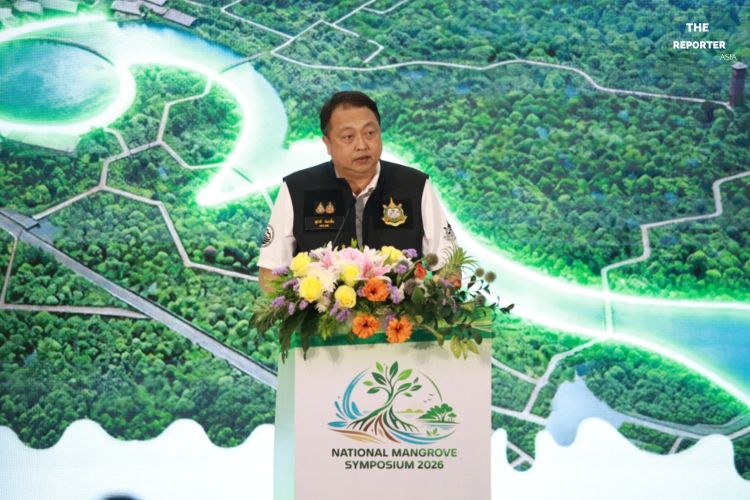
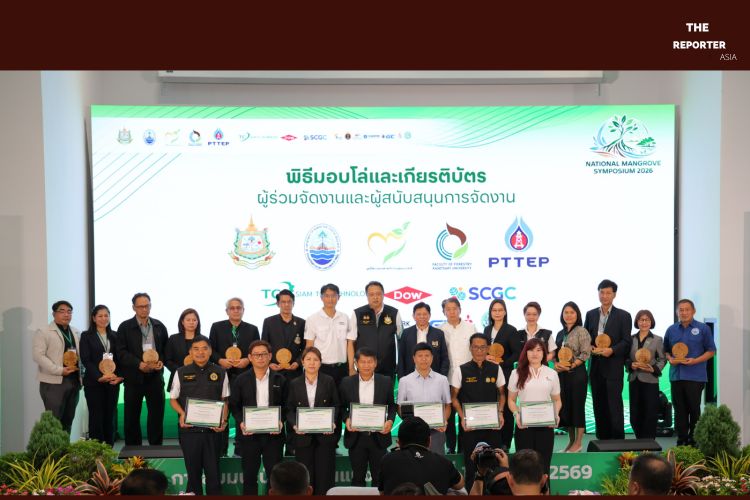
The initiative took center stage at the 16th National Mangrove Seminar and National Mangrove Forest Day 2026, held at the prestigious King Rama IX International Mangrove Botanical Garden in Chanthaburi province. Presided over by the Minister of Natural Resources and Environment, Suchart Chomklin, the event served as a high-level forum for policymakers, provincial leaders, and environmental experts. The gathering was not merely ceremonial; it represented a unified front against the escalating threats of climate change and coastal erosion that jeopardize Thailand’s maritime economic stability.
Under the framework of this partnership, SCGC has committed to a multifaceted approach that goes beyond traditional reforestation. By integrating its Environmental, Social, and Governance (ESG) strategy with the Department of Marine and Coastal Resources (DMCR) management plans, SCGC is actively reshaping how industrial players interact with the biosphere. This transition from “minimizing harm” to “creating a net positive impact” reflects a sophisticated understanding of the modern economic landscape, where biodiversity is increasingly viewed as a vital asset for sustainable development.
The Economic Imperative of Sustainable Mangrove Management
The scale of SCGC’s commitment is reflected in its expansive restoration footprint, which has covered more than 1,100 rai across the strategic coastal provinces of Rayong, Chonburi, and Phetchaburi since 2022. These regions are not only ecological hotspots but also critical hubs for Thailand’s industrial and tourism sectors. By restoring these mangrove ecosystems, SCGC is effectively building a “natural wall” that protects coastal infrastructure from storm surges while simultaneously enhancing the livelihoods of local fishing communities who depend on these nurseries for aquatic life.
Furthermore, the collaboration with the Marine and Coastal Resources Office 1 has yielded tangible results in Rayong province, with over 480 rai of forest successfully restored between 2017 and 2025. This long-term dedication underscores the shift toward a “Nature Positive” business model, where the success of a corporation is measured by the health of the environment it operates within. From an economic perspective, these restored forests serve as high-capacity carbon sinks, offering a cost-effective mechanism for offsetting industrial emissions while preserving the nation’s natural capital.
The synergy between SCGC and the MNRE highlights the importance of public-private partnerships in achieving large-scale environmental goals. Minister Suchart Chomklin emphasized during the event that the protection of Thailand’s coastal ecosystems requires the combined expertise and resources of both the government and the private sector. By leveraging SCGC’s technical capabilities and the DMCR’s regulatory oversight, the initiative creates a replicable model for sustainable land management that can be scaled across the ASEAN region, reinforcing Thailand’s position as a regional leader in green innovation.
Pioneering the Premium T-VER Carbon Credit Frontier
A groundbreaking highlight of SCGC’s environmental strategy is its recognition as the first private entity in Thailand to receive the Premium T-VER (Thailand Voluntary Emission Reduction) certification. Granted by the Thailand Greenhouse Gas Management Organization (TGO), this certification is a testament to the rigorous standards SCGC applies to its mangrove management and carbon sequestration initiatives. In the global carbon market, “Premium” status signifies high-integrity credits that ensure transparency, additionality, and long-term permanence, making them highly valuable for international trade and corporate sustainability reporting.
This certification serves as a powerful signal to the investment community that SCGC is future-proofing its operations against tightening carbon regulations. By quantifying the carbon absorbed by its 1,100 rai of mangroves, the company is effectively transforming ecological restoration into a verifiable financial asset. This move aligns perfectly with the global trend of “Blue Carbon” investments, where coastal ecosystems are prioritized for their superior carbon storage capacity compared to terrestrial forests. It also sets a benchmark for other Thai corporations to elevate their environmental standards to meet international expectations.
The technical rigor required for Premium T-VER certification involves sophisticated monitoring and evaluation protocols. SCGC’s success in this area demonstrates its ability to merge data-driven science with boots-on-the-ground environmental action. By securing these credits, the company not only mitigates its own carbon footprint but also contributes to the national goal of achieving net-zero emissions. This intersection of high-tech monitoring and natural restoration is precisely what defines the next generation of industrial sustainability, moving away from vague “greenwashing” toward measurable, audited outcomes.
Innovation in Marine Biodiversity and Circular Economy
Beyond the act of planting trees, SCGC is deploying a suite of advanced technological solutions to safeguard marine biodiversity and restore ecological balance. One of the most prominent initiatives is the “SCGC Fish Home” project, which utilizes recycled and innovative materials to create artificial habitats for aquatic species. These structures provide shelter and breeding grounds, directly boosting the local fish population and revitalizing the marine food chain. It is a prime example of how industrial engineering can be repurposed to support the natural world, turning potential waste into a catalyst for life.
Addressing the critical issue of marine debris, SCGC has collaborated with the DMCR to install 72 “SCGC-DMCR Litter Traps” across 19 coastal provinces. These devices are strategically placed at river mouths to intercept plastic waste before it enters the open ocean, protecting fragile mangrove roots and coral reefs from pollution. This proactive approach is complemented by the “Nets Up” project, a circular economy initiative that upcycles discarded fishing nets into high-quality marine materials. By creating a value chain for plastic waste, SCGC is reducing ocean pollution while providing an additional source of income for coastal communities.
These integrated projects reflect SCGC’s commitment to the circular economy—a system designed to eliminate waste and promote the continual use of resources. By addressing the lifecycle of plastics and the health of the oceans simultaneously, the company is tackling the root causes of marine degradation. This holistic strategy was echoed by Prof. Dr. Sanit Aksornkoae, President of the International Society for Mangrove Ecosystems (ISME), who delivered a keynote address at the event. He highlighted that true conservation requires a balance between human activity and nature, a principle that is clearly embedded in SCGC’s diverse environmental portfolio.
A Vision for the Future: Unity in Conservation
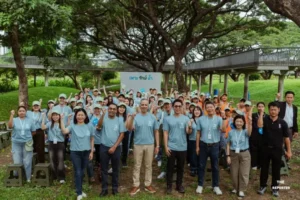
The 16th National Mangrove Seminar concluded with a powerful symbolic gesture: the collaborative planting of mangrove seedlings and the release of aquatic species into the wild. This act represented the culmination of years of partnership and a shared vision for a resilient coastline. The event underscored the fact that while technology and capital are essential, the success of “Nature Positive” initiatives ultimately depends on the collective will of various stakeholders—ranging from high-level government officials to local community volunteers and corporate leaders.
Prof. Dr. Sanit Aksornkoae provided a scientific foundation for these efforts during his address, noting the irreplaceable role of mangroves in the global climate system. He emphasized that these “blue forests” are critical for biodiversity and coastal protection, but they are also fragile and require consistent, science-based management to thrive. The collaboration between SCGC and the MNRE ensures that restoration efforts are not one-off events but part of a long-term, managed program designed to withstand the pressures of a changing climate and expanding industrial zones.
As SCGC moves forward, the focus remains on scaling these “Nature Positive” impacts and refining the technologies used in coastal restoration. The company’s journey from a traditional chemical producer to a champion of the blue economy provides a blueprint for how heavy industry can coexist with—and actively support—the natural environment. By investing in the health of Thailand’s mangroves, SCGC is not just fulfilling a corporate social responsibility; it is investing in the long-term stability and prosperity of the entire nation, ensuring that the bounty of the sea remains a legacy for generations to come.
“The protection of Thailand’s vital coastal ecosystems requires a unified front between the state and the private sector to achieve lasting sustainability.” — Suchart Chomklin, Minister of Natural Resources and Environment.
#SCGC #MNRE #NaturePositive #MangroveRestoration #ESG #SustainableBusiness #BlueCarbon #CircularEconomy #ThailandGreenGrowth #PremiumTVER