

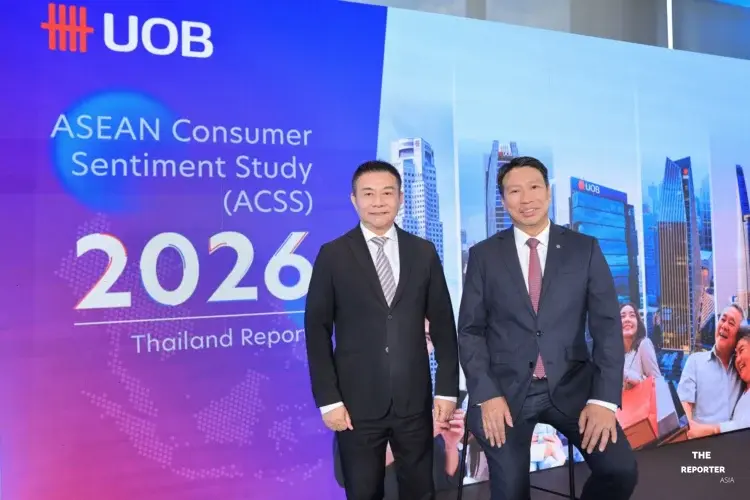
UOB Thailand has released its ASEAN Consumer Sentiment Study 2026 (ACSS 2026), revealing that Thai consumers view wealth as a combination of financial security, physical health, and meaningful life experiences. While 38 per cent of respondents associate wealth with good health and fitness spending among UOB customers aged 18–43 rose 21.5 per cent, the Tourism Authority of Thailand (TAT) highlighted the trend as a key opportunity to expand the country’s wellness tourism sector.
Redefining Wealth Around Health and Life Experiences
Conducted online in June 2026, the ACSS 2026 surveyed 5,000 consumers across five ASEAN markets—Thailand, Singapore, Indonesia, Malaysia, and Vietnam—including 1,000 Thai respondents aged 18–65. The study indicates that 41 per cent of Thai respondents associate wealth with being free from debt and financial worries, followed by 38 per cent who link it to good health and physical fitness, and 37 per cent who value access to meaningful experiences such as travel and dining.
Mr Yuttachai Teyarachakul, Managing Director and Head of Personal Financial Services at UOB Thailand, stated that when consumers think about wealth, they also consider their health, peace of mind, and the freedom to pursue what matters to them. He noted that financial planning must reflect these priorities, from caring for families today to preparing for future years, adding that understanding these goals enables UOB to help customers build a financial foundation tailored to their lives.
Younger Consumers Drive Preventive Health Spending
Customer transaction data from UOB Thailand covering savings, insurance, investment, digital banking, and credit card spending between July 2025 and June 2026 reinforces these survey insights. Spending on fitness and exercise among customers aged 18–43 increased by 21.5 per cent year-on-year, while outlays for sportswear and sporting equipment grew by 11.9 per cent.
Beyond physical exercise, consumer priorities around quality of life have expanded into preventive healthcare, healthy ageing, and mental well-being. Individuals are increasingly adopting practices to manage stress and improve work-life balance, ranging from workouts and meditation to physiotherapy and sound-based relaxation, creating opportunities for businesses to align products and services with health outcomes and value for money.
TAT Highlights Thailand’s US$42.7 Billion Wellness Economy
Mr Chuwit Sirivajjakul, Deputy Governor for Policy and Planning at the Tourism Authority of Thailand (TAT), noted that consumer focus on health, well-being, and meaningful experiences aligns directly with Thailand’s strategic positioning as a premier wellness tourism destination. Citing 2025 data from the Global Wellness Institute, he pointed out that Thailand ranks among the world’s 25 largest wellness economies, valued at more than US$42.7 billion.
Thailand’s wellness tourism sector alone expanded by 3.6 per cent in 2025 to reach US$14.5 billion. According to Mr Chuwit, TAT continues to promote high-quality wellness tourism to attract discerning travellers seeking restorative experiences, thereby generating sustainable economic benefits for domestic tourism operators and local communities.
Cross-Border Consumption and Sentiment Recovery
Alongside health priorities, the 37 per cent of Thai respondents who equate wealth with meaningful experiences demonstrated active international engagement, with 49 per cent travelling abroad over the preceding 12 months. Overall cross-border spending among respondents rose from 53 per cent in 2025 to 63 per cent in 2026, while online shopping from overseas merchants nearly doubled from 15 per cent to 29 per cent.
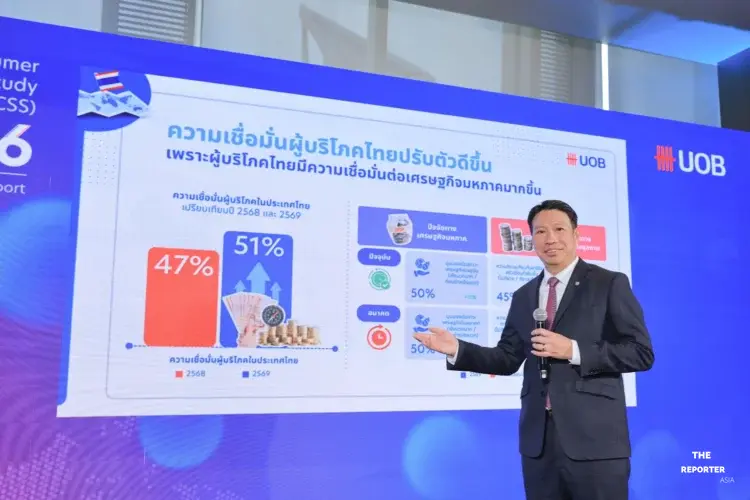
Overall Thai consumer sentiment improved compared to the previous year, supported by positive economic outlooks, recoveries in tourism and exports, and government stimulus measures, even as living costs, debt, and global economic uncertainty remained top concerns. Despite these pressures, financial discipline stayed resilient, with 76 per cent of respondents saving more than 10 per cent of their monthly income, 92 per cent holding emergency savings, and 58 per cent investing over 10 per cent of their annual income. Furthermore, 90 per cent reported knowing how much money they require for retirement, and roughly seven in ten have initiated estate or wealth transfer planning for the next generation.
AI Aids Financial Research While Human Advisers Retain Trust
The study also examined how Thai consumers adopt artificial intelligence (AI) in personal finance, finding that AI tools are primarily utilized to compare financial products, comprehend financial documentation, and assist with budgeting, saving, and investment planning.
However, when making major financial decisions, human expertise and established institutions continue to command higher confidence than automated tools. Exactly 78 per cent of respondents expressed trust in their primary bank, 73 per cent trusted family and friends, and 72 per cent relied on financial advisers. Mr Yuttachai explained that while easier access to information provides more options, selecting the right financial path requires evaluating personal goals, commitments, and risk appetite, positioning UOB to guide customers in balancing immediate lifestyle quality with long-term security.
#UOB #UOBThailand #ACSS2026 #WellnessTourism #PersonalFinance #AIFinance #ThailandEconomy #TheReporterAsia