

A comprehensive study by UOB Thailand reveals a strategic shift in business focus, with companies aggressively pursuing regional opportunities, digitalization, and sustainability to navigate escalating global trade disruptions and economic headwinds.
BANGKOK, Thailand – Thai businesses are demonstrating remarkable resilience and strategic foresight as they confront a challenging economic landscape marked by recent US tariff announcements and persistent supply chain disruptions. According to the newly released UOB Business Outlook Study 2025 (Thailand), a growing sense of caution is being met with decisive action, as companies pivot away from uncertainty in Western markets and anchor their growth strategies within the burgeoning ASEAN region.
The study, which incorporates fieldwork from January 2025 and a follow-up survey in April 2025 after the tariff announcements, paints a detailed picture of a business community in transition. The findings indicate that while confidence has taken a hit, businesses are proactively implementing measures focused on cost management, digital acceleration, and sustainable practices to build long-term resilience.
In a clear sign of the tariff’s impact, overall business sentiment among Thai enterprises dropped from 58 per cent in 2024 to 52 per cent following the April announcement, with small enterprises expressing the most significant pessimism. The primary drivers of this concern are rising operational costs, cited by 60 per cent of businesses, and the looming threat of higher inflation in Thailand, a worry for 57 per cent of respondents. The real estate and hospitality sectors have been identified as particularly vulnerable to these pressures.
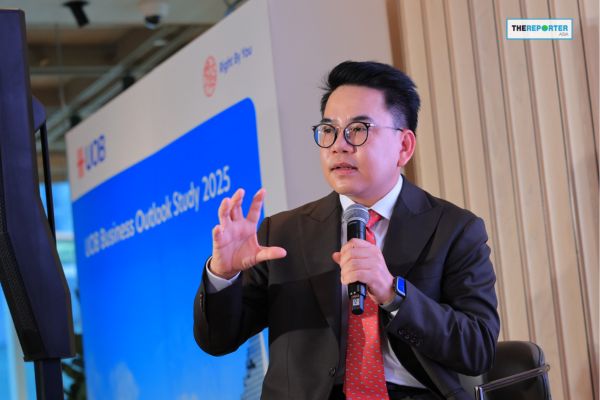
Highlighting the proactive stance of the Thai business community, Mrs. Vira-anong C. Phutrakul, Deputy CEO and Head of Wholesale Banking, UOB Thailand, commented on the findings. “The UOB Business Outlook Study 2025 (Thailand) underscores the resilience of Thai businesses as they adapt to global challenges,” she stated. “By pivoting to regional opportunities, embracing digital tools, and prioritising sustainability, businesses are charting a path to long-term growth. UOB is committed to supporting them with tailored financial solutions, local trade expertise, and our established network in the ASEAN region.”
Supply Chain Disruption Fuels Regional Focus
The most immediate and widespread consequence of the US tariffs has been the immense pressure on supply chains. The study reveals that an overwhelming 90 per cent of businesses expect to see more disruptions in their supply chain management, a direct fallout from the new trade policies. This is compounded by existing challenges, with 80 per cent anticipating further difficulties stemming from persistent inflation and high interest rates.
In response, Thai companies are fundamentally rethinking their supply chain strategies. The top strategy has shifted from diversification in 2024 to a more sophisticated approach in 2025. Now, four in 10 businesses are leveraging data analytics for faster and more informed decision-making, enabling them to anticipate bottlenecks and optimize logistics in real-time.
Crucially, this has triggered a significant strategic pivot towards regionalization. Companies are actively seeking and shifting to intra-ASEAN trade alternatives to stabilize their operations and reduce their exposure to trans-Pacific trade volatility. This move not only mitigates risk but also positions Thai businesses to capitalize on the dynamic growth within their own regional backyard. To facilitate this transition, businesses have identified tax incentives, better access to technology, and comprehensive workforce training as critical areas for support.
Digitalization and Sustainability: The New Pillars of Resilience
The current economic challenges have acted as a powerful catalyst for both digital transformation and sustainability adoption. The study found that 68 per cent of businesses expect to accelerate their digitalization adoption in the wake of the tariffs, with medium-sized enterprises leading this charge. Digital integration is no longer a luxury but a core component of business resilience. Nearly 40 per cent of businesses report having already fully integrated digital tools into their operations. The primary benefits cited include improved customer engagement, expanded market reach, and enhanced speed to market.
However, the path to full digitalization is not without its obstacles. Concerns around cybersecurity, the high cost of implementation, and the risk of data breaches remain significant hurdles for many. This has created a strong demand for specialized training programs and industry-specific analytics solutions to help businesses navigate these complexities securely and efficiently.
Similarly, sustainability has gained significant urgency. While over 90 per cent of businesses acknowledge the importance of sustainability, a gap between awareness and action persists, with only 53 per cent having implemented formal sustainability practices. The tariffs are set to close this gap, as more than 60 per cent of companies now anticipate accelerating their sustainability efforts. The push is driven not only by regulatory pressures and ethical considerations but also by the potential for operational efficiencies, such as the adoption of renewable energy, which is being explored by over 30 per cent of businesses. Key barriers remain, including infrastructure gaps, the high initial costs of green technology, and a perceived reluctance from customers to pay a premium for sustainable products.
ASEAN: The Unanimous Choice for Overseas Expansion
The pivot to regionalism is further confirmed by the expansion plans of Thai companies. Nearly 90 per cent of businesses are actively looking at overseas expansion, with over half expecting to fast-track these plans as a direct result of the post-tariff environment.
The destination of choice is overwhelmingly ASEAN. Malaysia, Singapore, and Vietnam stand out as the top three target markets for Thai businesses seeking to venture abroad. This is followed by interest in China and the broader North Asia region. The primary motivations for this expansion are clear: revenue growth and increased profitability. However, companies recognize challenges ahead, including navigating unfamiliar markets with limited local customer bases and knowledge gaps. Consequently, there is a high demand for market insights, dedicated financial support for cross-border ventures, and robust industry connections to ensure successful expansion.
Navigating Intensifying Workforce Challenges
The final piece of the puzzle highlighted by the UOB study is the human element. Half of all Thai businesses report facing significant workforce challenges, which have been amplified by the rise of AI and the evolving expectations of a younger generation of workers. Key issues revolve around compensation and the demand for greater workplace flexibility.
These challenges have a direct impact on the bottom line, with nearly 40 per cent of businesses struggling with talent retention. To combat this, companies are deploying a multi-pronged strategy that includes offering higher compensation, investing in digital transformation to improve the employee experience, implementing flexible work arrangements, and providing opportunities for growth through job rotations.
In conclusion, the UOB Business Outlook Study 2025 reveals a Thai business sector at a critical juncture. Faced with external pressures, companies are not retreating but are instead reorienting their strategies with a clear-eyed focus on regional strength, technological advancement, and sustainable growth. This proactive and resilient approach is set to define the next chapter of Thailand’s economic story.
#ThailandEconomy #BusinessOutlook2025 #UOBStudy #ASEANtrade #USEconomy #SupplyChain #DigitalTransformation #Sustainability #ThaiBusiness #EconomicNews #InvestmentThailand #EconomicResilience