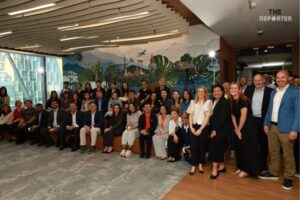


In a landmark collaboration, public, academic, and private sectors have united to launch “Routes to Roots,” a pioneering initiative using mobility data to champion cluster tourism. The project aims to revitalize Thailand’s vital tourism industry by transforming secondary cities into premier destinations, addressing post-pandemic recovery lags and intensifying global competition.
Bangkok, Thailand – Thailand is embarking on a strategic overhaul of its tourism sector, shifting focus from saturated primary destinations to high-potential secondary cities. A formidable alliance including the Ministry of Higher Education, Science, Research and Innovation (MHESI), the Program Management Unit for Competitiveness (PMU-C), the Office of National Higher Education Science Research and Innovation Policy Council (NXPO), Chulalongkorn University’s Social Design Lab, True Corporation, and Cloud-and-Ground, has unveiled a groundbreaking strategy to navigate the industry out of its current stagnation.
The initiative, themed “Routes to Roots,” leverages big data analytics to create new tourism “supply” through a cluster-based model. By analyzing vast datasets of mobile phone usage, the project identifies organic travel patterns, paving the way for the development of curated cultural routes designed to offer authentic, immersive experiences that reconnect visitors with Thailand’s rich heritage.
A Critical Juncture for Thai Tourism
Tourism has long been a cornerstone of the Thai economy. In the benchmark year of 2019, the Kingdom welcomed nearly 40 million international visitors, generating revenue that accounted for approximately 19% of the nation’s GDP and ranking it fourth globally in tourism receipts.
However, the global landscape has been irrevocably altered by the COVID-19 pandemic. While tourism is rebounding, Thailand’s recovery at 47% growth is being outpaced by regional competitors. Japan has seen a staggering 112% resurgence, with Vietnam close behind at 68%. Consequently, Thailand’s tourism recovery remains 12% below its pre-pandemic peak, and the sector’s contribution to GDP has fallen to 14%. This downturn is exacerbated by persistent negative factors, including a global economic slowdown and ongoing geopolitical tensions that dampen travel sentiment.
The competitive pressure is mounting. Vietnam is aggressively leveraging price competitiveness and promoting emerging destinations. Indonesia is capitalizing on its vast natural resources, offering affordable luxury and comfort. Meanwhile, Singapore continues its investment in world-class man-made attractions that promise safety and convenience, while Japan doubles down on its powerful cultural identity and scenic cities, offering immersive and affordable experiences that resonate deeply with modern travelers. This competitive environment necessitates a strategic pivot for Thailand to redefine its value proposition.
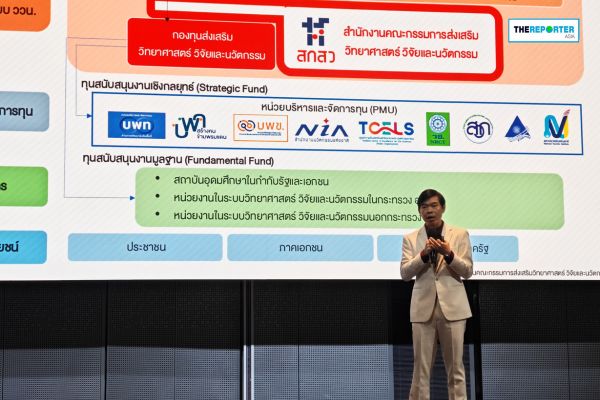
The Solution: Data-Driven Cluster Tourism
The answer to this challenge, according to the consortium, lies in a data-centric approach to “Creating New Supply through Cluster Tourism.” The strategy is built upon insights from True Corporation’s “Data Playground” project, which analyzed an immense dataset of over 500 million travel trips between 2023 and 2024. This mobility data has illuminated distinct, organic travel patterns, revealing how tourists naturally move between cities.
This analysis has identified 21 high-potential tourism clusters across the nation—groups of provinces that are already linked by traveler behavior. Examples of these natural clusters include the northern route of Chiang Mai–Lampang–Lamphun, the western corridor of Nakhon Pathom–Ratchaburi–Kanchanaburi, and the central coast linkage of Phetchaburi–Prachuap Khiri Khan–Samut Sakhon–Samut Songkhram.
For a group of cities to be formally developed as a viable tourism cluster, it must satisfy five critical criteria:
- Defining Identity: The cluster must possess popular attractions that forge a unique and marketable identity.
- Distinct Segments: It must attract clearly defined tourist segments, enabling precise and effective marketing strategies.
- City Roles: Each city within the cluster must have a defined role, typically consisting of a central hub city, key satellite cities, and supporting destinations.
- Impact Management: The development must consider the potential impacts of tourism, with clear strategies to prevent overtourism and respect each area’s environmental and social carrying capacity.
- Scalability: The model must allow for the strategic distribution of tourists to new, targeted destinations, ensuring sustainable growth.
A Unified Vision for a New Era
The project is backed by a unified vision from leaders across policy, technology, and academia, each emphasizing a different facet of its transformative potential.
Professor Dr. Komgrit Leksakul, Deputy Executive Director of NXPO, stressed the foundational role of research and innovation. “NXPO firmly believes that research and innovation are at the heart of driving the nation forward,” he stated. “Insights from the Routes to Roots initiative demonstrate how structured analysis of big data can offer new perspectives for policymaking, tailored to a modern economy that values sustainability, inclusivity, and social equity. Guided by the vision ‘SRI for All’, we are committed to advancing place-based research that delivers tangible impact at both community and national levels.”

From the technology perspective, Mr. Ekaraj Panjavinin, Chief Digital Officer at True Corporation, highlighted the practical applications of the data. “Mobility data is a key enabler in shaping strategic direction for Thailand’s tourism industry, helping it overcome current challenges while fostering long-term sustainability,” he said. “This data opens up opportunities to enhance the travel experience in multiple dimensions, from improving mobility and managing crowd density at tourist sites to supporting emergency preparedness. Ultimately, it enables broader opportunity creation, more equitable income distribution to local businesses and communities, and positions Thailand with new competitive advantages on the global stage.”
Representing the academic viewpoint, Asst. Prof. Dr. Nattapong Punnoi, Deputy Director of the CU Social Design Lab, focused on market evolution. “In today’s evolving competitive landscape, reshaping the tourism ‘supply’ can elevate Thailand’s tourism industry and unlock economic opportunities in emerging high-potential areas, referred to as ‘destination-worthy cities,’” he explained. “This cluster-based tourism strategy enables all stakeholders…to see the industry through a new lens. This approach is especially relevant in an era where tourists increasingly seek authenticity, meaningful experiences, and deeper value.”
‘Routes to Roots’: Six Journeys into Thailand’s Soul
From the 21 data-identified clusters, creative agency The Cloud has curated the initial launch of six “Routes to Roots” journeys. These are not merely travel itineraries but narrative-driven explorations designed to showcase the shared cultural DNA that connects provinces within a region. Each route offers a unique and profound immersion into Thai heritage:
- Food Route (Chanthaburi–Trat): A culinary pilgrimage to Thailand’s East to discover a treasure trove of local ingredients, particularly herbs and spices like cardamom and wild ginger that define iconic dishes like Kway Teow Moo Liang.
- Volcano Route (Buriram–Surin–Sisaket): A journey through the Northeast along the trail of extinct volcanoes, revealing a cultural mosaic that boasts the nation’s highest concentration of ancient Khmer stone castles, renowned silk weaving communities, and vibrant ethnic diversity.
- Flavor Route (Samut Sakhon–Samut Songkhram–Phetchaburi–Prachuap Khiri Khan): An exploration to the source of iconic Thai flavors, tracing the origins of premium seafood, sea salt, and palm sugar. Travelers learn from local artisans and gain a deep understanding of Thailand’s culinary essence.
- Lanna Culture Route (Chiang Mai–Lamphun–Lampang): An immersion into the majestic Lanna civilization of the North. This route uncovers architectural marvels, timeless arts, and a distinct cuisine shaped by over a thousand years of history along ancient trade routes.
- Nature Route (Nakhon Si Thammarat–Phatthalung): A serene escape to the South, offering a slower, more profound connection with Thailand’s lush landscapes, from misty mountains to tranquil wetlands.
- River Route (Suphan Buri–Uthai Thani–Chai Nat): An experience of the water-linked heritage of the central plains, where rivers have shaped traditions, communities, and unique ways of life for centuries.
Two additional routes are already in development and set to launch soon. This initiative signals a strategic, intelligent, and sustainable path forward, aiming to distribute economic benefits more broadly and secure Thailand’s position as a world-leading destination for authentic and meaningful travel.
#ThailandTourism #RoutesToRoots #ClusterTourism #BigData #MobilityData #CreativeEconomy #SustainableTourism #DiscoverThailand #SecondaryCities #ThaiCulture #EconomicRecovery