
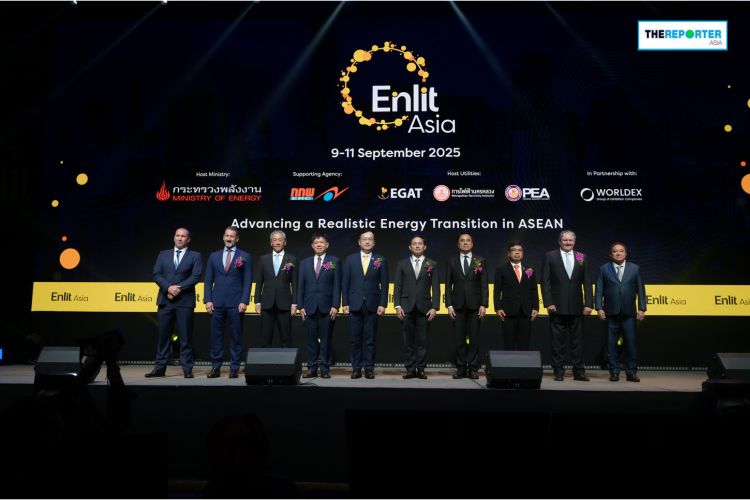
The future of ASEAN’s energy landscape is being defined this week in Bangkok, as Enlit Asia 2025 opens its doors, gathering the region’s most influential policymakers, industry titans, and technology innovators. The premier event, running from September 9-11 at the Bangkok International Trade & Exhibition Centre (BITEC), has become the critical nexus for confronting the region’s most pressing challenge: how to power monumental economic growth while navigating an urgent and complex transition to a sustainable, secure, and carbon-neutral energy future.
Bangkok, Thailand – This year’s dialogue moves beyond ambition, focusing on the actionable strategies, collaborative frameworks, and technological breakthroughs required to turn net-zero goals into a bankable reality for the entire ASEAN bloc.
The opening day set a powerful tone, underscoring a unified commitment to regional cooperation as the linchpin of success. In his inaugural address, Dr. Veerapat Kiatfuengfoo, Deputy Permanent Secretary of Thailand’s Ministry of Energy, articulated a vision that extends far beyond national borders. “Thailand is dedicated to fostering regional collaboration to accelerate a sustainable and resilient energy transition across ASEAN,” he declared, positioning the host nation not just as a participant, but as a key architect of the region’s collective energy strategy.
This sentiment encapsulates the core challenge for the 10-member bloc: a diverse collection of economies, each with unique energy profiles and development stages, that must now move in concert to achieve shared climate objectives without compromising economic stability. The conversations and partnerships forged at Enlit Asia will be instrumental in harmonizing this complex orchestra of interests into a cohesive and effective regional energy policy.
Thailand at the Helm: The Eastern Economic Corridor as a Green Energy Proving Ground
A dominant theme emerging from the high-level discussions is Thailand’s strategic ascension as a leader and hub for ASEAN’s energy evolution. The nation is leveraging its geopolitical and economic strengths, particularly through the Eastern Economic Corridor (EEC), to spearhead innovation and investment. This was emphatically highlighted by Dr. Buntoon Srethasirote, Commissioner of Thailand’s Energy Regulatory Commission, who stated, “Thailand’s strategic position in the Eastern Economic Corridor enables it to lead regional energy transition through innovation and collaboration.”
For international investors and corporations, this designation of the EEC as a focal point for the energy transition is a significant market signal. It suggests a concentration of resources, favourable regulatory frameworks, and a commitment to infrastructure that can de-risk investment in next-generation energy projects. The corridor is being primed as a live laboratory for the technologies and policies that will eventually be scaled across the region. Further reinforcing this message of a unified national strategy, leaders from Thailand’s key utility authorities presented a cohesive vision for progress.
Direk Boonpiyathud, Deputy Governor for Power System Planning and Innovation at the Metropolitan Electricity Authority (MEA), emphasized the technological backbone required for this shift. “Innovative grid planning and digital solutions are essential for integrating renewables and enhancing Thailand’s energy resilience,” he noted, pointing to the critical role of smart grids and digitalization in managing the complexities of a diversified energy mix.
This focus on grid stability was echoed by Pongsakorn Yuthagovit, Deputy Governor for Planning and Engineering at the Provincial Electricity Authority (PEA). He articulated the delicate balancing act that all ASEAN nations face: “Balancing energy security with net-zero goals requires integrating renewable energy while ensuring grid reliability.” His statement underscores the pragmatic approach being taken, where the integration of intermittent sources like solar and wind must proceed in lockstep with investments that guarantee a stable and uninterrupted power supply for industries and consumers.
Indeed, Thailand’s tangible progress in this area was cited as a benchmark for its neighbours. The Commissioner highlighted the country’s advancements, stating, “Our advancements in solar and wind energy integration demonstrate Thailand’s potential to set a regional benchmark for renewable energy scalability.”
Unlocking Capital: Overcoming Bankability and Financing Hurdles
While policy and technology set the direction, capital is the fuel that will drive the transition. Perhaps the most critical conversation for the business community at Enlit Asia revolves around financing this multi-trillion-dollar transformation. The high upfront costs of renewable infrastructure, the perceived risks of emerging technologies like green hydrogen, and the long-term returns on investment present significant “bankability challenges.”
Tawatchai Sumranwanich, Deputy Governor of Strategy at the Electricity Generating Authority of Thailand (EGAT), directly addressed this crucial issue. “Public-private partnerships and innovative financing are critical to overcoming bankability challenges for sustainable energy projects,” he affirmed. This statement is a clear invitation to the private sector, signaling that development banks and government bodies are actively seeking to create new financial instruments, blended finance models, and de-risking mechanisms to attract private capital.
The discussion is moving beyond traditional project finance towards creating new ecosystems of investment where public funds can be used to leverage much larger pools of private money. For businesses, this signals a maturing market where opportunities are expanding for infrastructure funds, venture capitalists, and corporations to participate in building ASEAN’s new energy backbone through collaborative and financially viable structures.
The opening day summit delved deep into the actionable strategies required to build this new ecosystem, emphasizing the importance of cross-border transmission projects to create a more integrated and efficient ASEAN power grid. Panelists stressed the need for robust regulatory frameworks that provide long-term certainty for investors, and highlighted the pivotal roles that utilities, private developers, and large industrial energy users must play in working together to ensure both grid stability and overall sustainability.
The Technology Frontier: From AI and Digitalization to Hydrogen and Nuclear
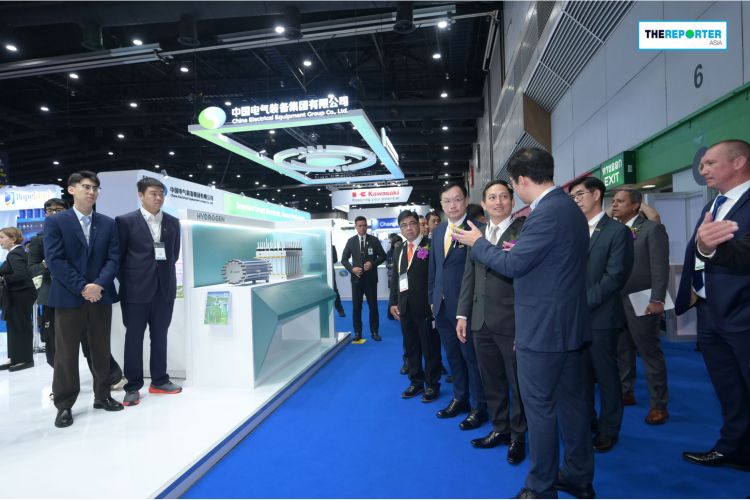
Enlit Asia 2025 serves as a sprawling marketplace for the cutting-edge technologies that are enabling the energy transition. The exhibition floor, featuring over 350 exhibitors, is a testament to the pace of innovation, with industry giants and nimble start-ups showcasing tangible solutions. The agenda is deliberately fuel-agnostic, reflecting the pragmatic reality that ASEAN’s path to net-zero will involve a diverse mix of solutions.
Keynote sessions are exploring the immense opportunities in established renewables while also pushing the boundaries with discussions on the future of green hydrogen and next-generation nuclear energy in the region. However, the most immediate and transformative impact is being seen in the digital sphere. The event’s Technical Conference is heavily focused on leveraging Artificial Intelligence, digital technology, and advanced energy storage to enhance grid efficiency and stability. These are not abstract concepts but commercially available solutions that optimize energy flow, predict demand, and integrate variable renewable sources seamlessly into the grid.
Recognizing that the transition will not happen overnight, significant attention is also being given to interim measures. Discussions around retrofitting existing power plants, co-firing with lower-emission fuels like ammonia and biomass, and the strategic use of natural gas as a transition fuel highlight a practical, phased approach to decarbonization that ensures energy security throughout the journey.
A Dynamic Hub for Commerce and Collaboration
Beyond the strategic dialogues, Enlit Asia is fundamentally a platform for business. With an expected attendance of over 12,000 professionals—surpassing last year’s 11,000—the event is a vibrant ecosystem for forging partnerships and generating commercial opportunities. Organizers have placed a strong emphasis on facilitating meaningful connections.
The event’s proprietary Business Matching platform, accessible via a dedicated networking app, allows attendees to pre-schedule one-on-one meetings with key industry players, from regional utility executives to technology vendors and project developers. This tool transforms the conference experience from passive observation to active engagement, empowering participants to build strategic partnerships and accelerate their business growth.
The event’s structure is designed to maximize knowledge sharing and practical learning. The Technical Conference and Knowledge Hubs offer free-to-attend sessions across specialized theatres covering New Energy, AI & Digitalisation, and building a Flexible, Resilient & Connected Grid. These sessions provide practical insights and real-world case studies, moving beyond theory to offer actionable intelligence. Meanwhile, specialized activations like the Nuclear Forum provide deep dives into specific sectors, allowing for focused discussions among experts and stakeholders.
As Simon Hoare, Portfolio Director for Enlit Asia, aptly summarized, the event serves a unique and essential purpose. “Enlit Asia is where the ASEAN power sector connects, bringing together decision-makers and innovators to collaborate and accelerate progress towards a sustainable energy future.”
As the discussions continue over the next two days, the message from Bangkok is clear: ASEAN’s energy transition is moving into a decisive new phase. The era of planning is giving way to an era of implementation, driven by regional collaboration, strategic investment, and technological innovation. For businesses and investors, Enlit Asia 2025 is not just an event; it is the definitive barometer of a market on the cusp of profound transformation, offering a clear roadmap to the opportunities that lie ahead in powering a sustainable and prosperous Southeast Asia.
#EnlitAsia #ASEANEnergy #EnergyTransition #RenewableEnergy #Sustainability #Thailand #EEC #NetZero #Investment #SmartGrid #Innovation