


In a landmark move for Thailand’s gaming industry, major publisher Maxion Tech has announced a strategic partnership with local developer ROTJANA KAANKEM STUDIO, investing an initial 10 million THB to launch the Thai-made game “Kyrie & Terra” across Southeast Asia. This ambitious launch, however, comes with a powerful message to policymakers: Thai developers are competing on an uneven playing field and require urgent structural reforms to thrive globally.
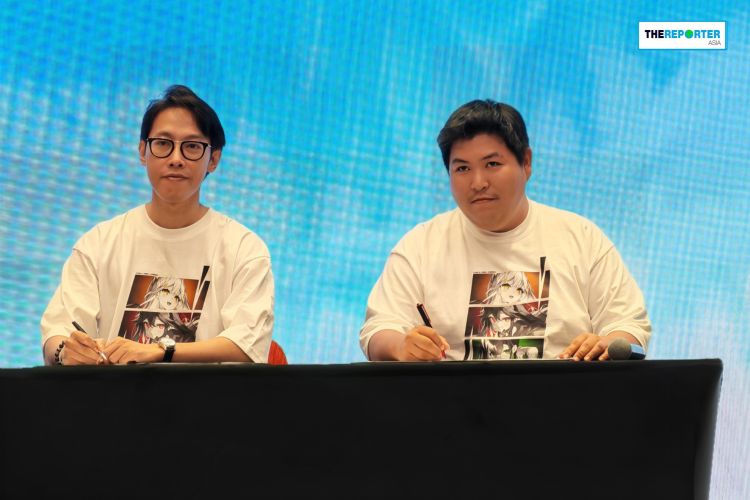
Bangkok, Thailand – The Thai digital economy witnessed a significant development as game publisher Maxion Tech formalized a long-term strategic partnership (MOU) with ROTJANA KAANKEM STUDIO, a highly regarded Thai game development and art outsourcing firm. The alliance is centered on propelling “Kyrie & Terra,” the studio’s debut intellectual property (IP), into the regional spotlight with a simultaneous launch in 10 Southeast Asian countries. While the 10 million THB (approx. $270,000 USD) initial marketing budget for Thailand alone signals immense confidence in the project, the collaboration also serves as a platform to voice the profound structural challenges hindering the local industry’s international competitiveness.
This partnership transcends a typical publisher-developer contract. It represents a shared vision to elevate the entire Thai gaming ecosystem. An executive involved in the deal emphasized the long-term nature of the commitment, stating, “Realistically, our cooperation is not limited to a single game. We are looking towards a much broader future. As a Strategic Partner, we are prepared to grow together.” This statement underscores Maxion Tech’s belief in ROTJANA KAANKEM not just as a content creator, but as a long-term partner in innovation and success.

“Kyrie & Terra”: A Strategic Blend of Global Appeal and Local Ingenuity
At the heart of this venture is “Kyrie & Terra,” a Turn-based Role-Playing Game (RPG) deeply inspired by the globally popular Japanese ACG (Animation, Comics, and Games) culture. Developed under ROTJANA KAANKEM STUDIO’s slogan, “Crafting Worlds, Igniting Imagination,” the game is designed to captivate a broad audience with its unique mechanics that merge deep strategy with elements of chance.
The game’s primary unique selling proposition lies in two innovative systems:
- The Action Card System: Players can strategically customize their characters by equipping up to three action cards from a pool of over 50 unique options. This allows for an immense variety of combinations and playstyles, encouraging tactical thinking and replayability.
- The Akashic Record Dice System: This feature introduces a novel dimension to every turn. A roll of the dice determines which skills a player can activate, forcing them to adapt their strategy in real-time. This dynamic interplay between the player’s prepared card deck and the random element of the dice creates a constantly engaging and challenging experience.
In terms of visual design, “Kyrie & Terra” adopts a popular anime art style to ensure international appeal. However, the studio has been deliberate in its integration of Thai culture. “We chose not to force traditional Thai aesthetics too heavily, as that could narrow our market,” a studio representative explained. “Instead, we subtly weave in elements, such as characters inspired by Thai historical figures. This makes the culture more accessible to a global audience.” This nuanced approach demonstrates a sophisticated understanding of the global market, where cultural representation is most successful when it is creative and seamlessly integrated.
The game targets players aged 18-30, encompassing university students and first-jobbers. This is a strategic move to cultivate a younger fan base compared to many flagship titles that often target demographics over 30, thereby investing in a new generation of long-term, engaged players.
An Ambitious Go-to-Market Strategy
The launch roadmap for “Kyrie & Terra” is nothing short of aggressive. Maxion Tech plans a coordinated release across 10 Southeast Asian nations this October, aiming to rapidly capture regional market share. Following the establishment of a strong foothold in SEA, the company has set its sights on Latin America, signaling its global ambitions for the IP.
To fuel this launch, the 10 million THB marketing budget is exclusively allocated for offline activities within Thailand, a figure that does not include the substantial online marketing spend or budgets for the other nine countries. This capital will be directed towards high-visibility advertising, such as on the Bangkok BTS Skytrain system, and a significant investment in Key Opinion Leaders (KOLs) and gaming influencers.
“Based on our metrics, KOLs generate the fastest market impact. Therefore, we are placing special emphasis on this channel, both in Thailand and abroad,” a marketing executive commented. The campaign’s immediate goal is to achieve 200,000 pre-registrations by the end of the year—a challenging target that reflects the publisher’s profound confidence in the game’s potential.
The Elephant in the Room: A Call for a Fair Playing Field
Beneath the surface of this exciting launch lies a critical plea for regulatory reform. Executives from Maxion Tech have been candid about the structural disadvantages faced by domestic companies.
“We are on an unequal playing field,” a senior manager stated unequivocally. “As a Thai-registered company, we bear the full burden of Value Added Tax (VAT) and other taxes. For every 100 baht in revenue, we first lose 30% to platform fees, and then face various taxes, leaving a very thin margin for reinvestment. Conversely, foreign-based publishers can enter the Thai market directly, generate revenue, and repatriate their earnings without the same tax obligations. We are at a disadvantage from the very first step.”
This issue highlights a significant regulatory gap that puts Thai entrepreneurs in a fiercely competitive and handicapped position. The lack of a clear framework gives international players a substantial financial edge. This has led to a direct appeal for government intervention to establish fairness, primarily through the proposed “Game Act” currently under consideration.
“We are not asking for the government to control the industry to the point of stifling it,” the executive clarified. “We are asking the government to ‘support’ us by creating a fair playing field. We have excellent models in China and Vietnam, where foreign service providers must obtain a license and establish a registered company in-country. This not only ensures fair tax collection for the state but also stimulates job creation, circulates money within the domestic economy, and fosters local talent development.” This is a powerful message from the front lines of the industry, calling for meaningful policy changes to enable sustainable growth.
The challenges extend beyond taxation into the realm of “Soft Power.” The company revealed difficulties in promoting its own Thai IP within Thailand. “There have been many instances where we wanted to host major offline events at national landmarks to promote a Thai IP, only to find that international brands with much deeper pockets gain access to these venues more easily. It’s a pity that a Thai IP faces limitations in being showcased in its own homeland.”
Ultimately, the launch of “Kyrie & Terra” is far more than a new product release. It is a high-stakes wager on the potential of Thai intellectual property, a testament to the skill of Thai developers, and a powerful, unified call to policymakers. It demands a serious re-evaluation of the structural issues that are currently undermining the competitive potential of Thailand’s burgeoning game industry. The success of “Kyrie & Terra” may not only be a point of pride for its creators but could become a beacon of hope for every entrepreneur and creator in the Thai gaming community who dreams of seeing Thai innovation stand tall on the world stage.
#MaxionTech #ROTJANAKAANKEM #KyrieAndTerra #ThaiGamingIndustry #DigitalEconomy #SoftPower #ThaiGames #GameDev #SEAMarket #EconomicPolicy