
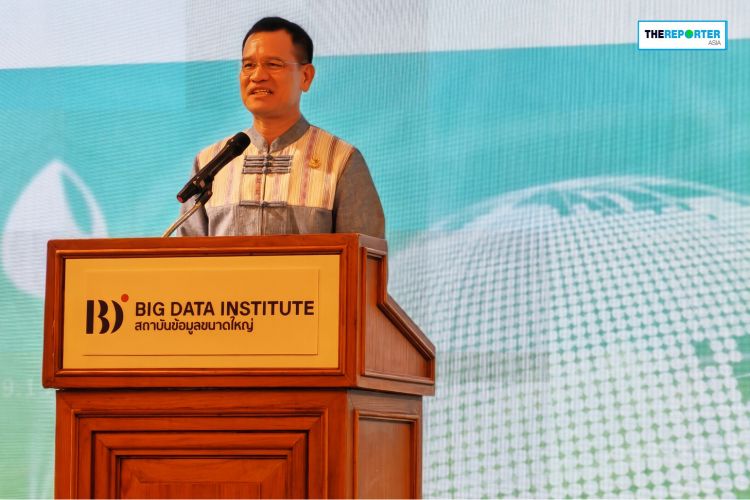
In a landmark move to tackle the perennial haze crisis that has long plagued its northern provinces, Thailand is deploying a sophisticated big data platform, “Envi Link,” aiming to transform the environmental challenge into a catalyst for a new green economy. The Big Data Institute (BDI) is spearheading this initiative, positioning Chiang Mai as a “Clean Air City” prototype to restore investor confidence, rejuvenate the vital tourism sector, and pave a sustainable economic path forward.
For years, the thick, hazardous haze of PM2.5 particulate matter has been more than an environmental nuisance in Northern Thailand; it has been a severe economic liability. The annual “smoky season” has consistently choked economic activity, grounding flights, deterring tourists, escalating healthcare costs, and disrupting agricultural supply chains. The direct impact on tourism, the lifeblood of Chiang Mai and surrounding provinces, has resulted in staggering revenue losses, casting a shadow of uncertainty over a region rich with economic potential. This recurring crisis has become a significant risk factor for investors and a major operational hurdle for local businesses.
However, the tide is beginning to turn. In a strategic pivot from a reactive, defensive posture to a proactive, data-driven assault on the problem, the Thai government is now leveraging technology as its primary weapon. The Big Data Institute (BDI), a public organization under Thailand’s Ministry of Digital Economy and Society, has stepped onto the battlefield, unveiling a national environmental data platform, Envi Link. This initiative signals a profound shift in national policy, aiming not just to clear the air, but to build a resilient and sustainable economic model founded on the power of information.
Envi Link: The Central Nervous System for Environmental Intelligence
At the heart of this transformation is the Envi Link platform, a formidable “central brain” for environmental intelligence. It represents one of the most ambitious data integration projects in the nation’s history, unifying over 200 distinct datasets from more than 30 government agencies, research institutions, and public sensor networks. By harnessing the power of Big Data and Artificial Intelligence (AI), Envi Link is designed to collect, analyze, and synthesize vast streams of information, providing a comprehensive, real-time understanding of the pollution crisis.
This move addresses a critical bottleneck that has historically hampered effective policy-making: data fragmentation. Previously, crucial information was siloed within different ministries and organizations, making a coordinated response nearly impossible. Envi Link breaks down these silos, creating a unified ecosystem for data that empowers decision-makers at every level.
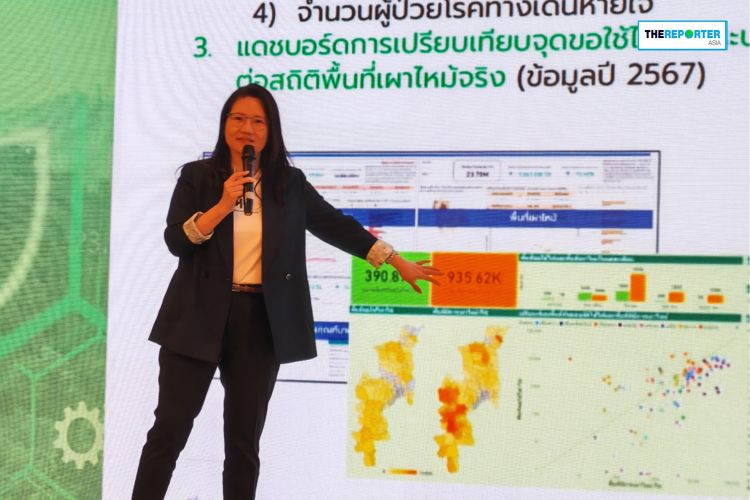
Prof. Dr. Tiranee Achalakul, President of the Big Data Institute (BDI), articulated the vision behind the platform. “BDI is committed to harnessing the power of Big Data and AI as a core engine for driving the economy and society in every dimension,” she stated. “This includes environmental management, which is the foundation of our nation’s quality of life and sustainability. The integration of over 200 datasets through the Envi Link platform is the heart of creating a central data system. It connects various agencies—from government and researchers to the private sector and local communities—to enable policy decisions that are both precise and impactful.”
For the business community, this translates into more predictable and effective governance. By basing environmental policy on empirical evidence rather than anecdotal observation, the government can implement targeted, efficient measures, reducing the collateral economic damage often associated with broad, sweeping restrictions.
The “Chiang Mai Model”: A Blueprint for a Green Economic Hub
The choice of Chiang Mai as the pilot province for this initiative is a calculated strategic decision. As the undisputed economic, cultural, and tourism hub of Northern Thailand, its success or failure in managing air quality has an outsized impact on the entire region. Yet, it is also one of the areas most severely affected by the annual haze.
By transforming Chiang Mai into a “Clean Air City,” the project aims to create a powerful new brand identity for the province. A clean-air Chiang Mai is not just an environmental victory; it is a compelling economic proposition. It enhances its attractiveness for high-value tourism, positions it as an ideal location for the growing global community of digital nomads, and sends a strong signal to international investors that Thailand is serious about sustainable development. The “Chiang Mai Model” is envisioned as a scalable blueprint that can be replicated across other provinces, creating a network of smart, environmentally resilient economic zones.
Mr.Sivakorn Boupong, Deputy Governor of Chiang Mai, emphasized the platform’s immediate impact on governance. “The province of Chiang Mai has faced challenges from air pollution and PM2.5 for many years,” he commented. “The introduction of an integrated data system like Envi Link is a major turning point for environmental management in our area. It provides the province with deeper, more accurate data to assess situations, formulate plans, and implement measures in a timely manner.”
This collaboration between the provincial administration and BDI is upgrading public sector management to international standards. Custom-built data dashboards provide executives with a real-time, granular view of the situation on the ground, enabling them to monitor hotspots, track the effectiveness of interventions, and allocate resources with unprecedented precision.
“This partnership is not merely about using data technology to solve the haze problem,” Mr. Buapong added. “It is a prototype for a ‘Clean Air City’ where the public sector, private companies, academic institutions, and citizens can all use the same unified data to monitor the situation and collaboratively plan prevention strategies. This elevates our environmental management to a proactive level, driven by real data and multi-stakeholder cooperation.”
Under the Hood: The Data Powering the Decisions
The true power of Envi Link lies in the depth and diversity of the data it integrates. This multi-layered approach provides a holistic view of the pollution lifecycle, from source to impact:
- Air Quality Data: Real-time PM2.5 readings are streamed from a vast network of sensors, including RGUARD, DustBoy, Air4Thai, DPM Alert, and Check Dust, providing comprehensive, ground-level coverage.
- Combustion Data: Satellite-derived data pinpoints the precise coordinates of “hotspots” and maps the actual burn scars on the landscape, offering a clear picture of fire activity.
- Policy & Enforcement Data: Information from the government’s Fire-D system, which manages permits for controlled agricultural burning, is integrated. By overlaying this with hotspot data, authorities can instantly differentiate between legal, managed burns and illegal wildfires, enabling a targeted enforcement response.
- Public Health Data: Statistics on pollution-related illnesses are fed in from healthcare agencies, allowing officials to correlate air quality with public health outcomes and proactively allocate medical resources.
This integrated data is then visualized through more than 15 bespoke dashboards, each tailored to a specific user group:
- The Executive Dashboard: Provides provincial governors and C-suite leaders with high-level Key Performance Indicators (KPIs), comparing metrics like hotspot counts, total burn area, days exceeding pollution standards, and patient numbers across different districts. This fosters accountability and allows for the quick identification of best practices and areas needing improvement.
- The Analytical Dashboard: Offers a deeper dive for policy analysts, comparing areas with burning permits against where fires actually occurred. This allows for a critical evaluation of policy effectiveness and helps refine strategies for managing agricultural burning.
- The Public Dashboard: Presents real-time air quality information in a simple, intuitive format, empowering citizens and businesses to make informed decisions to protect their health and manage their daily operations.
Beyond Mitigation: Forging a Sustainable, Data-Driven Economy
The vision for Envi Link extends far beyond pollution monitoring. BDI is already planning the platform’s next evolution: leveraging its data to actively create new economic value and drive sustainable growth.
A key future initiative involves analyzing burn scar data in conjunction with satellite imagery that identifies the types of crops being cultivated in those areas. This powerful combination of data will allow the government to design highly targeted agricultural policies. Instead of generic subsidies, authorities can offer specific incentives for farmers in high-risk burn zones to transition from low-value, slash-and-burn crops to higher-value, more sustainable alternatives. This is a tangible example of using data innovation to guide the agricultural sector towards modernization, increasing farmer incomes while simultaneously protecting the environment.
This strategy aligns perfectly with the Thai government’s national agenda for a Bio-Circular-Green (BCG) Economy. By providing the data infrastructure to support this transition, Envi Link becomes a critical enabler of this long-term economic vision. Furthermore, the project is a cornerstone of the government’s Smart City policy, specifically fulfilling the “Smart Environment” pillar. The ultimate goal is to entrench data as the central tool for designing public policy, managing natural resources, and fostering a high quality of life.
The future of Northern Thailand’s economy is no longer being dictated by the smoky season. BDI plans to expand the use of the Envi Link platform across all 8 provinces of the upper northern region, creating a regional environmental intelligence network. This will support cohesive cross-provincial policies on critical issues like forest fire management and pollution reduction.
This ambitious undertaking is built on a foundation of robust collaboration. The project received primary funding from the National Research Council of Thailand (NRCT) and involves a consortium of key partners, including Chiang Mai University (CMU), the Highland Research and Development Institute (HRDI), the Geo-Informatics and Space Technology Development Agency (GISTDA), and the Thailand Institute of Scientific and Technological Research (TISTR). This alliance of top academic, research, and technology agencies ensures the scientific rigor and long-term viability of the platform.
The launch of Envi Link is more than the debut of a new technology. It is a declaration that Thailand is entering a new era where data is its most valuable asset in shaping a prosperous, healthy, and sustainable future. For investors, it is a clear signal that the nation is de-risking its environmental challenges and paving the way for a new wave of growth in the green economy.
#ThailandEconomy #BigData #EnviLink #PM25 #CleanAir #ChiangMai #SmartCity #GreenEconomy #SustainableInvestment #BCGEconomy #DataDriven #Innovation #SEAsia #EnvironmentalTech