
In an exclusive interview, HPE Networking’s Perry Sui outlines the strategy to create a unified, AI-driven Edge-to-Cloud platform, merging GreenLake and Mist AI to redefine enterprise networking, security, and hybrid cloud operations for the AI era.
TheReporterAsia – In an industry landscape being perpetually reshaped by the seismic forces of artificial intelligence (AI) and digital transformation, the network has evolved from simple plumbing into the strategic backbone of the modern enterprise. It is within this high-stakes context that HPE’s acquisition of Juniper Networks emerges not just as a major consolidation, but as a calculated, transformative move set to redefine the future of enterprise connectivity.
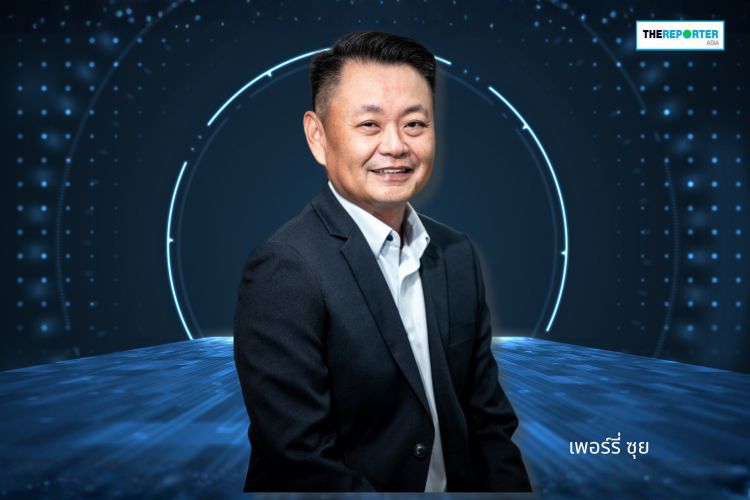
This acquisition is a “significant step” and a “key moment for HPE,” according to Perry Sui, General Manager for HPE Networking in the Southeast Asia, Taiwan, and Hong Kong (SEATH) region.
In an exclusive interview with TheReporterAsia, Mr. Sui provided a comprehensive breakdown of the vision behind this industry-shaking merger. The core objective is ambitious: to forge a true, unified Edge-to-Cloud architecture built on an “AI-Native“ foundation. This strategy hinges on the powerful synergy between HPE’s GreenLake hybrid cloud platform and Juniper’s renowned Mist AI, creating an intelligent, self-optimizing network designed to propel businesses into the next era of innovation.
The Perfect Fit: Forging a True Edge-to-Cloud Architecture
The digital-first economy demands more than just connectivity; it demands an intelligent, agile, and secure infrastructure that spans from the smallest edge device to the largest multi-cloud environment. Mr. Sui emphasized that the acquisition’s primary goal is to create “a unified AI-Native networking portfolio” that redefines how organizations “connect, protect, and innovate.”
The power of this merger lies in what Mr. Sui describes as its “strongest synergy”—the integration of two market-leading platforms:
- HPE GreenLake: This platform serves as the organization’s “central brain.” It provides an unparalleled hybrid cloud management, compute, and edge capabilities, delivering a unified operational experience as-a-service.
- Juniper Mist AI & Cloud-Native Platform: This acts as the “intelligent nervous system.” It brings deep automation, robust observability, and profound user experience intelligence to the network, famous for its ability to proactively identify and resolve issues.
“The combination of these strengths,” Mr. Sui explained, “allows us to deliver a true Edge-to-Cloud architecture that is simpler, smarter, and more secure.”
For business leaders, this translates into a tangible solution for one of IT’s greatest challenges: complexity. Historically, CIOs have battled with disparate, siloed tools for managing their campus networks, data centers, and multi-cloud deployments. This fragmentation is not only complex and costly but also creates dangerous security gaps and stifles innovation.
The HPE-Juniper vision directly dismantles these silos. “This is what makes HPE different in the market: a single, integrated platform,” Mr. Sui noted. “It combines the intelligence of cloud, compute, and networking under a single operating model.”
This unified platform provides organizations with AI-driven precision to manage their entire IT estate. It offers a “single pane of glass” visibility, breaking down the walls between previously separate domains and empowering IT teams to move from a reactive troubleshooting stance to a proactive, strategic one.
The Foundation: Why ‘Cloud-Native’ and ‘AI-Driven’ Are Now Non-Negotiable
Mr. Sui was clear that terms like “Cloud-Native” and “AI-Driven” have graduated from industry buzzwords to “the foundation of modern networking.”
In today’s distributed enterprise—where employees work from anywhere, IoT devices connect from every corner, and data is processed at both the edge and in the cloud—traditional network architectures are no longer sufficient. Organizations, Mr. Sui stated, “need a network that can adapt in real-time, automate repetitive tasks, and predict problems before they happen.”
This is precisely where the integration of GreenLake and Mist AI demonstrates its transformative potential. This combination is the engine for Autonomous Networking, a state where the network can “configure, optimize, and repair itself based on data and intent.”
This capability is particularly crucial for the highly diverse SEATH region. Mr. Sui, who oversees this dynamic territory, noted it ranges “from mature digital economies to rapidly emerging markets,” each with unique regulatory, infrastructure, and cloud adoption landscapes.
“Organizations in this region operate in multiple geographies and hybrid environments,” he said. A unified, AI-native platform delivers what they need most: “Simplified Management, Improved Visibility, and Faster Troubleshooting across their entire Edge, Data Center, and Cloud footprint.”
Ultimately, the goal is to bring “the power of cloud agility and AI intelligence to where the business actually operates.” Mr. Sui offered concrete examples: a retail business instantly reconfiguring its in-store network to support a new promotion, or a hospital network autonomously prioritizing critical medical devices to ensure patient safety. This is the tangible, intelligent future HPE is building.
The Innovation Multiplier: Unifying Networking, Hybrid Cloud, and HPC
HPE’s strategy extends far beyond networking alone. The company is creating what Mr. Sui calls an “Innovative Fabric for the enterprise” by integrating three powerful pillars: Networking, Hybrid Cloud (GreenLake), and High-Performance Computing (HPC).
This integration unlocks a new class of innovation and powerful use cases. “This combination allows customers to securely and intelligently move data between the Edge and Cloud,” Mr. Sui explained, “while simultaneously controlling massive compute power for AI training, data analytics, and real-time decision-making.”
To illustrate this, Mr. Sui provided a clear example of a forward-thinking manufacturing company:
- Networking (Juniper Mist): The factory floor is equipped with a secure, real-time network connecting IoT sensors and production robots, gathering vast amounts of operational data.
- Hybrid Cloud (HPE GreenLake): The GreenLake platform provides the agility to scale compute and storage resources on demand. As production needs fluctuate, the manufacturer can instantly adapt, optimizing both costs and operations in a flexible, as-a-service model.
- HPC (HPE): The manufacturer uses HPE’s HPC solutions to accelerate complex simulations. This could involve iterating on new product designs (digital twins) or running sophisticated supply chain forecasting models, turning raw data into actionable insights at unprecedented speed.
“This tightly integrated approach,” Mr. Sui summarized, “not only reduces downtime but also enables predictive maintenance and workflow automation.” By analyzing sensor data, the AI can predict machine failures before they happen. This powerful “innovative fabric” empowers the business to “innovate faster and deliver better outcomes,” driving “intelligence-driven decision-making and operational excellence” at scale.
A New Era of Security: Defining ‘AI-Native’ and Agentic Zero Trust
One of the most forward-looking aspects of the merger is the introduction of “AI-native Security,” a concept HPE championed at Black Hat USA 2025. Mr. Sui described this as a “significant evolution” from traditional “AI-powered security.”
The difference is critical:
- AI-Powered Security (Traditional): Uses Machine Learning (ML) models to detect anomalies and react to threats.
- AI-Native Security (New): Embeds “intelligent automation and deep contextual understanding” directly into the security architecture itself.
The game-changer, Mr. Sui explained, is that AI-Native platforms operate “Agentically.”
“This means they can autonomously take corrective actions without waiting for human intervention,” he said. Furthermore, these platforms “natively” manage their own AI models within their secure infrastructure. This is a vital distinction, as it “reduces external data exposure risks” and allows for more granular, real-time policy enforcement that is aligned with the organization’s business context.
In an era of endlessly expanding threat surfaces, this new capability is the key to achieving a true Zero Trust security posture. The HPE-Juniper solution “brings AI-native Security to life by embedding Agentic AI within network and security controls.”
This enables organizations to implement a “holistic and adaptive Zero Trust” framework. The system “continuously validates every user, device, and application in the context of the network.” It uses dynamic segmentation and automated threat mitigation in real-time. If an employee’s laptop is compromised, the agentic AI doesn’t just send an alert; it instantly isolates that device from the network, preventing the threat from spreading—all across the edge, data center, and multi-cloud environments.
The business result is a dramatic “reduction in manual security overhead” while “accelerating threat detection and response,” laying the foundation for a scalable, effective Zero Trust strategy fit for the modern age.
Navigating SEATH and Ensuring a Seamless Transition
As the leader for the “dynamic and diverse” SEATH region, Mr. Sui is keenly aware of the local challenges. This environment demands a flexible and understanding partner.
For the thousands of existing HPE (Aruba) and Juniper customers, Mr. Sui offered a clear commitment: “We are focused on ensuring a seamless integration journey.”
He outlined a clear transition plan designed to build confidence and deliver immediate value:
- Aligning Partner Ecosystems: HPE is actively working to ensure its channel partners are fully trained and enabled to design, sell, and support the new integrated solutions effectively.
- Unifying Support Models: Customers will continue to receive the high level of service they trust, but will now have access to a broader portfolio and deeper AI capabilities under a single, unified support structure.
- Investing in Local Enablement: HPE is “investing in local enablement programs and training initiatives” to help both partners and customers in the SEATH region unlock the full potential of the combined portfolio.
The 5-Year Horizon: Autonomous Networks and the ‘Next Big Thing’
Looking ahead 3-5 years, Mr. Sui’s vision for the enterprise network market is ambitious. “We see enterprise networks evolving into fully AI-Native and Cloud-Native ecosystems,” he said, “ones that are autonomous, adaptive, and predictive by design.”
HPE’s ultimate vision, he stated, is to be the “most trusted partner for intelligent and secure connectivity from Edge to Cloud.”
When asked what “Next Big Thing” businesses can expect from this merger, Mr. Sui pointed to “breakthroughs in network assurance, Edge AI applications, and unified management under the GreenLake platform.” This means networks that can guarantee application performance, new intelligent apps running at the edge, and the full realization of the “single pane of glass” vision.
“In summary,” Mr. Sui concluded, “we are defining a future where organizations can innovate without limits, operate with confidence, and achieve outcomes faster than ever before.”
This landmark acquisition is clearly not just a consolidation of market share. It is a strategic, deeply integrated bet on a future where every element of the enterprise—from the edge to the cloud—is connected, intelligent, and autonomous, positioning HPE to be the architect of the very infrastructure that will power the next decade of AI-driven business.
#HPE #JuniperNetworks #HPEGreenLake #MistAI #AINative #EdgeToCloud #HybridCloud #HPC #ZeroTrust #AINativeSecurity #SEATH #DigitalTransformation #Networking #TheReporterAsia #ExclusiveInterview