
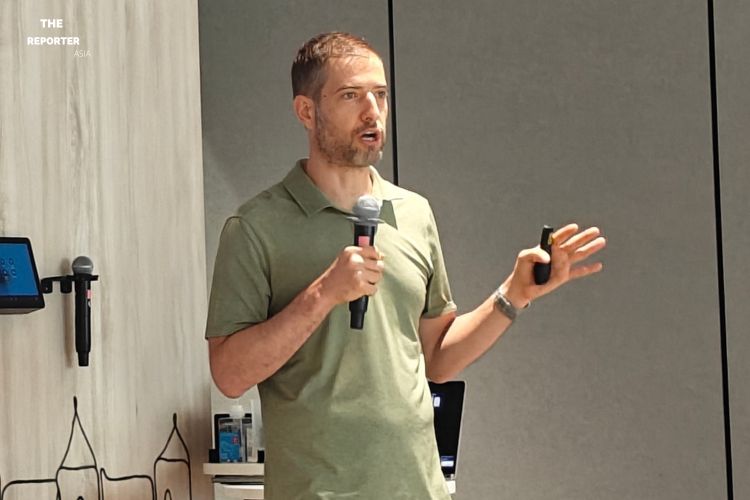
In a landmark revelation that signals a profound shift in the global technology landscape, Idan Zalzberg, the Chief Technology Officer of Agoda, has declared that the era of traditional, manual software coding has effectively come to an end. Speaking from the company’s state-of-the-art new main Thailand office at One Bangkok, Zalzberg detailed how generative artificial intelligence (GenAI) is not merely an incremental tool but a foundational restructuring force within the travel giant. As Agoda marks its 21th anniversary, it is repositioning itself from a traditional Online Travel Agency (OTA) into a comprehensive travel companion, powered by a massive proprietary infrastructure that processes trillions of data points daily to ensure seamless global travel experiences.
The Radical Evolution of Software Engineering at Agoda
The most striking takeaway from the CTO’s address was the assertion that the physical act of writing lines of code in languages like Python or Java is becoming a relic of the past. According to Zalzberg, the practice of engineers sitting down to manually type out syntax has been replaced by AI-assisted development, where nearly 100% of research and production is now guided by machine intelligence. This transition does not render human engineers obsolete but rather elevates them to higher-level roles such as “Spec Engineering” and “Strategic Review,” where they focus on architectural direction rather than the minutiae of code construction.
This shift is underscored by Agoda’s aggressive deployment of “Code Buddy,” an internal AI-driven code review tool that is now utilized in over 50% of the company’s code changes. Despite initial resistance, the tool has achieved a staggering 92% satisfaction rate among the engineering team, proving that AI can successfully manage the quality and style of high-velocity software production. The transition to this new paradigm allows Agoda to release app updates 500 times a day, managed by thousands of microservices that empower individual teams to push changes independently and at a rate previously unimaginable in the industry.
To support this new era of “harness engineering,” Agoda is moving development environments away from individual laptops and into a private cloud-oriented infrastructure. Zalzberg noted that local hardware often lacks the memory to handle multiple AI agents working in parallel, causing bottlenecks in productivity. By shifting to a centralized environment, AI agents can continue to work on complex tasks without interruption, even when the human developer is offline or connecting via mobile, ensuring a 24/7 cycle of innovation and deployment.
The Inside-Out Strategy: Empowering the Global Workforce
Agoda’s approach to GenAI is governed by what Zalzberg calls the “Inside Out” framework, which prioritizes internal employee empowerment before customer-facing features. This strategy was born from the realization that the “lowest-hanging fruit” for AI value lies in automating repetitive, boring tasks for employees, thereby freeing them to focus on high-value creative endeavors. By integrating AI tools like a custom ChatGPT interface into Slack just two weeks after its initial release, Agoda fostered a culture where AI is viewed as a supportive “friend” rather than a threat to job security.
Currently, more than 85% of the entire Agoda workforce, including customer support and non-tech departments, utilizes internal AI platforms like GPO to enhance their daily workflows. These tools allow staff to summarize lengthy communication threads, analyze complex data structures, and even generate interactive graphs and images without worrying about usage costs or external service limitations. This internal experimentation serves as a crucial feedback loop, allowing the company to build confidence and courage in its AI solutions before they are ever presented to the global traveler.
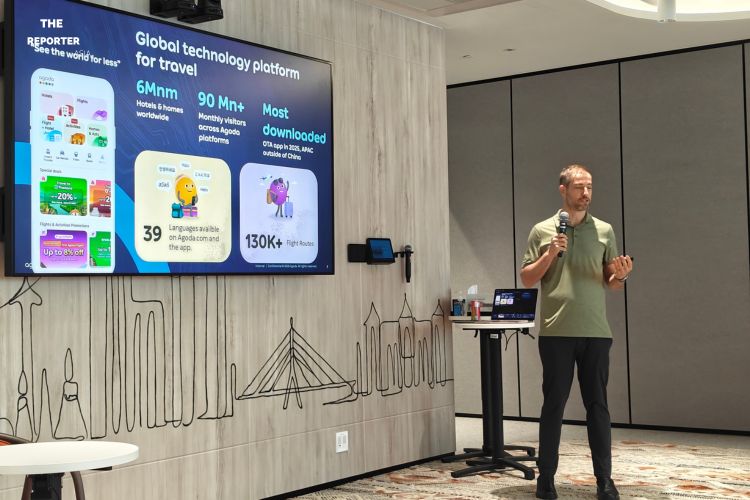
The “Inside Out” philosophy also extends to highly specialized analytical tools such as “Query Assist,” which understands Agoda’s specific data semantics and structure. This allows non-analysts to ask complex business questions and receive expert-level answers, effectively democratizing data across the organization. By automating the “boring” aspects of support and knowledge management through AI-created knowledge bases, Agoda has transformed its internal operations into a highly efficient engine of growth that can rapidly scale to meet the demands of 90 million monthly visitors.
Why Agoda Rejects Tech Layoffs Amid AI Disruption
In a period where major global tech firms have announced significant workforce reductions, Agoda is taking a diametrically opposed path by maintaining its 4,000-strong team in Bangkok. Zalzberg expressed a lack of understanding regarding the industry-wide trend of layoffs, arguing that AI actually makes individual engineers far more valuable to the company. Because an AI-empowered engineer can produce significantly more output than in the past, the Return on Investment (ROI) for keeping experienced staff is higher than ever.
The CTO suggested that many big tech companies are currently suffering from “hiring sprees” conducted during the COVID-19 pandemic, where teams were often brought on board without clear missions. In contrast, Agoda has remained disciplined and focused solely on its travel platform mission, avoiding the bloat that has forced others to downsize. By being careful not to overhire in previous years, the company now finds itself in a position of strength, needing every member of its team to tackle the “too many opportunities” currently presented by AI technology.
“Look, all this innovation and technology… just makes engineers more valuable because an engineer today can produce much more than they could do in the past, and that same engineer is just worth more. The ROI is higher.” — Idan Zalzberg, CTO of Agoda
Infrastructure at a Trillion-Message Scale
To facilitate its massive global operations, Agoda has eschewed traditional public cloud platforms in favor of building its own private data centers. This decision grants the company total control over its networking and hardware, powering over 1 million CPU cores to drive the entire platform. Zalzberg revealed that the company manages an astounding 4 trillion messages daily across its messaging clusters, peaking at 50 million messages per second. This level of scale is essential for calculating 13 million prices every second, ensuring that customers always receive the best possible offers in real-time.
The sheer volume of data processed by Agoda is equally impressive, with the system writing 500 terabytes and reading 14 petabytes of data every single day. Even in the realm of GenAI, Agoda operates at a notable scale, processing half a million tokens per second on average, with peaks exceeding 1 million tokens per second. The company’s independent infrastructure allows it to maintain a 99.95% uptime while avoiding the rigid cost structures and feature limitations of third-party enterprise platforms.
By building the entire tech stack internally, Agoda achieves an efficiency level that would be financially unfeasible on public cloud platforms. Zalzberg emphasized that if they were to pay for this scale of messaging and data processing on a public platform, the numbers “would not make sense,” forcing the company to scale back its ambitions. This technical independence is the bedrock upon which Agoda builds its innovative features, providing the flexibility to adopt the latest hardware and software tools exactly when they are needed.
Enhancing the Customer Journey Through Intelligent Interfaces
Beyond internal efficiency, Agoda is leveraging GenAI to fundamentally “enhance” the customer experience on its platform. One of the most successful implementations is the AI-driven chatbot on property pages, which helps users navigate the overwhelming amount of data available for each hotel. Instead of scrolling through endless text, customers can ask specific questions—such as “how quiet is the room?”—and the AI will synthesize information from thousands of reviews and property data points to provide a trustworthy, personalized response.
Agoda is also using AI to improve the quality of its content, particularly for hotels that may have had sparse or uninteresting descriptions in the past. By analyzing photos and guest reviews, GenAI can create more accurate and engaging property descriptions that truly reflect the guest experience. Additionally, the platform now offers summarized reviews, distilling hundreds of opinions into a “bottom line” that saves travelers time while highlighting the aspects of a stay they care about most.
Zalzberg cautioned that while building a “nice demo” of these AI features takes only an hour, rolling them out to millions of users requires immense patience and experimentation. The company focuses heavily on “responsible” AI, creating feedback loops to ensure the technology doesn’t fail at the “edges” or provide inaccurate information to travelers. This meticulous approach to polish and approval is what allows Agoda to transition from being a simple booking engine to a “travel companion” that assists with everything from flight selection to activity planning.
One Bangkok: Creating the Silicon Valley of Asia
Agoda’s move to its new offices at One Bangkok is a physical manifestation of its commitment to innovation and collaboration. The space was specifically designed to foster spontaneous interaction, featuring interconnected floors with stairs to encourage movement and a “Bridge Cafe” where employees can meet casually. Zalzberg explained that the goal is to break down hierarchical barriers, allowing for “flat communication” where any employee can approach the CTO with an idea without needing multiple levels of approval.
This new environment is intended to act as a catalyst for what Zalzberg calls “spontaneous connection,” where ad-hoc meetings in a cafe or an elevator can lead to the next big breakthrough in travel tech. The office design incorporates inspiring art and spacious areas to keep employees’ minds active and motivated. By investing so heavily in a physical hub during the hybrid work era, Agoda aims to create a “Silicon Valley down here in Bangkok,” attracting top-tier global talent to Thailand.
Ultimately, Agoda’s vision for the future is one of “limitless opportunity” driven by a culture of scientific experimentation and ownership. The company even invests in the next generation by teaching children how to build AI applications, ensuring that the spirit of innovation continues well into the future. As they open this new chapter at One Bangkok, Agoda stands as a testament to how a focused mission, a robust private infrastructure, and a human-centric approach to AI can redefine an entire industry on a global scale.
#Agoda, #GenAI, #TechEconomy, #BangkokHub, #SoftwareEngineering, #DigitalTransformation, #TravelTech, #Innovation, #OneBangkok, #FutureOfWork