

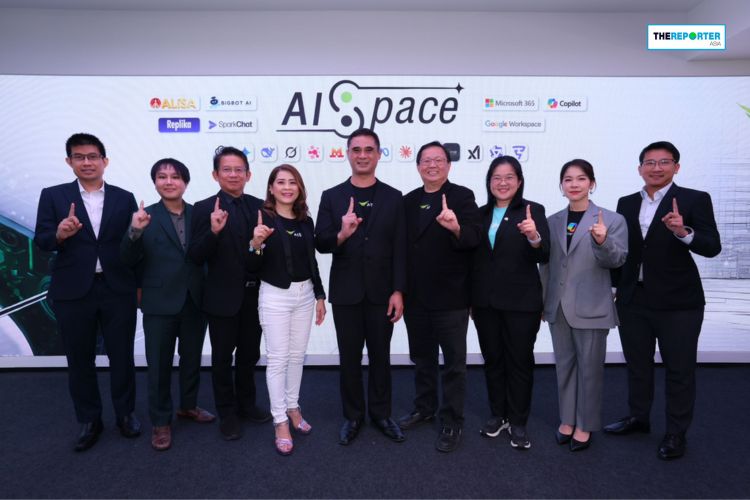
Advanced Info Service (AIS) has officially launched “AISpace,” a comprehensive AI ecosystem designed to democratize access to artificial intelligence for the Thai population. This launch comes at a critical juncture where digital adoption in Thailand is outpacing global averages, positioning the nation as a fertile ground for technological integration. According to recent data from PwC, 72% of Thai respondents reported using AI in their work over the past year, a figure significantly higher than the global average of 54%. Capitalizing on this surging demand, AIS is transitioning from a traditional telecommunications provider into a “Cognitive Tech-Co,” aiming to integrate intelligent networks with global AI partners to strengthen national digital capabilities.
The introduction of AISpace addresses a fragmented market where consumers and businesses are often overwhelmed by the sheer volume of standalone AI tools and subscriptions. By positioning itself as a central hub, AIS allows users to access top-tier models—including GPT-4, Claude, and Gemini—through a single interface, effectively streamlining the user experience and reducing the barriers to entry.
Mr. Saran Phaloprakarn, Head of Mobile and Consumer Product Business Unit at AIS, emphasized that the initiative is not merely about selling software but about creating an “AI hub for Thai people” that curates world-class technologies and makes them accessible via a unified billing system. This approach mirrors global trends where major telecommunications players are increasingly becoming aggregators of digital services to retain customer loyalty and diversify revenue streams beyond connectivity.
For the Thai economy, this development represents a significant leap toward bridging the digital divide. By offering localized pricing and bundling these advanced tools with existing mobile services, AIS is ensuring that AI is not a luxury reserved for tech elites but a productivity tool available to students, freelancers, and small business owners.
The platform’s launch highlights a sophisticated understanding of the local market, particularly through partnerships with Thai-developed AI solutions alongside global giants, fostering a domestic ecosystem that supports local innovation while importing global standards. This dual-track strategy of importing best-in-class global tech while incubating local developers sets a new benchmark for how telecom operators can drive national economic digitization.
The Aggregator Model: Revolutionizing Consumer Access
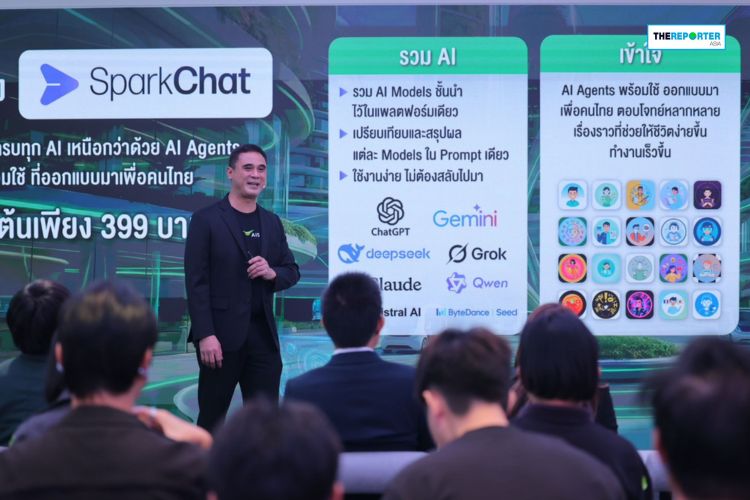
At the heart of the AISpace consumer offering is “SparkChat,” a flagship tool that epitomizes the “super-app” concept for artificial intelligence. Developed to solve the problem of subscription fatigue, SparkChat functions as an aggregator of aggregators, allowing users to send a single prompt to multiple leading AI models simultaneously, including ChatGPT, Gemini, and Claude. This capability is crucial for users who need to compare outputs or leverage the specific strengths of different Large Language Models (LLMs) without maintaining multiple expensive subscriptions.
Furthermore, the platform introduces “AI Agents”—20 specialized bots trained for specific Thai contexts, such as horoscope prediction, exam preparation, and social media sales writing. This localization strategy ensures that the AI is not just a generic tool but a culturally relevant assistant capable of navigating the nuances of Thai language and consumer behavior.
Another significant component of the consumer portfolio is “Alisa,” a generative AI integrated directly into the LINE application, which is Thailand’s dominant messaging platform. Recognizing that complex interfaces can be a barrier to adoption, AIS leveraged Alisa’s existing interface to target students and mass-market users who are already comfortable with chat-based interactions. Alisa is positioned as a personal tutor and creative assistant, capable of generating images and summarizing text within a chat window.
The strategic decision to bundle Alisa with “ZEED 5G” packages for youth demographics demonstrates AIS’s commitment to integrating AI into the educational infrastructure, offering free access for initial periods to hook the next generation of digital natives. By lowering the cost barrier—pricing subscriptions significantly lower than direct purchase options—AIS is effectively subsidizing digital literacy for the youth market.
Rounding out the consumer offerings are niche partnerships that highlight the diversity of the AI economy. “Replika,” an AI companion designed for language learning and emotional support, offers Thais a judgment-free zone to practice English conversation with a native-speaker-level AI.
Meanwhile, “BigBot AI” caters to the creative and administrative needs of micro-entrepreneurs, featuring prompt templates that allow users with no technical background to generate professional-grade graphics and documents simply by filling in the blanks. These diverse tools underscore a broader economic narrative: AIS is moving beyond selling data packages to selling productivity and capability, fundamentally altering the value proposition of a mobile network operator in the modern economy.
Enterprise Solutions: Data Sovereignty and Security
While consumer applications drive mass adoption, the economic heavy lifting of AISpace lies in its enterprise solutions, specifically designed to address corporate concerns regarding data privacy and security. Large organizations in Thailand, particularly in financial and governmental sectors, have been hesitant to fully embrace public cloud AI due to fears of data leakage and regulatory non-compliance.
AIS addresses this head-on with “AIS Cloud,” powered by Oracle Cloud Infrastructure, which qualifies as a localized Hyper-Scaler. This infrastructure ensures “Data Sovereignty,” meaning that sensitive organizational data never leaves Thailand. The system allows companies to process data via high-performance AI models while keeping the core datasets secure within their own on-premise or private cloud environments.
In addition to infrastructure, AIS has partnered with global productivity leaders Microsoft and Google to resell and integrate their enterprise AI suites, such as Microsoft 365 Copilot and Google Workspace with Gemini. However, AIS adds value beyond simple resale by offering implementation services and “manage services” that help Thai companies configure these tools for maximum efficiency and security.
This is critical for the Thai business sector, where the gap between purchasing technology and effectively utilizing it remains a challenge. By acting as a consultant and integrator, AIS helps Thai businesses unlock the “productivity paradox,” ensuring that AI investments translate into tangible business outcomes like automated reporting, enhanced data analysis, and streamlined internal communications.
The third pillar of the enterprise strategy focuses on customer experience automation through “AI Voicebots.” As labor costs rise and the demand for 24/7 customer service increases, traditional call centers are becoming unsustainable. AIS’s AI Voicebots are capable of holding natural, human-like conversations, handling complex queries, and significantly reducing the workload on human agents.
This technology is not merely a cost-cutting measure but a scalability engine for Thai businesses looking to expand their service capacity without a linear increase in headcount. The adoption of such technologies aligns Thai service standards with global expectations, where immediate, AI-driven responsiveness is becoming the norm.
Infrastructure and the “AI-Powered Network”
A common concern accompanying the explosive growth of AI is the potential strain on national network infrastructure. However, AIS executives have clarified that the primary load of AI processing falls on Graphics Processing Units (GPUs) in the cloud, not on the telecommunications bandwidth itself. While AI adoption does lead to an increase in data uploads—such as sending images or audio files for processing—the network impact is manageable and distinct from the bandwidth-heavy consumption of video streaming.
This distinction is vital for investors and economic analysts, as it suggests that the “AI boom” will drive demand for data centers and cloud computing services (a high-margin business) without necessarily degrading the quality of consumer mobile networks.
To support this ecosystem, AIS continues to invest heavily in its 5G and fiber capabilities, ensuring that the “pipe” connecting users to these powerful cloud-based brains remains robust. The company’s vision of an “Autonomous Network” uses AI not just as a product for sale, but as an internal tool to manage network traffic and energy consumption.
For instance, AI algorithms now control the power usage of base stations, reducing electricity costs by 5% and automatically adjusting coverage areas when neighboring towers experience faults. This internal application of AI demonstrates a mature technological capability that validates AIS’s credibility as a service provider to other enterprises.
Financially, the move to become an AI hub diversifies AIS’s revenue mix. The traditional revenue model of charging for minutes and gigabytes is being augmented by a commission-based and subscription-sharing model with AI partners. By leveraging its massive marketing power and customer base of over 46 million users, AIS acts as a gatekeeper and distributor, taking a share of the revenue generated by global tech giants in the Thai market. This economic model is highly attractive to foreign partners who lack the local distribution channels and market insights to penetrate Thailand effectively, creating a symbiotic relationship that boosts foreign direct investment in the digital sector.
Global Alignment and Partner Opportunities
The launch of AISpace places Thailand in lockstep with global digital transformation trends, where the integration of AI into daily workflows is becoming a standard for economic competitiveness. By facilitating access to tools like Microsoft Copilot and Google Gemini, AIS is ensuring that the Thai workforce remains competitive in the global labor market, where proficiency in AI tools is fast becoming a prerequisite.
The 90% of users who reported improved productivity after using AI serves as a testament to the latent economic potential waiting to be unlocked. Furthermore, the platform serves as a case study for other regional telcos, illustrating how to evolve from a utility provider to a lifestyle and business enabler.
For international technology developers, AISpace represents a prime opportunity to enter the Southeast Asian market. The platform’s open ecosystem approach allows for the integration of various models and applications, suggesting that AIS is actively seeking partnerships with innovative AI developers globally.
The “revenue sharing” model hinted at during the launch indicates a willingness to collaborate rather than compete, offering a lucrative pathway for foreign software vendors to access millions of verified, paying customers without the need for expensive local marketing campaigns. This openness positions Thailand as a potential regional hub for AI deployment, attracting talent and technology from abroad.
Ultimately, the success of AISpace will depend on the sustained adoption rates and the ability of Thai businesses to leverage these tools for genuine innovation. However, the foundation laid by AIS—combining robust infrastructure, localized content, and secure enterprise-grade solutions—creates a compelling framework for growth. As AI continues to reshape industries, AIS’s proactive strategy ensures that Thailand will not be a passive consumer of technology, but an active participant in the global AI economy.
#AIS #AISpace #ArtificialIntelligence #DigitalEconomy #ThailandTech #BusinessInnovation #MicrosoftCopilot #GoogleGemini #SparkChat #AlisaAI #DataSovereignty #TelecomTrends #EconomicNews