

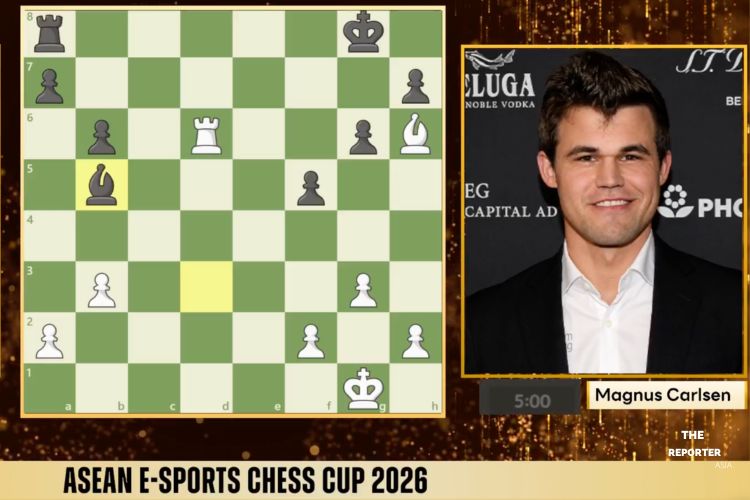
In a groundbreaking fusion of classic strategy and digital innovation, Bangkok has firmly positioned itself as Southeast Asia’s premier hub for creative tech-driven sports.
Digital Innovation Meets Classic Board Strategy in Bangkok
The ASEAN E-Sports Chess Cup 2026, hosted at the prestigious Four Seasons Hotel Bangkok at Chao Phraya River, has marked a historic turning point for the regional gaming and sports industry. The tournament brought together 22 of the world’s and the region’s top mind-sports athletes to compete entirely through digital interfaces rather than traditional wooden chessboards. Organized by the Thailand Chess Association in strategic partnership with WR Chess, this high-profile event successfully transformed a centuries-old game into a fast-paced, spectator-friendly digital entertainment format. By shifting the battleground to computer screens, the tournament attracted massive engagement from younger demographics, redefining how intellectual sports are commercialized and broadcasted globally.
The economic and logistical execution of the tournament highlighted Thailand’s world-class digital infrastructure and readiness to host premium international tech events. Beyond the intense mental battles on screen, the event served as a major showcase for the country’s hospitality and creative industries, drawing global eyes to Bangkok’s scenic riverside. Key stakeholders noted that the smooth technical operation of a high-stakes, real-time international competition provides an excellent blueprint for future digital sports tourism in the country. It effectively demonstrated that Thailand can seamlessly integrate luxury tourism with high-tech infrastructure to capture a lucrative market of global consumers.
From a broader developmental perspective, the tournament has set a new benchmark for how intellectual games can leverage esports infrastructure to generate massive marketing value. The integration of advanced broadcast technologies, multi-angle camera feeds, and real-time computer-generated evaluation bars made the complex nuances of elite chess accessible to a mainstream audience. This innovative approach bridges the gap between traditional athletic competition and the rapidly expanding digital economy. Government officials and business leaders alike view this successful model as a highly replicable strategy to drive forward-thinking investments across the wider Southeast Asian technology landscape.
Rapid Format Catalyzes Economic Potential and Media Appeal
The choice of a strict and punishing Rapid Chess format—where each player was strictly allocated 10 minutes per game with no incremental time added—served as a primary catalyst for intense drama. This fast-moving structure was engineered specifically to meet the consumption habits of modern audiences, ensuring that every individual match concluded in under 20 minutes. The high-velocity format created immense psychological pressure on the competitors, making split-second tactical errors inevitable and keeping spectators on the edge of their seats. This deliberate design directly addresses the entertainment industry’s demand for concise, high-stakes content that maximizes viewer retention across digital streaming networks.
By packing the group stages into the morning and the elimination brackets into the afternoon, the entire tournament was completed in a single action-packed day. This compact scheduling minimized operational overheads while maximizing the media impact and concentrated viewership metrics. Industry experts point to this tournament as a prime operational model for modern mind-sports entertainment, demonstrating how to generate maximum economic output and digital engagement in a highly condensed timeframe. The rapid nature of the event also proved highly lucrative for sponsors and advertisers, who benefited from an unceasing stream of viral moments and high-tension gameplay.
The immense commercial potential unlocked by this rapid format signals a paradigm shift in how intellectual sports will be marketed in the future. No longer confined to quiet, prolonged rooms over several days, digital chess can now compete directly with mainstream sports for prime-time broadcast slots and corporate sponsorships. The success of this dynamic operational setup encourages regional event organizers to adopt similar high-speed digital frameworks. Consequently, this helps build a robust commercial ecosystem around intellectual gaming, opening fresh revenue streams in the regional digital entertainment market.

Thai Prodigy Stuns Elite Field Amid Heavyweight Upsets
The morning group stages delivered a series of shocking upsets that reverberated through the global chess community and instantly elevated the tournament’s international profile. The absolute standout moment of the day occurred in Group D, where 10-year-old Thai prodigy Pakornnarong Liukasemsarn achieved the unthinkable by defeating Russian Super Grandmaster Andrey Esipenko. Esipenko, a participant in the prestigious 2026 Candidates Tournament and recognized as one of the strongest players on earth, was outmaneuvered by the brilliant young Thai player. Acclaimed commentator Sagar Shah flagged this spectacular victory as one of the most memorable and historic moments of the entire event, perfectly captured in a post-game photograph of the young Thai boy standing proudly alongside the world champion.
“For Thailand, esports represents an important opportunity to develop the skills and capabilities of the new generation.” — Wadim Rosenstein, Founder of WR Chess
Simultaneously, an absolute catastrophe unfolded in Group B for the world number two, American superstar Fabiano Caruana. In a tense, must-win final group match, Caruana suffered a shocking defeat at the hands of the United Arab Emirates’ Grandmaster Salem A.R. Saleh. This unexpected loss caused the American top seed to sensationally crash out of the tournament in the opening stage, missing the cut for the top two spots. Caruana’s sudden elimination cleared a path for Salem A.R. Saleh and Singaporean rising star Tin Jingyao to secure their tickets to the quarterfinal knockout rounds. This dramatic turn of events emphasized that in high-speed digital chess without time increments, standard classical ratings offer no protection against split-second errors.
Meanwhile, in Group A, International Master Jan Emmanuel Garcia from the Philippines added his own chapter to regional sports history. Although Garcia narrowly missed out on advancing to the knockout phases due to a prior misstep against Spanish Grandmaster José Martínez, his final group performance was a masterpiece. Garcia pushed world number one Magnus Carlsen to the absolute absolute limit, holding the global icon to a thrilling 51-move draw. This exceptional performance ignited immense pride across the ASEAN chess community, proving that Southeast Asian regional talent could directly challenge and share points with the undisputed king of world chess.
Heavyweights Collide in High-Stakes Knockout Brackets
As the tournament shifted into the high-stakes afternoon knockout brackets, the elite contenders immediately reasserted their dominance in dominant fashion. Magnus Carlsen shook off his morning sluggishness to smoothly sweep past Singapore’s Tin Jingyao with a definitive 2-0 scoreline in the quarterfinals. On the other side of the bracket, Vietnam’s former World Blitz Champion, Le Quang Liem, showcased magnificent tactical precision throughout the early rounds. After dominating his group with a flawless 4-4 record, Le Quang Liem eliminated Indonesia’s Megaranto Susanto 1.5-0.5 in the quarterfinals to set up a highly anticipated semifinal showdown against Carlsen.
The semifinal clash between Carlsen and Le Quang Liem quickly became the ultimate highlight of the event, drawing intense focus from fans packed into adjacent rooms. Le Quang Liem entered the match with aggressive, highly meticulous preparation, securing a tangible pawn advantage in the opening game as computer evaluations swung in his favor. However, Carlsen demonstrated his trademark genius in navigating critical crisis situations, utilizing immense clock pressure to force a fatal error from the Vietnamese grandmaster. Carlsen clinically converted the advantage to secure a hard-fought 2-0 victory, sending Le Quang Liem to a commendable joint-third-place finish.
In the parallel bracket, Andrey Esipenko mounted an incredible comeback campaign following his shocking morning loss to the young Thai prodigy. Esipenko narrowly edged past Mongolia’s Amilal Munkhdalai in a thrilling quarterfinal match that required a sudden-death Armageddon tiebreaker to resolve. The resilient Russian then displayed immense tactical power in the semifinals, dismantling Spain’s José Martínez 2-0 to punch his ticket to the grand final. This setup perfectly realized what former Carlsen trainer and commentator Jan Gustafsson enthusiastically labeled a “dream final” between two of the most aggressive digital chess players in the world today.
Armageddon Showdown Seals Carlsen’s Historic Esports Crown
The grand final between Magnus Carlsen and Andrey Esipenko lived up to its massive billing, delivering world-class drama. Carlsen claimed first blood in the opening game, executing a cold, flawlessly precise endgame grind that left Esipenko with no options. Refusing to back down, Esipenko launched a ferocious, highly creative kingside assault in the second game, leaving Carlsen’s king completely exposed in the center of the board. Carlsen candidly admitted post-match that he had entirely overlooked Esipenko’s ability to castle queenside, forcing his immediate resignation and locking the match at an explosive 1-1 tie.
With the championship on the line, the tournament moved into its final, most ruthless tiebreaking phase: an Armageddon match. Under this high-pressure rule set, Carlsen commanded the white pieces with 5 minutes on his clock, while Esipenko held black with 4 minutes. However, the black pieces carried a massive draw-odds advantage, meaning Esipenko would claim the entire championship if the game ended in a tie. Facing immense pressure, Carlsen deliberately steered the game into a dry, highly technical position, betting on his peerless endgame mastery despite commentator Jan Gustafsson questioning the risky strategy against an opponent of Esipenko’s caliber.
Carlsen’s high-stakes gamble paid off beautifully as his unmatched speed and technical precision under time distress proved decisive. As the clock ticked down, Esipenko crumbled under the dual pressure of an inferior position and severe time trouble, committing rapid tactical errors. Carlsen systematically dismantled his opponent’s defenses to claim the inaugural ASEAN E-Sports Chess Cup title and the $8,500 first-place prize. Esipenko secured a well-deserved second place along with $6,000, while Le Quang Liem took home $2,500 for third. The victory further expands Carlsen’s legendary collection of digital trophies following his Esports World Cup triumph, securing his legacy as the region’s first-ever digital chess king.
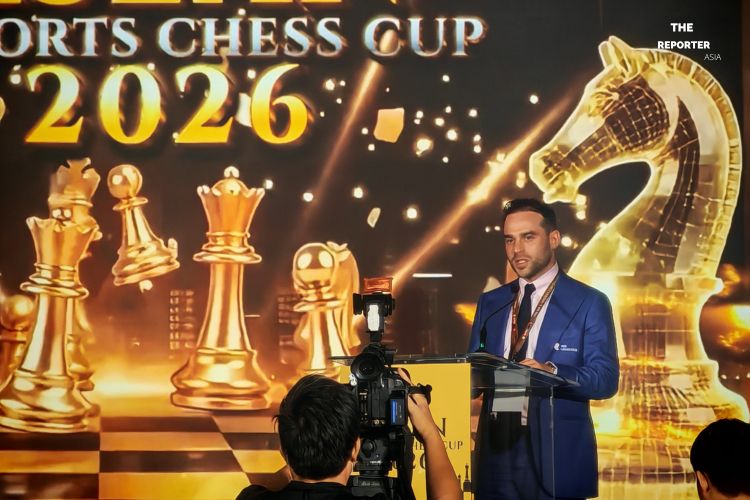
Government and Global Partners Unite to Drive Creative Economy
The resounding success of the ASEAN E-Sports Chess Cup 2026 serves as a major validation of Thailand’s strategic economic pivot toward the digital creative economy. The presence of high-ranking dignitaries, including former Thai Minister of Higher Education Supamas Isarabhakdi and Thailand Chess Association President Sahapol Nakvanich, underscored the immense state backing for the initiative. By actively championing esports as a legitimate pillar of soft power and economic growth, the Thai government is signaling its clear intent to foster innovation-driven industries. This structural integration of state support and private capital creates an incredibly lucrative environment for technology firms, media networks, and international investors looking to tap into the booming Southeast Asian entertainment ecosystem.
Looking to the future, the blueprint established by this tournament provides an exceptional roadmap for sustainable public-private partnerships in sports technology. The collaborative efforts between global entities like WR Chess and local regulatory authorities pave the way for regular, highly advanced tech events within the region. This ongoing synergy is anticipated to accelerate infrastructure spending, elevate local digital broadcasting standards, and nurture a highly capable workforce specialized in digital event production and competitive gaming management. These elements are absolutely vital for cementing Thailand’s long-term goal of becoming the indisputable digital sports hub of ASEAN.
Ultimately, the commercial and cultural impact of the event extends far beyond the monetary prize pools distributed to the elite competitors. By demonstrating that a traditional, intellectual game can be successfully monetized into a highly viral digital commodity, Bangkok has opened up entirely new frontiers for the creative economy. The inspiring performance of young local talent like Pakornnarong Liukasemsarn guarantees that grassroots interest in technology and mind sports will continue to surge. As the country continues to capitalize on this digital momentum, the fusion of intellect, entertainment, and advanced technology will undoubtedly serve as a critical engine driving Thailand’s economic growth in the twenty-first century.
#MagnusCarlsen #ASEANEsports2026 #DigitalEconomy #EsportsTourism #BangkokEsportsHub #MindSportsEconomy #WREchess #CreativeEconomy #TechSports #EsportsBusiness