

Thailand enters a critical economic transformation as a high-powered national coalition unifies tech infrastructure, data governance, and workforce upskilling to turn AI adoption into measurable business value.
The Dawn of Thailand’s Structured AI Era
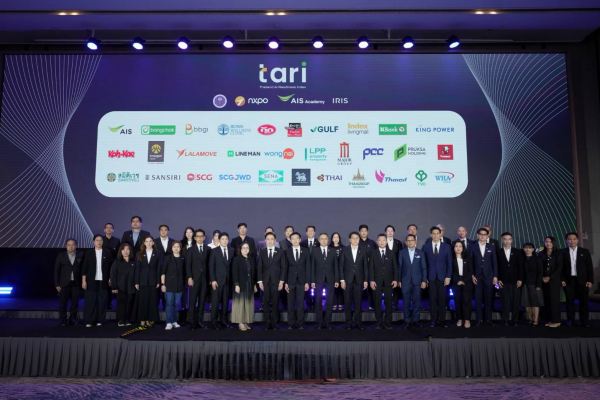
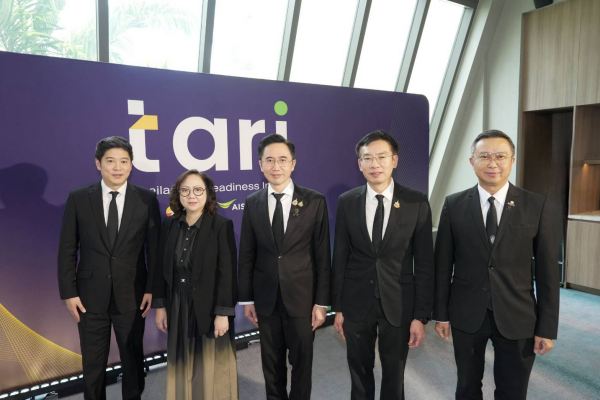
The landscape of the Thai digital economy has officially shifted from a trend-chasing technology adoption model to a highly structured, value-driven era of digital maturity. In an unprecedented national collaboration, the Ministry of Higher Education, Science, Research and Innovation (MHESI), through the Office of National Higher Education Science Research and Innovation Policy Council (NXPO), has joined forces with AIS Academy and IRIS Consulting to officially launch the “Thailand AI Readiness Index” (TARI). Unveiled on July 2, 2026, in Bangkok, this pioneering national index serves as the country’s very first standardized assessment tool designed specifically to measure, benchmark, and scale up artificial intelligence capabilities across both public and private sectors.
For years, Thai enterprises have heavily poured capital into securing state-of-the-art technological architectures, yet many have struggled to translate these immense investments into tangible corporate performance or commercial output. TARI addresses this critical bottleneck by diagnosing structural gaps across organizational functions, ensuring that AI implementations are backed by solid data governance, human capabilities, and operational readiness. Rather than acting as a simple scorecard, the initiative operates as a national strategic operating system that allows entities to accurately plot their position on the digital maturity spectrum and successfully navigate complex technological transitions.
This initiative arrives at a time when global technological competition requires deep self-awareness and localized precision. Professor Dr. Yodchanan Wongsawat, Deputy Prime Minister and Minister of MHESI, highlighted the macroeconomic gravity of this launch during his keynote address, noting that effective AI integration is no longer optional for nations aiming to escape middle-income traps.
“AI is not merely a new technology; it is becoming a key factor in shaping the direction of national development across the economy, industry, innovation, and workforce,” Professor Dr. Yodchanan stated. “The TARI initiative plays an important role in building a systematic understanding of the current level of AI readiness among Thai organizations, providing a critical foundation for the government to design targeted policies.”
Decoding TARI: The Multi-Level Strategic Framework
At the absolute core of TARI is a sophisticated, multi-level evaluation architecture that rejects one-size-fits-all metric systems in favor of deep, multi-dimensional analysis. The framework assesses organizations across three distinct operational layers: the organizational view (L1), which evaluates strategic vision among C-suite executives; the functional view (L2), which captures operational readiness across specific business units; and the individual view (L3), which directly tests the practical AI literacy and technological capabilities of the workforce. This holistic, 360-degree perspective ensures that an enterprise’s leadership goals are perfectly synchronized with the ground-level capabilities of its workforce.
To ensure absolute coverage of organizational dynamics, TARI breaks down its evaluation into eight comprehensive, foundational pillars. These pillars analyze critical corporate dimensions including AI strategy and leadership, rigorous data management, technology and infrastructure, workforce skills, risk governance, business value creation, change management culture, and realized implementation impacts. Through these metrics, organizations are categorized into five distinct stages of maturity: Aware, Active, Operational, Systematic, and Transformational. This enables corporate boards to move past superficial market trends and target precise technical deficiencies.
By looking beyond basic tech adoption, TARI provides a clear mechanism to link operational capabilities with business survival. Mr. Boriwat Pinpradab, Chairman at IRIS Consulting, explained the pervasive corporate dilemma that necessitated this meticulous structure.
“From IRIS’s experience working with organizations across a wide range of industries, we have found that many organizations are committed to advancing AI, but remain uncertain about where to invest first,” Mr. Boriwat observed. “Before developing a roadmap, organizations must first understand their starting points. TARI acts as a strategic framework that establishes a common language for AI readiness in Thailand going forward.”
Public-Private Alliance Securing Data Governance and Scalability
A major factor separating TARI from typical commercial assessments is its structural foundation as an independent, public-private consortium known as the AI Readiness Consortium (ARC). Within this alliance, each founding partner serves a specialized role: NXPO acts as the independent Data Governor aligning the framework with national development goals; AIS Academy serves as the Industry Anchor bridging corporate ecosystems; and IRIS Consulting manages the Project Management Office (PMO) responsible for scoring systems, data methodologies, and dashboard infrastructure. This balanced distribution of power ensures that data collection remains completely neutral, highly secure, and free from corporate bias.
Addressing valid private-sector anxieties regarding intellectual property and data confidentiality, TARI’s data governance architecture is rigidly aligned with international standards. The entire framework is built in compliance with Thailand’s Personal Data Protection Act (PDPA), ISO/IEC 27001, and the NIST AI Risk Management Framework (NIST AI RMF). Raw institutional data will never leave the secure system without explicit board approval, and comparative benchmarks will only be generated for industrial sectors containing a minimum of five participating organizations to completely prevent corporate deanonymization.
The scaling strategy for TARI is remarkably ambitious, moving rapidly from initial corporate pioneers to widespread macroeconomic integration. While over 40 leading Thai conglomerates have already committed to the initial cohort to establish a premium national benchmarking database, the project is designed to aggressively expand into small and medium-sized enterprises (SMEs) and critical supply chains. The alliance has established a definitive target of auditing at least 5,000 organizations within the first year of operation, with long-term blueprints aiming to surpass 20,000 audited enterprises as the platform scales globally.
Economic Impact and the Path Toward Precision Transformation
The launch of TARI marks a crucial evolutionary leap for Thailand’s industrial policymaking, mirroring the structural success of previous national initiatives like the Thailand Industry 4.0 Index. Professor Dr. Supachai Pathumnakul, Permanent Secretary of MHESI, pointed out that having access to centralized, standardized readiness data allows academic institutions and state bodies to co-create hyper-targeted upskilling curriculums. By understanding exactly which sectors lag in specific dimensions, such as data management or infrastructure, the state can deploy educational and financial resources with maximum surgical precision.
On a broader macroeconomic scale, TARI is explicitly designed to harmonize with global readiness standards, including compliance frameworks set forth by UNESCO, the OECD, and international technological benchmarks. This alignment ensures that as Thai companies elevate their local TARI scores, they simultaneously enhance their cross-border compatibility and attractiveness to foreign direct investment (FDI). Furthermore, the index will expand by 2027 to include an “AI Capability Passport,” a verified credential that will allow Thai businesses and professionals to formally validate their AI competence on the global stage.
True national resilience, however, stems from a deep-seated corporate commitment to social progress and collective growth. Ms. Kantima Lerlertyuttitham, Deputy Chief Executive Officer and Chief Corporate Officer at AIS, summarized the foundational philosophy behind this massive nation-building endeavor.
“Guided by AIS’s core vision of ‘Think Ahead for Thais,’ we look beyond the development of technology within our own organization,” Ms. Kantima emphasized. “The transition into the AI era must begin with a clear understanding of an organization’s readiness across people, skills, data, work processes, and organizational culture, rather than technology investment alone. We believe TARI will help our country move confidently toward an AI economy where competitiveness is defined by who is better prepared to use AI effectively.”
#ThailandAIReadinessIndex #TARI #DigitalTransformation #ThaiEconomy #AISAcademy #NXPO #IRISConsulting #AITransformation #DataGovernance #SMEsThailand #GlobalCompetitiveness