

Global energy company PETRONAS is actively expanding its liquefied natural gas portfolio from 40 million tons per annum to 50 million tons per annum by 2035. The growth strategy centers on strengthening supply flexibility across the Asia-Pacific and Atlantic basins to support regional energy security and meet the continuous baseload power requirements of expanding digital infrastructure.
Global Portfolio Expansion and Upstream Strategy
PETRONAS is scaling its international footprint to meet long-term contract commitments across major consumer markets. The company’s total LNG production capacity is projected to increase from the current 40 million tons per annum to approximately 50 million tons per annum by 2035. The baseline consists of 30 million tons per annum from domestic operations in Bintulu, Sarawak, while international production nodes will account for the remaining 20 million tons per annum. Key offshore production facilities and pipeline networks feed into this supply chain. A new 2 million tons per annum facility in Sabah is also scheduled for commissioning by the middle of next year to support deliveries to East Asian markets.
The expansion includes volume from the LNG Canada Phase 2 development, where the final investment decision (FID) is targeted for the second half of this year. In addition to its Canadian operations, PETRONAS holds a 4 million tons per annum offtake position in the Gulf of Mexico, maintains upstream stakes in Australia and the Masela block’s Abadi field in Indonesia, and is actively assessing deepwater projects in Suriname. The Suriname integrated project aims to supply European buyers with up to 2.4 million to 5 million tons per annum. At the Dragon LNG import terminal in the United Kingdom, the company holds 48 regasification slots annually to facilitate access across the Atlantic market.
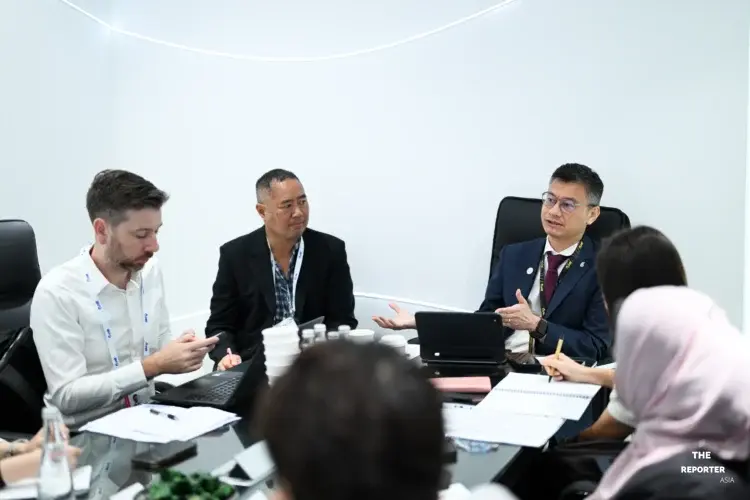
“We don’t consider ourselves just as energy suppliers; we are service providers,” said Ezran Mahadzir, Vice President of LNG Marketing and Trading at PETRONAS. “The product is just a vehicle in terms of how we are providing our services, and how we provide services is by being solution-focused, whereby we understand the needs of our customers and we try to solve their pain points. Because we are an integrated operator, we are able to align upstream, plant operations, and shipping to minimize disruptions and deliver greater reliability.”
Securing Asia-Pacific Energy Security and Data Center Demand
The Asia-Pacific region continues to represent the core destination for PETRONAS volumes. The operator utilizes its fleet of more than 33 dedicated LNG vessels to maintain direct supply lines, ensuring round-trip deliveries within seven days to Japan, South Korea, and China. The company has completed more than 12,000 commercial cargo deliveries without missing a single contractual shipment since initiating its export operations in 1983. This logistical proximity provides buyers with operational insulation against Middle Eastern geopolitical friction and shipping bottlenecks.
The rapid deployment of enterprise hyperscale data centers across Southeast Asia, particularly in Malaysia and Thailand, is driving substantial baseload power consumption. Because hyperscale facilities demand uninterrupted 24/7 uptime, natural gas remains the primary dispatchable energy source required to offset the intermittency of renewable installations. Commercial contract structures are diversified across multiple benchmark indexes—including Henry Hub, AECO, Brent, JKM, GCC, TTF, and NBP—to offer buyers hedging flexibility amid global market volatility.
“In this kind of volatile environment, the partnerships that we have with our buyers are really based on long-term foundations where we help each other out,” Mahadzir explained. “Data centers require almost perfect reliability; you cannot miss out on milliseconds. As a baseload for those hyperscalers and data centers, gas will still be top of mind, and our promise is that the supply will be at their doorstep because of our integrated capacity and shipping flexibility.”
Regional Cross-Border Collaboration and Decarbonization
PETRONAS continues to leverage bilateral energy agreements across the Association of Southeast Asian Nations (ASEAN). The Malaysia-Thailand Joint Development Area (MTJDA), operated in partnership between PETRONAS and PTT, serves as a primary framework for offshore gas production and pipeline integration. Gas is transported via the Trans-Thailand-Malaysia pipeline network into Songkhla and peninsular Malaysia, while offshore infrastructure connects directly into the Gulf of Thailand.
To support customer emissions reduction mandates, PETRONAS is scaling its Carbon Capture and Storage (CCS) infrastructure. The business model integrates physical LNG deliveries with cross-border carbon management to deliver a full lifecycle solution. Under this framework, power utilities receiving LNG shipments can capture carbon dioxide emissions at the combustion site, which PETRONAS subsequently takes back and injects into offshore depleted reservoirs and dedicated geological storage sites across Malaysia.
#PETRONAS #LNG #EnergySecurity #NaturalGas #AsiaPacific #EnergyTransition #DataCenters #CCS #MTJDA #OilAndGas