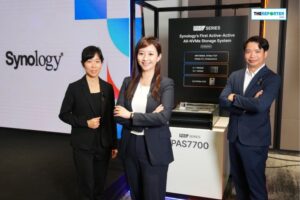


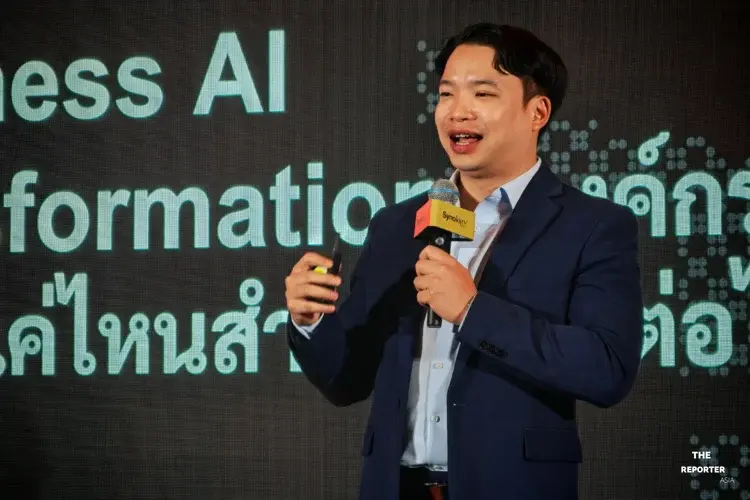
Synology Inc. has officially introduced its next-generation data infrastructure lineup, spearheaded by the PAS7700 all-flash NVMe storage system, the ActiveProtect data protection platform, and the DSM Agent diagnostic assistant at the Synology Press Event 2026 in Bangkok. The deployment targets critical enterprise bottlenecks highlighted in recent regional industry research, underscoring that robust data infrastructure, verifiable cyber resilience, and structured workplace governance form the indispensable foundation for turning artificial intelligence investments into tangible business outcomes.
Bridging the Infrastructure Gap for Scalable AI Workflows
According to findings from The Synology 2026 Southeast Asia Business AI Transformation Survey, 86% of enterprise respondents in Thailand recognize that AI-ready infrastructure is essential to sustaining workflow efficiency and workplace productivity. Despite this widespread recognition, merely 31.3% currently categorize infrastructure readiness as an urgent strategic priority. This disparity reveals that while regional organizations acknowledge the transformative potential of artificial intelligence, many have yet to prioritize the underlying storage frameworks required to sustain heavy computational models before scaling implementations across operational departments.
Operational data management hurdles continue to stall adoption timelines across multiple industry sectors. The survey indicated that 64.4% of businesses identify data security and privacy concerns as their primary operational obstacle, followed by data quality and accessibility at 47.3%, and upfront system deployment costs at 33.7%. Without high-speed storage channels capable of feeding data directly into compute engines, high-performance computing hardware faces recurring input/output bottlenecks that delay critical decision-making processes.
Antoine Yang, Southeast Asia Head at Synology Inc., noted that enterprise AI success is fundamentally anchored in reliable data readiness. “AI is shifting from selecting tools to proving business outcomes. Success depends on an organization’s ability to store, access, protect, and use data in time for decision-making,” stated Antoine Yang. He emphasized that artificial intelligence only delivers measurable returns when enterprise datasets are thoroughly prepared, storage systems can support intensive workloads without disruption, and operational workflows can recover immediately from unforeseen technical incidents.
High-Throughput NVMe Storage and Capacity Optimization
To address throughput restrictions in data pipelines, Synology unveiled the PAS7700, the company’s first all-flash NVMe SSD storage system engineered specifically for mission-critical enterprise workloads and accelerated AI analytics. Operating on the updated DSM 7.4 platform, the system incorporates Synology Tiering and advanced data reduction capabilities across traditional hard drive tiers. This architecture enables IT administrators to allocate processing-heavy operational files to ultra-low-latency flash arrays while routing bulk datasets to scalable high-density tiers, lowering total hardware acquisition costs.
The operational viability of this flash architecture was demonstrated through an enterprise deployment at Ethos Media Production. Utilizing a 70 TB PAS7700 central unit serving 15 concurrent production users, the studio reduced the transfer time required to upload a 100 GB uncompressed video file from approximately 40 minutes down to just 2 minutes. This transfer acceleration eliminated post-production waiting periods and streamlined broadcast asset deliveries.
Alongside the PAS7700, Synology introduced refreshed iterations of its FS Series and RS Series systems to handle general enterprise data demands. The company also detailed the development of scale-out object storage systems capable of clustering up to 48 active hardware nodes into a unified data architecture. This architecture supports an increasing shift among regional enterprises moving away from public-cloud-first policies toward hybrid on-premises environments designed to maintain absolute data sovereignty.
Ransomware Recovery via the 3-2-1-1-0 Defense Framework
Regional survey metrics revealed persistent operational risks surrounding corporate data security and recovery preparedness. While 92% of surveyed businesses in Thailand currently deploy dedicated data protection tools, only 21.4% express complete confidence in their ability to rapidly restore operations from a ransomware event while keeping backup repositories intact. Conversely, 38.5% of respondents openly acknowledged being unprepared for sophisticated AI-driven cyber threats, and 32.5% remained uncertain whether primary datasets could be restored following an attack.
To eliminate these vulnerabilities, Synology advocates for the complete architectural separation of backup environments from live production workloads alongside the strict adoption of the 3-2-1-1-0 backup methodology. Under this framework, organizations maintain three copies of critical data across two distinct storage media types, with one copy isolated offsite and one copy preserved in an immutable or air-gapped environment, supported by regular recovery verification to guarantee zero data restoration errors.
These protective protocols are operationalized through the ActiveProtect appliance family, including the standalone 1U DP5200 appliance, which operates free of recurring software licensing fees. Managed through ActiveProtect Manager 2.0, the solution expands platform coverage to Nutanix AHV and Proxmox VE hypervisors while introducing volume-level encryption. Synology is also engineering AI-enhanced anomaly detection capabilities to flag irregular modifications, alongside automated sandbox malware scanning and auto-fallback recovery routines to prevent corrupted restore points.
Workplace Governance and On-Premises DSM Agent Integration
Enterprise adoption of digital productivity assistants has yielded measurable operational efficiencies, particularly as 73% of corporate personnel in Thailand report spending over 10 hours each week on repetitive administrative documentation. Deploying automated tools for draft compilation, presentation structuring, and spreadsheet analysis can return substantial working hours to personnel. However, these productivity gains introduce serious data leakage risks: 34% of organizations lack technical usage policies for employee AI access, 47.1% lack visibility into how third-party tools manage shared enterprise data, and only 26.1% enforce usage boundaries through technical controls.
Rahat Boontunjeen, Country Manager for Thailand at Synology Inc., highlighted the necessity of replacing passive compliance advisories with enforceable on-premises technological controls. “AI in the workplace should start from business needs that create value, accompanied by clear answers on where data resides, who has access, and what information is shared externally. Verifiable controls allow organizations to expand adoption with confidence,” explained Rahat Boontunjeen. He noted that local redaction and on-premise governance prevent unauthorized external exposures of sensitive corporate assets.
To support compliant productivity workflows, the Synology Office Suite enables local document editing, slide composition, and spreadsheet processing on private internal networks without routing data through public cloud infrastructure. Secure communication is managed via Synology ChatPlus and Meet, which handle on-premise conversation translation and meeting summaries. For administrative operations, DSM 7.4 integrates the DSM Agent, a natural-language diagnostic assistant that resolves IT inquiries, flags account irregularities, and guides system configurations strictly within existing administrative role permissions.
Intelligent Physical Surveillance and Commercial Availability
Expanding on physical facility security, Synology introduced the DVA7400 network video recorder, an appliance utilizing onboard AI video analytics to track movements and execute targeted footage searches using visual object attributes, such as apparel color or physical characteristics. The unit interfaces with standard third-party IP cameras, converting conventional monitoring setups into automated investigative networks that eliminate labor-intensive manual footage reviews. Furthermore, ongoing engineering work into scale-out architectures and hybrid surveillance frameworks aims to facilitate multi-site expansion for distributed corporate facilities.
The PAS7700 all-flash storage system, ActiveProtect backup appliances, DSM 7.4 platform, and DVA7400 surveillance units are commercially available across regional enterprise distribution channels in Southeast Asia. Built-in productivity software modules and the DSM Agent assistant deploy directly onto supported Synology hardware without requiring subscription-based license renewals.
#Synology #DataInfrastructure #CyberResilience #AITransformation #DataStorage #EnterpriseBackup #PAS7700 #ActiveProtect #TechNews