
The Thailand Center of Excellence for Life Sciences (TCELS) has unveiled an ambitious strategy to cement the nation’s position as a regional high-value medical hub, announcing a THB 500 million (approx. USD 13.6 million) annual strategic fund to catalyze growth across five core industries. Revealed at the “TCELS Business Forum 2025: The Future of AI-Enabled Health,” the plan heavily emphasizes Artificial Intelligence as a key driver for innovation and aims to generate over THB 1.2 billion (approx. USD 32.7 million) in economic value by 2025, signaling a new era for Thailand’s burgeoning life sciences ecosystem.
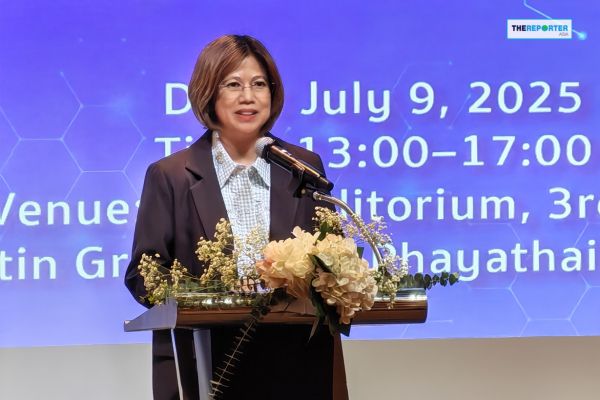
Bangkok, Thailand – At the landmark investment forum, Dr. Patcharaporn Wongsa, Director of the Nutraceutical and Cosmeceutical Program and Acting Director of the Industry Strategy and Investment Department at TCELS, outlined a clear vision for the future. She articulated a strategic shift for Thailand, moving beyond being a mere consumer of medical technology to becoming a formidable creator of world-class, homegrown innovations.
“Thailand’s medical and health industry has made tremendous progress,” Dr. Wongsa stated in her opening address. “We are now developing more of our own innovations. The most prominent area is medical devices, where we have successfully developed and propelled six new products into the National List of Innovation and the Universal Health Coverage (UHC) scheme. This includes innovations like dental implants, ostomy bags, dynamic prosthetic feet, and artificial tears, which significantly reduce our reliance on imports and enhance public access to essential technologies.”
Beyond tangible hardware, Dr. Wongsa highlighted the nation’s significant strides in the deep-tech arena, a critical indicator of a maturing ecosystem. “We are witnessing clear success in advanced fields like biologics and targeted therapies. For instance, the first targeted cancer drug registered by the Chulabhorn Research Institute is a monumental benefit for patients in our country. Likewise, advancements in cell therapies like CAR T-cell, which are being developed by several leading institutions, reflect that our personnel and infrastructure are ready to compete on the global stage.”
The engine driving this national ambition is TCELS’s new strategic framework, backed by a substantial budget. Dr. Wongsa detailed that for the 2025-2026 fiscal years, TCELS will operate with a combined annual budget of approximately THB 500 million. This capital is earmarked to foster innovation across five key pillars, with the explicit goal of generating a return on investment measured in broad economic impact, projected to reach THB 1.2 billion.
The five core pillars of TCELS’s strategic focus are:
- Medical Devices and Medical AI: Positioned as a “Quick Win” sector due to its immediate market demand and potential for rapid impact, this pillar will receive a significant portion of the budget. The integration of Artificial Intelligence for diagnostics is a top priority.
- Natural Products: The second “Quick Win” pillar, this area leverages Thailand’s rich biodiversity. The focus is on developing evidence-based cosmeceuticals and herbal medicines. Combined, these first two pillars are slated to receive over 50% of the total strategic funding.
- Advanced Pharmaceuticals: This pillar targets the development of complex and innovative drugs, particularly biologics, to address challenging diseases and enhance the nation’s pharmaceutical self-sufficiency.
- Genomics Medicine: Embracing the global trend of precision medicine, TCELS will promote the use of genetic data for personalized disease prevention, diagnosis, and treatment.
- Digital Health: This broad category encompasses the digital technologies set to revolutionize healthcare delivery, making it more efficient, accessible, and patient-centric.
With AI as the central theme of the forum, Dr. Wongsa elaborated on its pivotal role in the strategy. “We are focused on supporting what is known as ‘Narrow AI’—specialized AI that excels at specific tasks, particularly in diagnostics. An AI that assists radiologists in reading chest X-rays, for example, can drastically reduce human error and increase accuracy. The more cases an AI learns from, the more proficient it becomes,” she explained. “However, we are acutely aware of the ethical challenges and the critical importance of data security. This is why TCELS has already developed and published ‘Ethical Guidelines for the Use of AI in Medicine.’ This proactive measure ensures that our innovation drive proceeds responsibly and maintains public trust.”
The support mechanism designed by TCELS is comprehensive, intended to guide innovators from the laboratory bench to commercial success. “Our support system has two main parts,” Dr. Wongsa detailed. “The first is funding. We concentrate on late-stage projects with a Technology Readiness Level (TRL) of 7 or higher—meaning they are ready for human clinical trials and regulatory registration. Our funding is provided as a non-refundable grant with no maximum cap; we have previously funded projects well over the ten-million-baht mark. The key condition is that applicants must be a partnership between a researcher and a commercial enterprise. This ensures that the research is market-driven and has a clear path to commercialization.”
The second, equally vital component is non-financial support. “Our role doesn’t end once a product is registered. We remain committed to helping them succeed in the market,” she affirmed. “We facilitate this through our Business Forum for business matching, provide training to prepare them for capital markets, and actively help them penetrate global markets. In the cosmeceuticals space, for instance, we have a strong partnership with France’s Cosmetic Valley, the world’s leading cosmetics cluster. Each year, we select promising Thai entrepreneurs to attend the prestigious ‘Cosmetic 360’ event in Paris, opening doors to international business opportunities and elevating the standard of Thai products.”
The tangible results of this strategy are already evident. Dr. Wongsa proudly noted, “We have successfully guided six Thai-made innovations into the public health system under the UHC scheme. This list includes the aforementioned medical devices and also critical products like a pertussis (whooping cough) vaccine and a screening kit for liver fluke, all of which are now accessible to the public at little to no cost.”
For entrepreneurs and researchers eager to participate, Dr. Wongsa provided a clear pathway. “We typically issue our open call for proposals between August and September each year. Interested parties can find information on the TCELS website and through the national NRIIS system. We welcome all innovations that have high potential and address the country’s needs.”
Concluding her address, Dr. Wongsa shared a powerful vision for the future. The ultimate goal, she explained, is to shift Thailand’s healthcare paradigm from a reactive model focused on “treatment” to a proactive one centered on “prevention.” Technologies like AI and genomics are the essential tools to achieve this transformation. The TCELS Business Forum 2025, therefore, was more than an investment event; it was a declaration of Thailand’s readiness to embrace a new era of healthcare, driven by innovation, data, and artificial intelligence.
#TCELS #ThailandLifeSciences #MedicalAI #HealthTech #Biotechnology #MedicalInvestment #ThailandBusiness #Genomics #DigitalHealth #Cosmeceuticals #Bioeconomy