
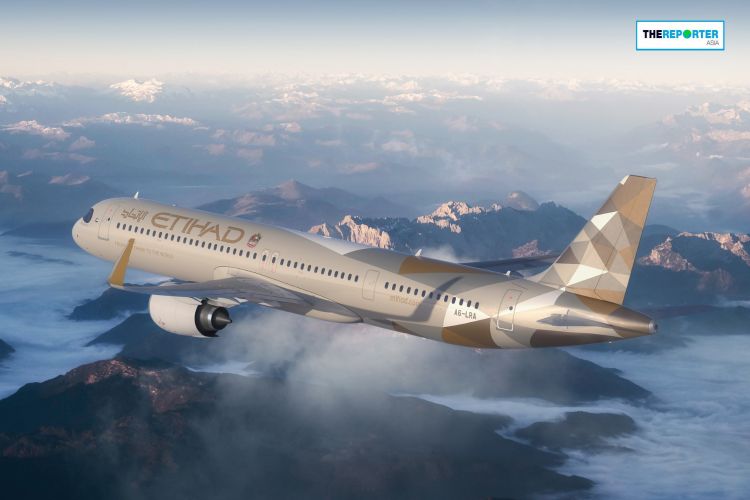
Etihad Airways is initiating a strategic masterstroke in market segmentation, taking delivery of its first Airbus A321LR. This aircraft isn’t merely a fleet addition; it’s a statement of intent, merging narrow-body operational efficiency with an unprecedented level of wide-body opulence, including a true, two-seat First Class cabin.
This aircraft (MSN 12471) signals a new era for the Abu Dhabi-based carrier, challenging the very definition of regional and medium-haul travel. As the first of 20 A321LRs leased from Aercap, this delivery fires the starting gun on Etihad’s ambitious “Vision 2030,” a plan focused on doubling its fleet and pioneering new, high-yield routes across the globe.
The Strategic Pivot: Doubling Down on 2030
For analysts and business leaders, the arrival of this A321LR is far more than a simple equipment update; it’s the physical manifestation of a nuanced and aggressive growth strategy.
The 2030 Fleet Expansion: Etihad’s “Vision 2030” aims to double its fleet size, and the A321neo family is a cornerstone of this expansion. This aircraft is not a replacement but a tool for network growth. The A321LR’s extended range and lower seat count provide Etihad with a ‘scalpel’—the ability to profitably open “long-thin” routes (long-distance routes with less demand) that cannot support the capacity of a wide-body aircraft like an A350 or 787.
Furthermore, it allows the airline to increase frequency on high-demand regional routes, offering business travelers more flexibility. The plan is to deploy these new aircraft across key markets in Europe, Asia, and the Middle East, solidifying Abu Dhabi’s status as a global hub.
The Aercap Deal and Market Confidence: The 20-aircraft lease agreement with Aercap, a global leader in aviation leasing, is a significant vote of confidence. For Etihad, leasing provides flexibility, reduces capital expenditure, and allows for faster fleet modernization. For Aercap, it signifies a strong belief in Etihad’s strategic direction and the long-term value of the A321neo platform.
This move is a calculated deployment of capital, prioritizing agility in a volatile market. It allows Etihad to scale its operations in line with market demand without the heavy financial burden of direct purchases for this entire tranche of aircraft.
Redefining the Cabin: A Three-Tiered Revolution
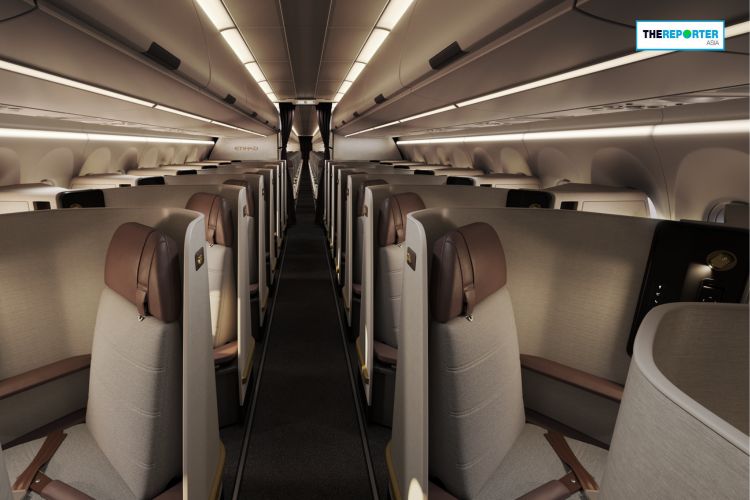
The true disruption lies inside. Etihad has completely inverted the standard narrow-body layout. By configuring this aircraft with only 160 seats, the airline is making a clear bet on yield over volume. This low-density configuration is designed from the ground up to protect and enhance premium service, even on flights of four to six hours.
The “Airspace” cabin design, customized for Etihad, creates an immediate sense of premiumization. A contemporary welcome area, paired with sophisticated LED mood lighting, mimics the boarding experience of its larger A380s, psychologically differentiating the product from low-cost competitors before passengers even take their seats.
The First Class Revolution
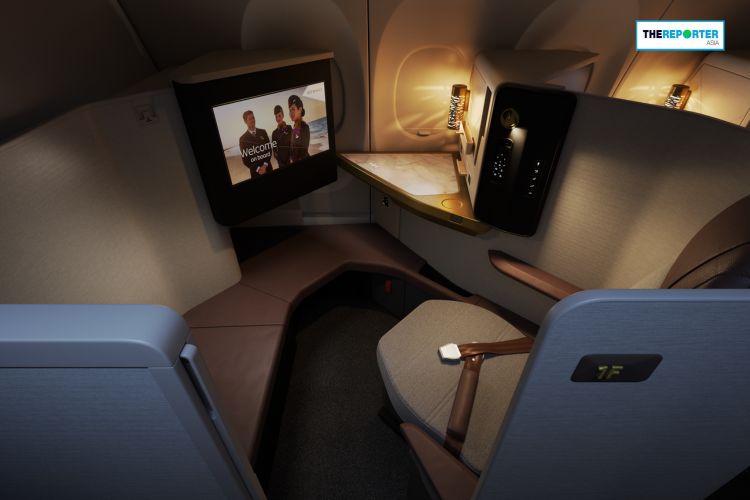
This is the single most audacious and headline-grabbing element. Etihad has installed two “First Private” seats, utilizing the premium Stelia Opera model. This is not a “Business Plus” product; it is a genuine First Class suite, complete with:
- Full lie-flat capability.
- Significant personal space and privacy.
- The full-service standards expected of First Class.
The Business Rationale: This move allows Etihad to capture ultra-high-yield passengers (dignitaries, C-suite executives, high-net-worth individuals) on regional routes. It creates a “halo effect” for the entire brand, reinforcing its position as a luxury carrier. It also provides a consistent product offering for passengers connecting from a long-haul First Class flight onto a regional segment.
A New Standard for Business
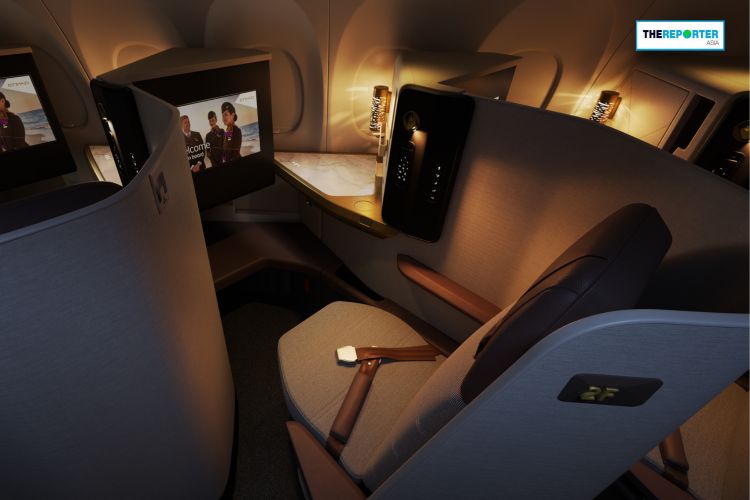
Following the First Class cabin are 14 Business Class seats, which also use the Stelia Opera model. Critically, these are all lie-flat, establishing a new benchmark for regional business travel.
The Business Rationale: For corporate travel managers, product consistency is paramount. This guarantees that business travelers will have a flatbed, regardless of whether they are on a 12-hour flight to New York or a 5-hour flight to a European capital. This reliability is a key driver for securing high-value corporate accounts, ensuring travelers arrive rested and ready for business.
Economy Plus: Elevating the Standard
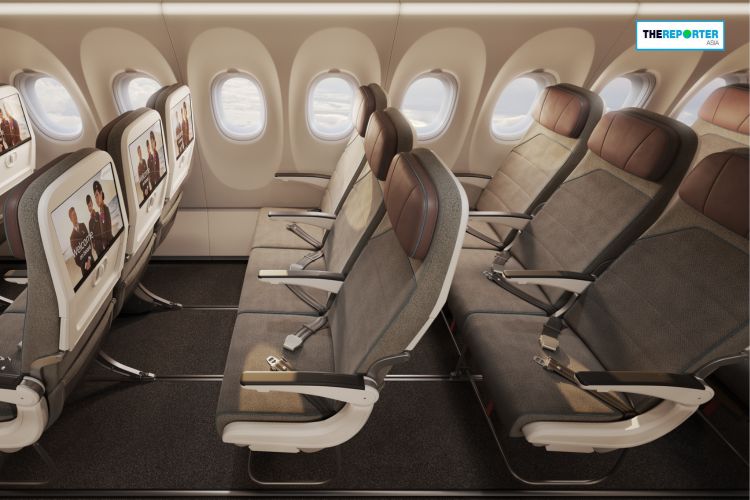
The 144 Economy Class seats (Collins Meridian Plus) reveal the second half of Etihad’s strategy. By offering a seat pitch of up to 39 inches in some rows, Etihad is creating a de-facto “Economy Plus” experience. This is significantly more generous than the industry standard and even rivals the domestic first-class pitch on many other airlines.
The Business Rationale: This isn’t just a comfort feature; it’s a sophisticated “fare-fencing” tool. Etihad can now cater to the entire market spectrum:
- First: Price-insensitive, service-focused.
- Business: Corporate, comfort-focused.
- Premium Economy (implied): Leisure-plus and business-minus travelers willing to pay a premium for extra space.
- Standard Economy: Price-conscious travelers.
This three-tiered product on a single-aisle plane allows for maximized Revenue Per Available Seat Mile (RASM) by capturing revenue from every conceivable customer segment.
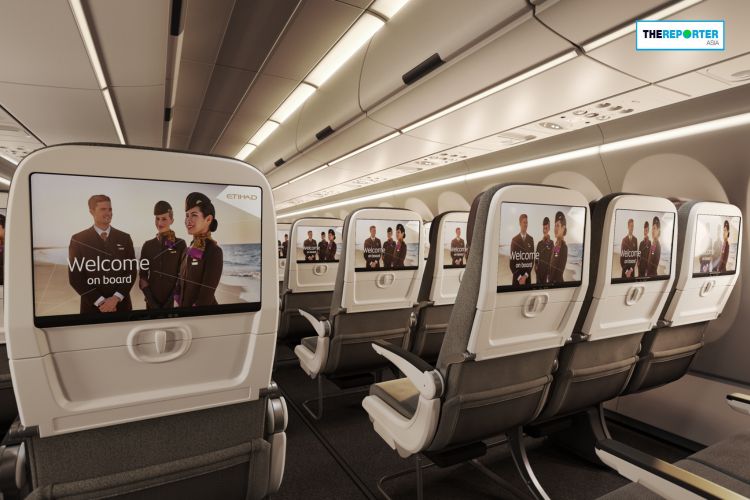
The Digital & Comfort Ecosystem: Anticipating Traveler Needs
Etihad understands that for modern business travelers, connectivity is as vital as comfort. The A321LR is, therefore, a fully connected “office in the sky.”
- High-Speed Connectivity: Viasat’s Ka-band Wi-Fi is installed, offering gate-to-gate high-speed internet access. This is a non-negotiable for executives who need to remain productive.
- Advanced IFE: A state-of-the-art Safran SPI inflight entertainment system provides content on 4K, high-resolution touch screens.
- Bluetooth Audio: In a significant nod to modern preferences, the system supports Bluetooth audio. Passengers can seamlessly connect their personal wireless headphones (AirPods, Bose, etc.), a major upgrade in convenience and hygiene.
- Power for All: Reflecting the “bring-your-own-device” culture, every seat is equipped with both USB-A and USB-C charging ports.
- The Bin Wars: The aircraft features XL overhead bins, which provide 60% more storage space. This directly addresses one of the biggest passenger pain points—the anxiety and chaos of finding space for carry-on luggage. Faster boarding and deplaning is a direct operational benefit.
Even the cabin infrastructure is premium. The galley and service areas are designed to handle complex, multi-course premium meal service. A cleverly designed mid-cabin lavatory acts as a subtle but effective partition, separating the premium First/Business cabins from the Economy section.
The Bedrock of the Strategy: Operational & Market Justification
This strategic bet on premium narrow-body service is not a gamble; it’s built on a foundation of proven technology and operational efficiency.
The “Fleet Commonality” Advantage
This is a crucial, if less glamorous, part of the business case. Etihad already operates a significant Airbus fleet (A320s, A321s, A350s, A380s). The A321LR is part of the A320neo family, which shares a common type rating for pilots.
This fleet commonality delivers massive, long-term operational and financial advantages:
- Reduced Training Costs: Pilots can be cross-qualified to fly different aircraft in the family, creating a more flexible and efficient crew pool.
- Streamlined Maintenance: Maintenance teams are already familiar with the platform, and many spare parts are interchangeable.
- Operational Synergy: The airline can “right-size” the aircraft for a specific route, swapping an A320 for an A321LR with minimal operational disruption.
The Power of the A321neo Platform
The A321LR (MSN 12471) is powered by CFM Leap-1A32 engines and has a Maximum Takeoff Weight (MTOW) of 97 tonnes. These specs translate directly into business capabilities. The “neo” (New Engine Option) engines boast the highest bypass ratio (12:1) in their class.
Combined with aerodynamic improvements like Sharklets (the wing-tip extensions), this aircraft can:
- Fly Farther: Achieve a range of approximately 4,000 nautical miles, opening up new city pairs.
- Burn Less Fuel: Deliver significant fuel savings and reduced carbon emissions—a critical factor in an era of high fuel costs and ESG (Environmental, Social, and Governance) scrutiny.
- Operate Flexibly: It can operate from relatively short runways (1,300 meters), granting it access to secondary airports.
Market Dominance: Betting on a Proven Winner
Ultimately, Etihad’s decision is validated by the market itself. This is not an investment in a niche or unproven product. This is an investment in the most successful aircraft in its class.
The Airbus A320neo family has secured over 11,100 orders, capturing more than 60% of the total narrow-body market. In the large narrow-body segment (the A321’s direct category), its dominance is even more pronounced, with over 80% market share.
With over 4,000 aircraft already delivered worldwide and a stellar operational reliability rate of 99.7%, the A321neo is the undisputed industry workhorse.
By choosing this platform, Etihad is not just buying an aircraft; it’s investing in a proven, efficient, and market-leading asset. The airline’s innovation is not in the hardware itself, but in how it has audaciously configured that hardware.
This A321LR is a microcosm of Etihad’s new philosophy: a blend of strategic market segmentation, uncompromising luxury, and shrewd operational efficiency. It sends a clear signal to competitors that the battle for the premium traveler is no longer confined to long-haul routes—it is now being fought, and redefined, on a narrow-body aircraft.
#Etihad #A321LR #FirstClass #AviationNews #BusinessTravel #LuxuryTravel #Airbus #A321neo #AirlineStrategy #MiddleEast #AviationEconomics #FleetExpansion #Aercap #PassengerExperience #AirspaceCabin #CFMLeap