
As the Chao Phraya Dam increases its water discharge, threatening Thailand’s core economic triangle of Pathum Thani, Nonthaburi, and Bangkok, True Corporation is mobilizing a massive-scale reinforcement of its critical communication network. This is not a routine drill; it is a high-stakes stress test of the nation’s primary digital infrastructure, with the continuity of Thailand’s economy hanging in the balance.
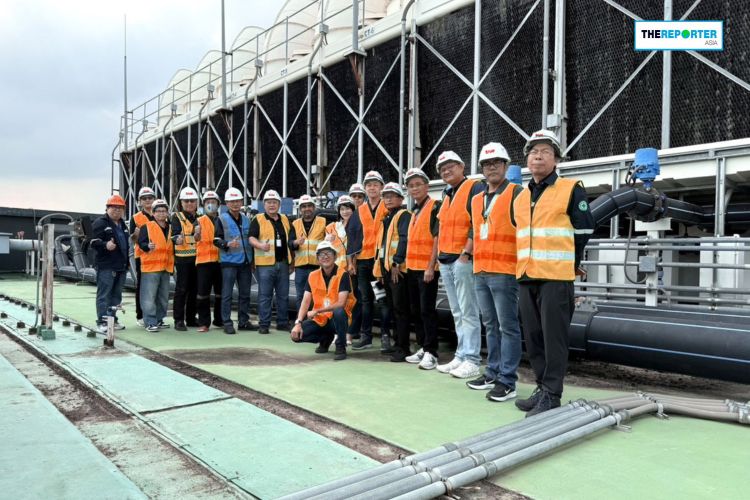
BANGKOK –In a decisive move, the company’s top technical leadership, including Chief Network Officer Mr. Khurrum Ashfaque and Deputy Chief Network Officer Mr. Jirachai Kunakorn, were seen personally leading engineering teams on the ground. Their mission: to inspect and fortify mobile network centers and crucial base stations against the imminent threat of sudden, severe flooding.
This preemptive action from the nation’s leading telecom giant underscores a stark reality for the business community: in 2025, digital connectivity is not a utility; it is the central nervous system of the entire economy. True Corporation’s statement that “communication systems are critical infrastructure” is perhaps the most significant understatement of the year. In an era of cloud computing, remote workforces, digital-first banking, and just-in-time logistics, network downtime is no longer an inconvenience—it is a catastrophic economic event.
The potential impact of widespread network failure in these three provinces cannot be overstated. This region is not just the administrative capital; it is the heart of Thailand’s industrial, financial, and logistical power. A failure here would sever corporate headquarters from their factories, paralyze e-commerce platforms, halt financial transactions, and instantly cripple the supply chains that feed the nation.
The Business Continuity Imperative: Analysis
For business leaders and investors, True’s actions should be viewed through the lens of Business Continuity Planning (BCP) and systemic risk. The lessons from Thailand’s devastating 2011 floods were clear, but the nation’s reliance on digital infrastructure has grown exponentially since. Today, a data center in Pathum Thani or a network operations center in Nonthaburi is as critical as a power plant or a deep-sea port.
What True is currently executing is a live-fire BCP drill, forced by a real-world crisis. The company’s response provides a tactical playbook that other corporations should be studying. Their approach is not merely defensive; it is a complex, multi-layered strategy designed to ensure service continuity at all costs. This proactive stance is a significant investment, signaling to the market that True understands its role not just as a service provider, but as a guardian of economic stability.
The cost of failure is astronomical. Every minute of downtime translates into millions of baht in lost productivity, failed transactions, and logistical snarls. More importantly, it erodes business confidence. In a crisis, the ability to communicate—to coordinate, to manage assets, to pay employees, to reach customers—is the single most important factor separating companies that pivot from those that perish.
True’s mobilization highlights the escalating challenge of climate change on critical infrastructure. Floods are no longer a “once-in-a-century” event; they are a recurring operational risk that must be priced into infrastructure investment. The capital expenditure required to harden these networks—raising base stations, sealing fiber ducts, and ensuring redundant power—is massive. This is the new cost of doing business in a volatile climate.
A Multi-Pronged Defense: The Operational Playbook
True Corporation’s engineering teams are not just patching holes; they are deploying a sophisticated, preemptive defense strategy. The company’s emergency response plan reveals a deep understanding of flood-related network vulnerabilities.
The plan operates on two primary fronts: defense and flexibility.
1. Fortifying the Core (Defense): The primary objective is to protect the static, high-value assets. This includes the main network centers—the “brains” of the operation—and the thousands of base stations that provide last-mile coverage. Mr. Ashfaque and Mr. Kunakorn’s inspections are focused on ensuring these sites are waterproofed, have redundant power sources (batteries and generators), and that all backhaul connections (the fiber-optic links connecting the towers to the core network) are secure.
The company has explicitly stated it is reinforcing signal coverage in key areas. From a business perspective, this means prioritizing zones with high economic and logistical importance—industrial estates, hospitals, government centers, and financial districts. This is a tactical allocation of resources to protect the most critical functions of the economy.
2. Deploying Flexible Assets (Flexibility): True is also preparing for the inevitable: some areas will be compromised. To counter this, the company is preparing its fleet of Cell-On-Wheels (COW). These mobile base stations are the network’s cavalry.
When a fixed tower is flooded or loses power, a COW can be driven to the edge of the affected area to instantly create a new “bubble” of connectivity. This is not just for residential use. This is a critical asset for government officials, local authorities, and volunteers. It ensures that disaster relief and coordination efforts can continue uninterrupted. For businesses in the area, a COW deployment can be the difference between a complete operational blackout and a lifeline that allows for essential communication and data access.
This dual strategy—hardening the core while preparing mobile assets—is a best-practice model for infrastructure resilience.
The Public-Private Mandate: Data, Alerts, and Regulation
In a national crisis, a corporation of True’s scale operates with a clear public mandate. The company’s response demonstrates a tight, essential collaboration between the private sector and government agencies.
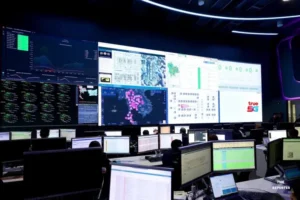
True’s network teams have escalated to 24-hour monitoring of the situation, which is now a data-driven operation. The company is not just waiting for water to rise; it is actively ingesting predictive data from the Thai Meteorological Department to anticipate where the floodwaters will go next and where network stress will be highest.
This intelligence is shared in a two-way collaboration with the Department of Disaster Prevention and Mitigation (DDPM). True’s infrastructure is then used as a critical public safety tool, delivering disaster alerts via Cell Broadcast Service (CBS) and SMS. This system is vital for ensuring people in at-risk areas receive clear, fast, and accurate information, a key factor in saving lives and protecting property.
Furthermore, this entire operation is being conducted in close coordination with the industry regulator, the NBTC (National Broadcasting and Telecommunications Commission). This collaboration ensures that all emergency response protocols are met and that the nation’s key infrastructure is being managed to the highest standard.
This public-private partnership is the backbone of the nation’s response. It ensures that the country’s communication systems—critically, both mobile and home internet—remain continuously operational.
The mention of “home internet” is particularly salient for the post-COVID business landscape. With a significant portion of the workforce operating remotely or in a hybrid model, the resilience of the fixed-line broadband network is just as crucial as the mobile network. A failure in home internet would instantly halt the productivity of thousands of knowledge workers across Bangkok’s suburbs.
Ultimately, True’s role extends beyond just network operations. The company has pledged to support cross-sector efforts to provide relief and help restore affected areas to normal as quickly as possible. This demonstrates a holistic understanding of its corporate responsibility—that a healthy business requires a healthy, functioning society.
For the business leaders of Thailand, the message is clear. The digital foundation you stand on is being aggressively defended. But this event is a powerful reminder to ask: How resilient is my own operation?
#TrueCorporation #ThailandFlood #BusinessContinuity #BCP #CriticalInfrastructure #RiskManagement #Telecom #PathumThani #Nonthaburi #Bangkok #NetworkReadiness #ChaoPhrayaDam #DigitalEconomy #Thailand40