

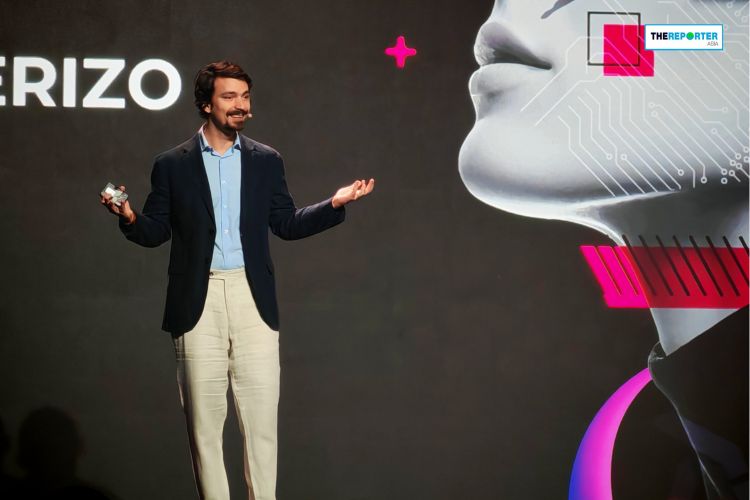
The global travel landscape is currently undergoing a seismic shift, where the boundaries between digital innovation and physical reality are becoming increasingly blurred. At the MarketHub Asia 2026 event in Bali, Javier Cabrerizo, the Chief Strategy, Transformation, and AI Officer at HBX Group, delivered a compelling keynote titled “Travel: Our Anchor to what’s Real.”
He addressed a room of industry leaders, emphasizing that in an era where AI can fabricate convincing holograms and fake Christmas markets, the travel industry remains the “last frontier” of genuine human experience. Cabrerizo’s message was clear: while technology is the engine of efficiency, the soul of travel is found in the sights, smells, and connections that cannot be replicated by an algorithm.
The AAA Strategy: Engineering the Future of Travel Distribution
HBX Group has pioneered a sophisticated “AAA” framework—Automate, Accelerate, and Augment—to navigate the complexities of the modern travel market. The first pillar, Automate, focuses on removing every possible point of friction from the traveler’s journey, from the initial search to the final hotel check-in. By integrating advanced technologies like those from the recently acquired company CivitFun, HBX is enabling deep, seamless integrations with hotel backbone systems to mirror the efficiency of airline online check-ins. This automation extends to customer service, where AI-driven text and voice interactions now handle a significant portion of client inquiries in multiple languages, ensuring that support is always available and accurate.
The second pillar, Accelerate, transforms the sheer volume of data into actionable intelligence. HBX Group processes a staggering 7 billion searches every day, a feat that is impossible for human teams to manage without the aid of high-level algorithms. These algorithms are designed to identify market outliers, such as sudden spikes in demand between specific regions, allowing the company to implement algorithmic pricing in real-time. This capability ensures that travel providers can offer the most competitive products and maximize conversion rates by anticipating global market needs before they fully manifest.
Finally, the Augment pillar aims to unlock entirely new value opportunities through hyper-personalization. Cabrerizo highlighted the shift toward MCP (Model Context Protocol) models, which transition the customer interface from static grids to interactive, meaningful conversations. This allows travel companies to capture the subtle nuances of what a traveler truly desires, moving beyond broad demographic segments to what HBX calls the “segment of one”. By augmenting human capacity with AI, the industry can finally provide the unique, tailored experiences that modern travelers are increasingly demanding.
Gen Z and the Rise of the Experiential “Hidden Gem”
The behavior of Gen Z travelers is a critical focus for HBX Group, as this demographic acts as the “point of the spear” for future travel trends. Unlike previous generations, Gen Z views travel as a transformative experience rather than just a sightseeing exercise. They are early adopters of AI technology, trusting it to help them discover “hidden gems” and unique destinations that have not yet been touched by mass tourism. However, they also present a unique challenge: they are often lost in the gap between social media inspiration and the actual booking process. Cabrerizo emphasized that the industry must become “transaction ready” on social platforms to capture this spontaneous, inspiration-driven demand.
This shift toward authentic, experiential travel is particularly relevant for Thailand and the broader ASEAN region. There is a growing demand for “second-tier” cities and rural areas that offer boutique, authentic stays over traditional five-star mass-market hotels. By using AI to understand the specific demand patterns of certain regions—for instance, European travelers seeking boutique properties in provincial Thailand—HBX can recommend alternative destinations that satisfy the traveler’s desire for novelty while alleviating the pressure on overcrowded hubs like Bangkok. This “circular reference” model helps distribute tourism revenue more equitably across a country’s geography.
Furthermore, the rise of the digital nomad and the “de-localized” economy continues to boost destinations like Thailand, Bali, and Indonesia. These travelers are not just visiting; they are living and working remotely, seeking a high quality of life and meaningful local connections. This segment is expected to grow as more global roles become permanently remote, creating a long-term opportunity for local hospitality providers to cater to a more permanent and engaged international clientele. For businesses in Thailand, this means the focus must shift from high-volume turnover to building long-term trust and providing the infrastructure necessary for these “slow travelers”.
Aligning Local Governance with Global AI Standards
As AI becomes the primary interface for travel, the issues of trust and transparency have moved to the forefront of the economic discussion. Cabrerizo acknowledged the complexity of ensuring that algorithms remain impartial and objective rather than merely pushing products that drive the highest commission. To build credibility, HBX Group advocates for a “human-in-the-loop” oversight model. In this framework, humans act as “mechanics” who analyze the logic and reasoning behind an algorithm’s decision, ensuring that the output is aligned with the best interests of the consumer. This transparency is essential for maintaining the integrity of the travel brand in an increasingly automated world.
Thailand’s regulatory landscape for AI is often compared to global leaders, and Cabrerizo suggested that the industry should look toward the European framework as a benchmark. European regulations are among the most restrictive, focusing on preventing improper use of data and ensuring that AI is not used to segment consumers in ways that are not value-adding. By adopting these high global standards, Thai travel tech firms can position themselves as trustworthy partners for international investors and global distributors. Operating with a “consumer-first” governance model is not just a regulatory necessity; it is a strategic advantage in a market where reality and authenticity are the most valuable currencies.
In addition to governance, cybersecurity remains a significant hurdle in the age of AI-driven agents. As malware and cyber threats become more sophisticated through the use of AI, the industry must respond with equally advanced AI-driven defenses. HBX Group’s technology team, led by Daniel Guerra, is focusing heavily on protecting both company and partner data through these next-generation security measures. For international partners looking to enter the Southeast Asian market, collaborating with platforms that prioritize this level of technological protection is vital for ensuring business continuity and maintaining the personal trust that still underpins the travel industry.
The 2036 Vision: Collaborative Intelligence and Human Touch
Looking ahead to 2036, Cabrerizo presented a vision of “collaborative intelligence,” where big tech companies and specialized travel distributors work in tandem rather than in competition. In this future, big tech will handle what they do best: organizing the world’s information and providing the initial interface for inspiration. However, travel companies will remain the masters of execution, trust, and complexity reduction. This hybrid model ensures that while the process is powered by AI, the personal relationship and local expertise—the “human touch”—remain the final deciding factors for a traveler.
This collaborative future offers significant opportunities for foreign partnerships within the Thai tourism ecosystem. Local travel agents and hotel brands are not being replaced by AI; instead, they are being empowered with their own specific AI agents that are tailored to their unique products and brand identity. This allows even traditional boutique hotels to compete on a global scale by providing a sophisticated, AI-driven booking experience while maintaining their unique, authentic service on the ground. The key for international investors is to identify these local “hidden gems” that are ready to embrace this hybrid model of technology and tradition.
Ultimately, the winning formula for the next decade of travel is the combination of AI with humans in the right place. Loyalty is not becoming obsolete, but it is transforming from a transaction-based model to one driven by identity and community influence. Travelers today, especially the younger generations, are more likely to trust the recommendation of a person they follow than a corporate advertisement. By partnering with influencers and utilizing AI to deliver on the promises made in social content, the travel industry can bridge the gap between digital dreams and real-world memories.
#HBXGroup #TravelTech #MarketHubAsia2026 #GenZTravel #AIinTravel #ThailandTourism #FutureOfTravel #DigitalNomads #HospitalityInnovation #SustainableTourism