
The convergence of industrial growth and environmental stewardship has reached a significant milestone in Surat Thani, as CPRAM Company Limited marks the fourteenth year of its flagship marine conservation program. By integrating high-level corporate strategy with grassroots ecological preservation, the “Sustainable Blue Swimmer Crabs for Thai Sea” project has successfully introduced over 1.8 million young crabs into the Gulf of Thailand. This long-term commitment serves as a premier case study for the “Blue Economy,” demonstrating how a leader in the ready-to-eat food sector can safeguard its supply chain while simultaneously fortifying national food security and regional economic stability.
A Decade of Dedication to Marine Biodiversity
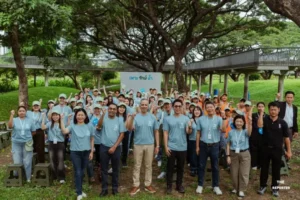
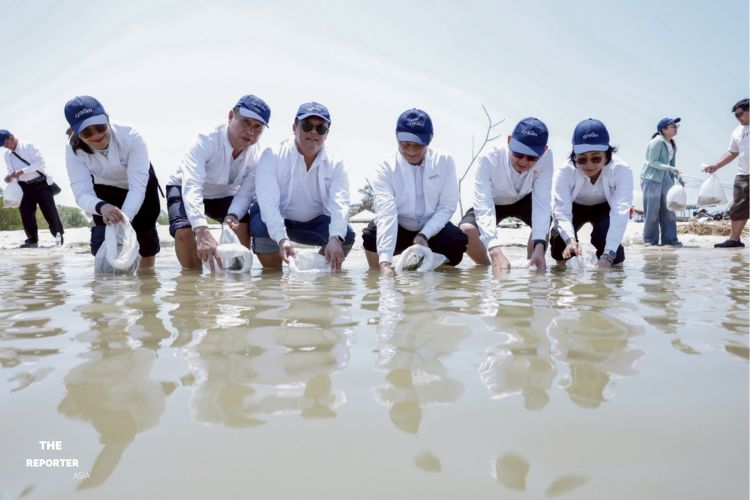
The recent release of more than 200,000 young blue swimmer crabs at Koh Sed, located in the Phum Riang Subdistrict of Surat Thani, signifies more than just a seasonal environmental effort. It represents the culmination of 14 years of consistent collaboration aimed at restoring the delicate ecological balance of the Thai seas. As CPRAM continues to scale this initiative, the cumulative impact of 1.8 million crabs highlights a shift toward regenerative business practices that prioritize the health of natural resources as the foundation for industrial longevity.
The selection of Koh Sed and the surrounding Phum Riang Bay is a deliberate choice grounded in environmental science. This specific maritime zone is characterized by its lush seagrass meadows and optimal salinity levels, providing a natural sanctuary for juvenile crabs to thrive during their most vulnerable stages. By focusing on the “Young Crab” stage—a phase where survival rates are significantly higher compared to younger larvae—CPRAM and its partners ensure that the biological intervention yields the maximum possible benefit for the marine population.
Beyond the immediate biological gains, this initiative acts as a vital catalyst for the local economy in Southern Thailand. By restoring the abundance of blue swimmer crabs, the project directly supports the livelihoods of local fishermen and strengthens the coastal ecosystem that draws thousands of tourists to the region annually. This multifaceted approach ensures that the natural beauty and resource-rich waters of Surat Thani remain a cornerstone of Thailand’s tourism and fishing industries for generations to come.
The Food 3S Framework: A Blueprint for Sustainability
At the heart of this enduring project is CPRAM’s “Food 3S” approach, which encapsulates the pillars of Food Safety, Food Security, and Food Sustainability. This strategic framework allows the company to view its operations through a holistic lens, ensuring that every product delivered to consumers is backed by a resilient and ethical supply chain. By investing in the “upstream” portion of the value chain—specifically the natural habitats where raw materials originate—CPRAM mitigates the risks of resource depletion and price volatility in the global food market.
Food Security, a primary concern for the 21st century, is addressed here by empowering local communities to become self-sufficient stewards of their environment. The project encourages a transition from short-term extraction to long-term resource management, fostering a stable supply of high-quality crab meat for both domestic consumption and industrial production. This stability is crucial for Thailand’s position as a global hub for ready-to-eat food, where consistency in quality and quantity is the hallmark of international competitiveness.
Furthermore, the “3S” philosophy promotes Food Sustainability by aligning corporate growth with the Three-Benefit Principle of the Charoen Pokphand Group. This principle dictates that all business activities must provide value first to the nation, second to the people, and third to the organization. By prioritizing the restoration of the Thai sea, CPRAM fulfills its duty to the country’s natural heritage while creating a sustainable model that eventually feeds back into the organization’s long-term profitability and reputation.
Strategic Synergy and Public-Private Partnerships
The success of the “Sustainable Blue Swimmer Crabs for Thai Sea” project is rooted in its extensive network of stakeholders, ranging from government agencies to local conservation groups. This “upstream-to-downstream” collaboration includes the Surat Thani Provincial government, the Department of Fisheries, and Viya Crab Products Co., Ltd., creating a unified front against environmental degradation. Such partnerships are essential for managing complex ecosystems like Ban Don Bay, where industrial interests and ecological needs must be carefully balanced.
Mr. Bundan Sathirachawal, Vice Governor of Surat Thani Province, emphasized the collaborative nature of this initiative:
“The ‘Sustainable Blue Swimmer Crabs for Thai Sea’ project is a collaborative effort across various sectors, including the government, private sector, and local communities, aimed at restoring ecological balance and enhancing the valuable natural resources of Surat Thani Province. Blue swimmer crabs are a vital resource for local fishermen and play an important role in the coastal ecosystem. The release of over 200,000 young crabs today marks a significant step in maintaining the balance and sustainability of Ban Don Bay, while also supporting the local economy in the long term.”
This sentiment is echoed by the involvement of the Coastal Aquaculture Research and Development Center Region 3, which provides the necessary academic and technical support to ensure the scientific integrity of the crab releases. By integrating academic research with corporate resources and community action, the project transforms a simple corporate social responsibility (CSR) activity into a sophisticated environmental management system. This ensures that the efforts of local fishermen and conservation groups are backed by the best available data and industrial logistics.
Enhancing Supply Chain Resilience and Community Income
For a food producer like CPRAM, supply chain management is not merely a logistical challenge but a strategic imperative. The crab conservation project serves as a practical application of end-to-end management, where the company engages directly with crab meat suppliers and local fishing communities. This direct engagement ensures transparency and quality control, while also providing a “shared value” that benefits every participant in the value chain, from the harvester to the end consumer.
The economic ripple effect of releasing 1.8 million crabs is profound for the small-scale fisheries of Chaiya District. As the crab population stabilizes and grows, local income levels rise, reducing the economic pressure on families and discouraging overfishing or the use of destructive fishing gear. This creates a virtuous cycle where economic prosperity leads to better environmental protection, which in turn leads to even greater resource abundance.

Mr. Wisade Wisidwinyoo, President of CPRAM Company Limited, highlighted the project’s role in the company’s broader mission:
“The ‘Sustainable Blue Swimmer Crabs for Thai Sea’ project, one of the key initiatives underpinning CPRAM’s food security strategy, has been carried out continuously for 14 years through collaboration across the entire supply chain, from upstream to downstream, under our ‘Food 3S’ approach, encompassing Food Safety, Food Security, and Food Sustainability. CPRAM is a ready-to-eat food producer that remains committed to conducting business for the benefit of Thai society under good governance, delivering high-quality food to consumers while creating shared value for society.”
Responsible Stewardship for a Sustainable Future
As CPRAM enters the fifteenth year of this initiative, the focus remains on maintaining the momentum of environmental restoration while adapting to the changing needs of the global food industry. The company’s position as a leader in ready-to-eat food is increasingly defined by its commitment to the environment and natural resources. This commitment is not an adjunct to their business model but a core component of their identity as a responsible corporate citizen.
The “Sustainable Blue Swimmer Crabs for Thai Sea” project stands as a testament to the idea that industrial production and nature can exist in a mutually supportive relationship. By grounding their operations in responsible stewardship and ethical governance, CPRAM ensures the health and well-being of the consumers they serve and the environments they rely upon. The continued abundance of Surat Thani’s waters serves as a living legacy of this 14-year journey.
In conclusion, the integration of the Food 3S approach with the Three-Benefit Principle provides a robust framework for addressing the challenges of the modern economy. Through the release of millions of crabs and the empowerment of local communities, CPRAM is not only securing its own future but also contributing to the enduring prosperity of Thailand’s marine heritage. The ripples of this project will continue to be felt across the Gulf of Thailand, ensuring that the blue swimmer crab remains a symbol of both ecological health and economic vitality.
#CPRAM, #Sustainability, #BlueSwimmerCrab, #FoodSecurity, #SuratThani, #MarineConservation, #ESG, #Food3S, #ThaiEconomy, #CSR, #EnvironmentalStewardship