

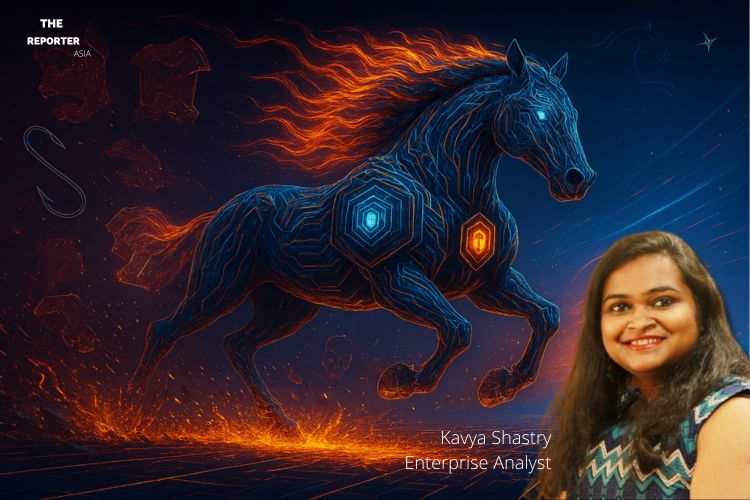
As the global economy charges into 2026, the traditional Lunar New Year celebrations bring more than just cultural festivities; they offer a critical strategic blueprint for corporate survival. The Shēngxiào, or the Chinese zodiac, designates this as the Year of the Horse, a creature synonymous with unbridled speed, agility, and the power of forward momentum. For the modern enterprise, these are no longer mere symbolic virtues but have become the essential requirements for navigating a digital landscape that is moving at a terrifying gallop. Economic stability in this era is now inextricably linked to an organization’s ability to move as fast as the threats it faces.
The shift in the global threat landscape has been dramatic, transitioning from the era of manual hacking to a period dominated by AI-driven attacks and automated exploits that never sleep. In this high-stakes environment, stationary defenses have become a liability rather than an asset, as obstacles are largely ineffective against enemies capable of relentless, automated breakthroughs. To maintain a competitive edge and protect market valuation, businesses are being forced to abandon the “fortress” mentality in favor of a more instinctive and mobile approach to security. The economic cost of falling behind in this race is catastrophic, making agility the primary currency of the 2026 digital economy.
Enterprises must now look toward the inherent instincts of the horse to redefine their operational security protocols. This means moving beyond passive protection and embracing a dynamic posture that anticipates movement and adapts to sudden, sophisticated shifts in the tactical environment. By aligning corporate security with the rapid, forward-leaning traits of the horse, leaders can ensure their organizations do not just survive the current cycle of disruption but thrive within it. The transition is clear: the slow and the stationary will be left behind, while those who master the gallop will secure the future of the digital marketplace.
The Trojan Evolution and the Death of Implicit Trust
The most enduring lesson in security history, the Trojan Horse, has undergone a radical transformation for the year 2026. What was once documented as a simple wooden statue in 1200 BCE has now evolved into a sophisticated digital menace, manifesting as hyper-realistic deepfakes and strategically engineered social lures. These modern iterations do not attack software vulnerabilities alone; they exploit the one element that remains the most difficult to patch within any economic ecosystem: human trust. This evolution marks a pivotal shift in how businesses must view their internal and external interactions to prevent devastating financial losses.
The era of fortification, where businesses relied on building higher walls and stronger perimeters, has officially come to an end. In its place, we have entered the era of verification, where the “fortress” model is replaced by a system that assumes no entity is safe by default. This new paradigm necessitates that every gate be closed until the contents are thoroughly inspected, reflecting a fundamental change in the philosophy of digital commerce. For a business to remain viable today, it must operate under the assumption that the enemy may already be at the gates, or even within them, disguised as a trusted partner or a legitimate communication.
To manage this risk, organizations are rapidly adopting Zero Trust architectures as their primary defensive framework. Within this model, every individual data packet, voice clip, and email is treated as a potential carrier for an adversary until proven otherwise. This level of scrutiny is essential in an age where deepfakes can impersonate executives and automated social engineering can bypass traditional filters. Implementing such rigorous verification is not just a technical requirement; it is an economic necessity to preserve the integrity of corporate communications and the security of financial transactions in a volatile digital world.
Balancing the Reins of Innovation and Security
Within every modern organization, a natural friction exists between the drive for rapid innovation and the necessity of robust security. Innovation can be viewed as the horse itself—fast, powerful, and eager to explore new territories and market opportunities. Conversely, security is often perceived as the rider, whose heavy hand on the reins can feel like a burden that slows down progress. If the rider pulls too hard, the horse becomes restless and unpredictable, potentially stifling the growth that the business requires to remain competitive.
However, releasing the horse entirely is equally dangerous, as the destination would then be determined by the horse’s whims rather than the rider’s strategic goals. The objective for 2026 is not to choose between speed and safety, but to find a way to thread the balance through guidance rather than mere restraint. Security should not function as a barrier that stops the horse from running; instead, it must act as a guiding force that ensures the organization stays on the correct course while having the capacity to correct its trajectory when hurdles appear. This balance is the hallmark of a mature, modern enterprise that understands how to leverage technology for growth without inviting disaster.
The technical “reins” of this relationship are now being forged through AI-automation and Extended Detection and Response (XDR) systems. These tools allow businesses to maintain high-velocity operations without losing control of their digital assets. By utilizing XDR, the “rider” gains better visibility and more precise control, allowing the “horse” of innovation to run at full speed while the automated systems handle the complex task of monitoring for threats in real-time. This synergy ensures that the business can pursue aggressive growth strategies with the confidence that their defensive posture is as fast and agile as their market ambitions.
The Endurance of Cyber Resilience as a Long Race
While speed is a defining characteristic of the horse, its true value in a cybersecurity context often lies in its incredible endurance. From an economic and security perspective, protecting an enterprise is a marathon rather than a sprint, requiring a long-term commitment to resilience. True cyber resilience is not merely about avoiding a fall; it is defined by how quickly an organization can get back on the horse and rejoin the race after an incident has occurred. In the current market, the ability to recover from a breach is often more important than the ability to prevent one entirely.
Focusing heavily on incident response ensures that when a breach inevitably occurs, the “recovery gallop” is instantaneous, minimizing downtime and protecting the bottom line. This shift in focus acknowledges that perfect security is an impossibility and that the most successful companies are those that can absorb a blow and continue moving forward. Resilience, therefore, becomes a competitive advantage, as stakeholders and customers place higher value on firms that demonstrate they can maintain operational continuity even under severe pressure.
Furthermore, building a culture of vigilance among employees is a critical component of this long-term endurance. Just as a horse can sense a predator long before it is visible, a well-trained workforce develops the “instincts” necessary to detect the subtle signs of a deepfake or a phishing attempt. Training employees to strengthen their vigilance transforms the human element from a vulnerability into a sophisticated sensory network. This collective awareness ensures that the organization as a whole remains focused on the race, seeing beyond the blinders to resolve attacks with faster, more decisive responses.
Expert Insights: Leading the Charge in 2026
Chief Information Security Officers (CISOs) are the primary navigators of this new, faster future, charting a course that is paved by resilience rather than just defense. They are currently navigating a complex field of hurdles, ranging from sophisticated AI attacks and deepfakes to breaches that threaten even the most heavily encrypted walls. To lead effectively in 2026, business leaders must embody the traits of the horse: agility, strength, and quick reflexes. The role of the CISO has transitioned from a back-office technical function to a front-line leadership position that is central to the company’s strategic success.
According to Kavya Shastry, an enterprise analyst, the fundamental nature of security has changed:
“The era of building a fortress is over and the Year of the Horse belongs to those who don’t just build higher walls, but see beyond the blinders, focusing sharp on resolving attacks with faster responses.”
This perspective emphasizes that the goal is no longer just to outrun an attack, but to be prepared to face it head-on with a robust set of skills and tools. Leadership in 2026 requires the foresight to look past traditional security boundaries and focus on the speed of resolution. Those who remain stuck behind the blinders of old methodologies will find themselves unable to keep pace with the rapid shifts in the digital economy.
Ultimately, the Year of the Horse serves as a reminder that the path to security is found through movement, not through standing still. Organizations that prioritize agility and quick reflexes will be the ones that lead their respective industries through the hurdles of the coming year. By adopting these horse-like traits, CISOs and business leaders can ensure their companies are not just participants in the AI race, but the ones setting the pace for the rest of the world. The race for digital dominance is on, and only the most resilient and well-prepared will reach the finish line.
#Cybersecurity, #YearOfTheHorse, #DigitalSurvival, #ZeroTrust, #AIThreats, #CyberResilience, #BusinessStrategy2026, #XDR, #TechInnovation, #RiskManagement