
In an exclusive reveal at HPE Discover More AI 2025, Tottenham Hotspur’s CTO detailed the 25-year tech partnership with HPE that created the world’s first 100% cashless stadium, a pending Wi-Fi 7 revolution, and an AIOps model so efficient it requires only a single core network engineer.
TheReporterAsia — In an era where digital transformation defines market leaders, the business of sport is undergoing a seismic shift. No longer are stadiums mere venues for 90-minute matches; they are complex, 365-day-a-year entertainment hubs. At the vanguard of this revolution is the Tottenham Hotspur Stadium, a 62,000-seat marvel of architecture and, more importantly, a case study in leveraging “invisible” technology to drive a revolutionary business model.
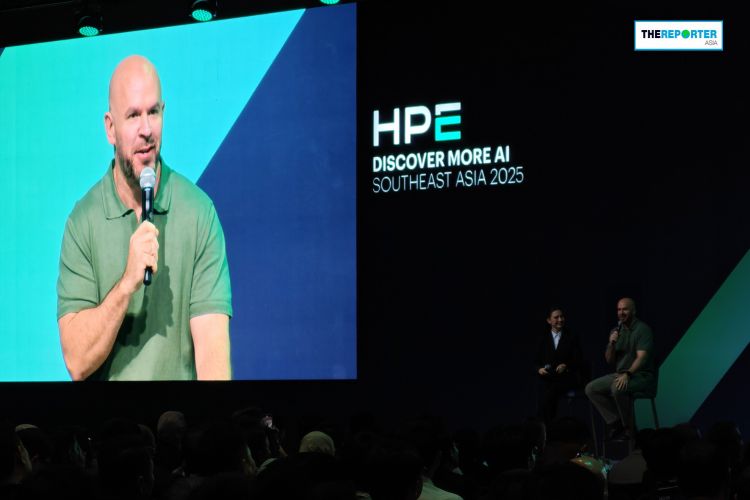
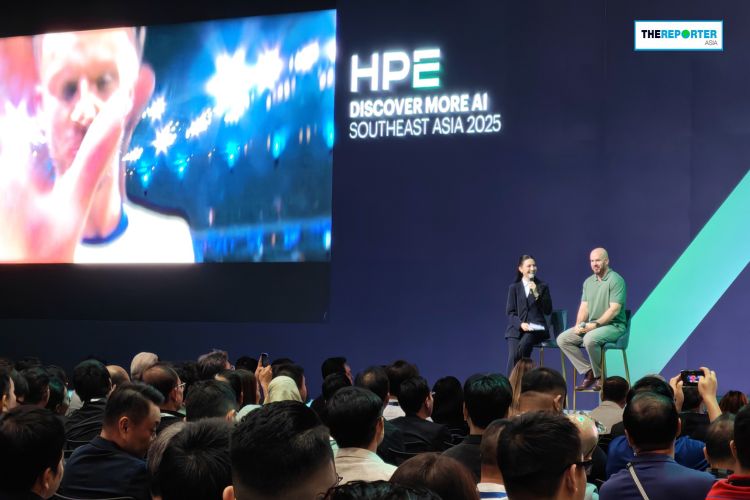
Speaking at the HPE Discover More AI 2025 Southeast Asia event, Rob Pickering, Chief Technology Officer (CTO) of Tottenham Hotspur, pulled back the curtain on the technological prowess that powers one of the world’s most advanced arenas. The key to its success? A 25-year strategic partnership with HPE (Hewlett Packard Enterprise) and a relentless focus on creating a “frictionless fan experience” powered by data, AI, and a pioneering move to HPE GreenLake.
The most staggering revelation, however, was one of operational efficiency: thanks to a deep investment in AI Operations (AIOps), the stadium’s immensely complex network—handling 60,000 fans, 3,000 permanent devices, and the world’s first 100% cashless system—is managed by a team with only one primary network engineer.
This is the story of how data and AI transformed a football club into a 365-day community asset, setting a new global standard for the experience economy.
The Core Business: From Football Pitch to 365-Day Asset
For Pickering, the mission extends far beyond football. He outlined three core objectives for his technology strategy: 1. Create a brilliant employee experience, 2. Build world-class technology for a world-class stadium, and 3. Deliver a world-leading digital fan experience.
This vision is anchored in a fundamental shift in the stadium’s business model.
“We are not just a football club. This stadium was built to be a 365-day-a-year asset,” Pickering stated emphatically. “Last year, football events accounted for about 50% of our schedule. The other 50% was other events—Beyoncé concerts, Kendrick Lamar, NFL games, boxing matches.”
This strategy isn’t just about revenue diversification; it’s about community regeneration. The stadium was designed as an anchor asset to stimulate economic growth in its surrounding borough, historically one of the most diverse and deprived areas of London.
To achieve this “multi-purpose” capability—to “change the personality” of the venue from a Premier League match to a global concert tour at a moment’s notice—requires a technological foundation of immense power and flexibility. This is where the 25-year relationship with HPE, which provides the core network, infrastructure, servers, and storage, becomes the central nervous system of the entire operation.
The Philosophy of Magic: “Invisible” and “Frictionless” Tech
Pickering’s core philosophy is counter-intuitive for a CTO: his goal is to make the technology disappear.
“The fantastic thing about technology, in many ways, is that it’s ‘invisible.’ And that is our goal,” Pickering explained. “When you go to a football match or a Beyoncé concert, the last thing you want to think about is the technology. My job as CTO is to deliver an experience that feels ‘magical,’ but it must disappear into the background. You’re not here to use tech; you’re here for the live experience.”
This pursuit of a “frictionless experience” led to several world-first innovations.
1. The World’s First 100% Cashless Stadium: The decision to go fully cashless was not a gimmick; it was a data-driven solution to the single biggest pain point in any stadium: the halftime rush.
“You have 60,000 people who, in 10-15 minutes, all want to use the bathroom and buy food and drinks,” Pickering said. “Cash is the biggest bottleneck.”
By eliminating cash entirely, the stadium drastically reduced queue times, increased transaction speed, and improved overall fan satisfaction.
2. NFC “Tap-and-Go” Ticketing: Similarly, the club abandoned traditional paper tickets and clunky QR codes in favor of NFC (Near Field Communication) digital tickets. Fans simply store their tickets in their mobile wallets and “tap and move on” at the turnstile, creating a fluid, rapid entry process that sets the tone for the entire experience.
Conquering the “Faraday Cage”: A New Standard for Connectivity
The most significant technical hurdle in any modern stadium is connectivity. A 62,000-seat bowl of concrete and steel acts as a giant “Faraday Cage,” actively blocking mobile and Wi-Fi signals.
This presents a direct threat to the modern fan experience. “Fans today want two screens,” Pickering noted. “Older fans like me might just watch the game. The new generation wants to watch the game on one screen and use the other screen in their hand. They want to see stats, create content, and upload to TikTok or Instagram instantly. If we can’t provide brilliant connectivity, we have failed.”
The solution, engineered with HPE, involved installing over 800 Access Points (APs) directly under fans’ seats. This unconventional approach beams a strong, reliable signal directly to users, bypassing the structural interference.
The result? Tottenham Hotspur Stadium has been ranked #1 for connectivity in the Premier League for five consecutive years. Fans can stream video and use social media as if they were at home, even when surrounded by 60,000 other people.
The Next Frontier: HPE GreenLake and the World’s First Wi-Fi 7 Stadium
Never content to rest on its laurels, the club is already planning its next two major technological leaps, both announced at the HPE Discover event.
1. Migration to HPE GreenLake: The stadium is moving its entire infrastructure to HPE GreenLake, HPE’s flagship platform that delivers an As-a-Service, cloud-like experience on-premises.
For business professionals, this is a critical strategic move. It shifts the stadium’s IT model from Capex (Capital Expenditure)—buying and maintaining massive, expensive servers that sit idle on non-match days—to Opex (Operational Expenditure).
With GreenLake, the club pays only for the computing and storage resources it actually consumes. This “elastic” model allows the stadium to instantly scale up resources for a major NFL game and scale back down to near-zero the next day, delivering profound cost efficiencies and business agility.
2. The World’s First Public Wi-Fi 7 Stadium: In a move that will solidify its technological supremacy, Pickering confirmed that the stadium will be the first in the world to deploy public-facing Wi-Fi 7 across the entire venue.
Slated for completion around June 2026, this upgrade is about more than just speed. Wi-Fi 7 will provide the ultra-low latency and massive device capacity needed for the next generation of fan experiences, such as real-time augmented reality (AR) overlays, interactive mobile gaming, and instant high-definition replays streamed to personal devices.
The Efficiency Miracle: How AIOps Enables a One-Person Network Team
The most compelling proof of Tottenham’s tech strategy lies in its operational efficiency. A stadium of this size and complexity—with 3,000 permanent network devices and 60,000+ transient fan devices on a match day—would typically require a large team of network engineers.
Pickering revealed his team structure: “I have a total technology team of about 35 people who look after everything, end-to-end.”
The shocker came next. “We have one primary network engineer,” he confirmed.
This seemingly impossible feat is the result of a deep investment in AI Operations (AIOps), specifically through platforms like OpsRamp (an HPE acquisition) and Morpheus, both integrated into the HPE GreenLake platform.
“We are investing heavily in AIOps,” Pickering said. “The goal is to create a system that can diagnose problems, predict problems, and automatically self-heal before they ever impact operations.”
This AI-driven system monitors the entire network 24/7. Instead of engineers manually searching for errors, the AI proactively identifies a failing switch or a potential bottleneck, automatically reroutes traffic, and flags the issue for replacement—all without human intervention. This automation eliminates the need for a large monitoring team and allows the single engineer to focus on high-level strategy and optimization rather than firefighting.
This AI-driven efficiency extends directly to the club’s bottom line and its corporate values.
- Sustainability: The AIOps platform is central to the club’s goal of being the “Premier League’s greenest club.” It employs dynamic power allocation for the Wi-Fi network. “Before the game, when fans aren’t in their seats, the system automatically reduces Wi-Fi power in empty areas,” Pickering explained. “As the stadium fills, it intelligently ramps up power only where it’s needed. This smart management saves a massive amount of energy.”
- Real-Time Operations: The system also uses data from IoT sensors to manage crowds. “We use data to see if a group of people is standing still, looking lost. We can dispatch a steward to help them immediately. This is using data to create the best possible experience.”
Measuring What Matters: From ROI to “Dwell Time”
When asked about the financial Return on Investment (ROI) for these massive tech expenditures, Pickering was clear that the metrics for success have evolved.
“Our true measure of success is fan satisfaction, which stands at 95%, and our consistent #1 ranking for connectivity.”
However, a key internal Key Performance Indicator (KPI) for the business is “Dwell Time.”
“We want fans to arrive earlier and stay later,” Pickering stated. This is a crucial business metric. The longer a fan is happily engaged at the venue, the more likely they are to spend money on food, drinks, and merchandise. “Our premium zones open two hours before the game and stay open two hours after. Seeing fans stay, spend, and enjoy the atmosphere—that is our success.”
To further enhance this, the club is launching a new “Companion App” designed to manage the entire fan journey, offering traffic alerts before leaving home, wayfinding to their seats (Pickering jokes he still gets lost), and exclusive promotions.
Intriguingly, Pickering’s inspiration for this next phase of customer experience (CX) doesn’t come from other stadiums.
“I don’t look at other stadiums for inspiration,” he concluded. “I look at world-class customer experiences from other industries—luxury hotels, leading airlines, high-end retail—and apply those lessons to our stadium.”
Even with 95% satisfaction, the goal for Tottenham and HPE remains 100%. The partnership is focused on using innovation to close that final 5%.
“The best compliment I can receive as CTO,” Pickering finished, “is when a fan leaves the stadium after a fantastic day and says they ‘didn’t even think about the technology.’ That means we’ve done our job. The technology has successfully disappeared, becoming part of one brilliant, seamless experience.”
#HPE #HPEDiscoverMoreAI #TottenhamHotspur #Spurs #HPEGreenLake #WiFi7 #AIOps #SmartStadium #RobPickering #DigitalTransformation #FanExperience #CashlessSociety #OpsRamp #BusinessTechnology #SportsBiz #AI #IoT #Sustainability