
The convergence of high-stakes automation and surgical precision has arrived in Southeast Asia as PIOT Robotics carves a strategic path for South Korean technological dominance within Thailand’s evolving industrial landscape. During a recent high-profile media event hosted by Korea Midland Power (KOMIPO) and the Korea AI Robot Industry Association (KAR), the South Korean firm unveiled its ambitious roadmap to integrate Vision AI-driven security and safety solutions into the heart of Thai infrastructure. This initiative signifies more than a mere product launch; it represents a fundamental shift in how industrial safety is managed, transitioning from passive monitoring to proactive, AI-led intervention in a region historically reliant on manual labor.
The collaboration between Korean power giants and AI innovators highlights a concerted effort to foster deep economic ties between Bangkok and Seoul through the medium of advanced technology. By introducing core technologies that have already been vetted by major Korean energy entities, PIOT Robotics aims to establish a benchmark for industrial safety that leverages the best of Korean manufacturing and software integration. This strategic entry is timed perfectly with Thailand’s own economic transformation, which is increasingly focused on high-tech industries and the integration of artificial intelligence into its national infrastructure.
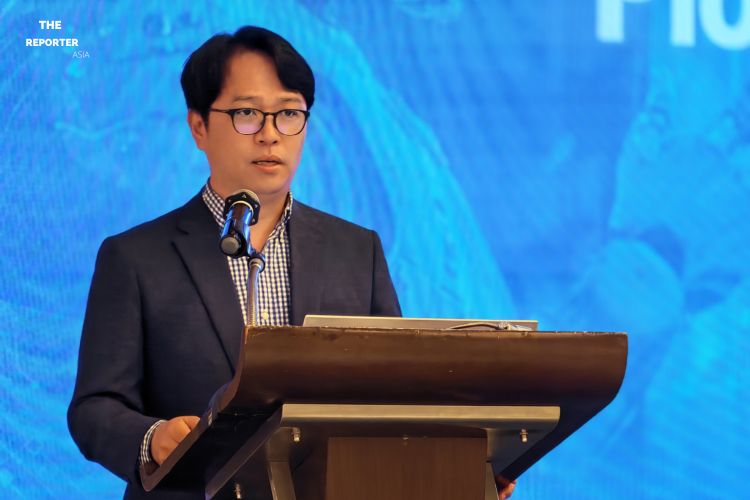
At the center of this expansion is Mr. Kim Myungsan, a Business Development Professional at PIOT Robotics, who emphasized that the company’s mission extends beyond selling hardware to providing a “Total Security Solution”. Through a series of technical presentations and candid interviews, the company detailed its plans to seek out local partners who can act as the bridge between Korean innovation and Thai operational needs. As the industrial world teeters on the edge of a humanoid revolution, PIOT Robotics positions itself as the vanguard, offering immediate solutions while preparing for a future where autonomous agents become the standard across factories and public spaces.
The Strategic Blueprint for Thai-Korean Industrial Synergy
The entry of PIOT Robotics into the Thai market is a carefully choreographed maneuver supported by significant institutional weight from the South Korean government and energy sector. Korea Midland Power (KOMIPO) and the Korea AI Robot Industry Association have spent half a decade identifying and nurturing promising AI firms to ensure that the technology exported is both mature and reliable. This partnership serves as a seal of quality, assuring Thai stakeholders that the incoming technology has survived the rigorous testing environments of Korean power plants and manufacturing hubs. By bridging the gap between innovative startups and large-scale industrial application, this collaboration aims to strengthen the competitive edge of both nations in the global high-tech arena.
Central to the business strategy discussed by Mr. Kim Myungsan is a focus on long-term sustainability rather than short-term sales. Instead of merely distributing products, PIOT Robotics is actively searching for local agents and partners who can eventually take over the technical maintenance and after-sales service within Thailand. The initial phase of this market entry involves heavy support from the South Korean headquarters, with engineers traveling to Thailand to oversee installation and provide hands-on training for local staff. This methodology ensures that the technology is properly integrated into the local context while building a skilled workforce in Thailand capable of managing advanced AI systems independently.
Furthermore, the company is keeping the door open for the establishment of a regional office or a dedicated Research and Development (R&D) center in Thailand, should the project scale reach a critical mass. While currently in the early stages of market exploration, PIOT Robotics is monitoring the Thai landscape for “big projects” similar to those they have already secured in Vietnam and the United States. This flexible approach allows the company to adapt to the specific nuances of Thai industry, ensuring that their Vision AI solutions—ranging from smart logistics to autonomous security—are optimized for the unique environmental and operational challenges of the region.
Advanced Vision AI: Redefining Safety and Security
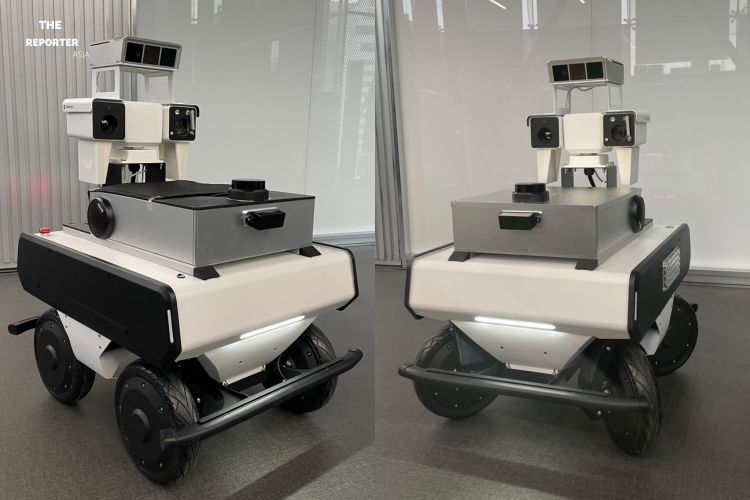
The flagship offering from PIOT Robotics is an autonomous security patrol and safety monitoring robot powered by a proprietary Vision AI engine. This technology is designed to address the persistent challenges of industrial accidents and security breaches by providing real-time, 360-degree surveillance that far exceeds the capabilities of traditional CCTV systems. The robot is equipped with a “smart gripper” and a suite of sensors that allow it to detect whether workers are wearing required safety equipment, such as helmets, and to identify unauthorized behaviors like jaywalking in hazardous zones. This level of granular monitoring is critical for high-risk environments like power plants, where a single oversight can lead to catastrophic consequences.
Beyond simple visual recognition, the PIOT security robot serves as a mobile diagnostic hub, capable of sensing environmental anomalies that are invisible to the human eye. It features integrated laser speed measurement for tracking fast-moving objects and uses IR cameras to detect abnormal heat patterns or overheating equipment. Additionally, the inclusion of micro-acoustic arrays and ultrasound sensors allows the robot to “hear” gas leaks or pipe ruptures before they become critical failures. All collected data is transmitted in real-time to a central control room, where AI agents can process the information and issue immediate warnings or commands to the field.
The technical sophistication of these robots is underpinned by advanced SLAM (Simultaneous Localization and Mapping) technology and collision avoidance algorithms. This allows the machines to navigate complex industrial layouts autonomously, adjusting their paths in real-time to avoid obstacles and ensure that all critical checkpoints are inspected. Unlike static security measures, these mobile units can be easily reprogrammed to cover different areas, providing a versatile solution for diverse settings such as seaports, shopping malls, data centers, and even historical cultural sites. The result is a comprehensive security web that combines the vigilance of AI with the mobility of robotics.
Pedigree of Excellence and the Humanoid Future
The credibility of PIOT Robotics is deeply rooted in its leadership and a history of prestigious recognition within the global tech community. The company is led by CEO Noh Kyu-chan, who formerly spearheaded the robotics division at LG Electronics, bringing a wealth of corporate expertise and a team of top-tier engineers to the firm. Since its founding in 2021, the company has rapidly moved from research to commercial readiness, earning certifications from major Korean power companies like South East Power and Korea Hydro & Nuclear Power (KHNP). These accolades are bolstered by international recognition, including awards from the German Inventors Association and KEPCO’s BIXPO event.
During his interview, Mr. Kim Myungsan provided a provocative look into the future, contrasting the technological strengths of different global regions. He noted that while the United States excels in the “brain” or software of robots and China dominates the physical manufacturing of hardware, South Korea’s unique strength lies in the integration of AI with sophisticated manufacturing processes. This “test bed” experience in factories operated by Hyundai, Samsung, and LG allows Korean firms to develop robot solutions that are immediately implementable and highly efficient. It is this practical, data-driven experience that PIOT Robotics believes will differentiate their products in the competitive Thai market.
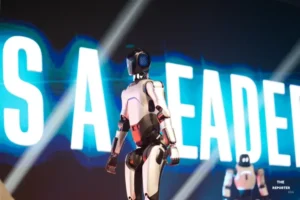
Perhaps the most striking insight shared by Mr. Kim was the impending rise of humanoid robots, which he expects to revolutionize the manufacturing industry within the next five years. Citing trends from industry leaders like Tesla and Hyundai, he warned that the traditional reliance on low-cost labor in countries like Thailand, Vietnam, and China is a model with a fast-approaching expiration date. As humanoids become capable of working 24 hours a day with lower total costs of ownership than human workers, industries must prepare for a radical shift. “Thailand also should be ready for this change,” Kim remarked, highlighting the need for proactive adoption of AI to remain competitive in a world where labor costs are no longer the primary factor for factory placement.
“Our target is any manufacturing factory, smart factory, and smart warehouse. It doesn’t matter which country… If humanoid robots come, they work 24 hours. If this technology develops fast, we won’t need to look for low-cost labor countries. Thailand should be ready for this change.” — Kim Myungsan, Business Development Professional, PIOT Robotics
Navigating the Thai Market and Infrastructure Needs
As PIOT Robotics moves forward with its expansion, the company is closely analyzing the specific opportunities within Thailand’s vast manufacturing sector. While many Japanese and Korean brands already have established factories in the region, the company’s strategy is to offer their solutions to any facility looking to upgrade to “smart” status, regardless of the company’s national origin. Mr. Kim acknowledged that while it is natural to initially work with Korean firms due to existing connections, the ultimate goal is to provide a universal solution for the logistics and security challenges faced by all large-scale operators in Thailand. This inclusive approach is designed to tap into the broad demand for automation across the country’s diverse industrial zones.
To facilitate this growth, Mr. Kim suggested that government policy could play a vital role in accelerating the adoption of robotics technology. He pointed to the “Robot Techno” clusters in South Korea as a successful model, where the government provides dedicated office buildings and infrastructure for robot companies to work in close proximity. Such a “makeup building” in Thailand would allow for better communication between innovators, foster a collaborative ecosystem, and provide the necessary support for international firms to set up regional operations. By creating a centralized hub for robotics, Thailand could position itself as a regional leader in the AI revolution, attracting more high-tech investment from global players.
Looking toward the remainder of 2026 and beyond, PIOT Robotics is focusing on building trust and establishing a solid foundation with Thai partners. The company is less concerned with immediate sales targets and more focused on finding the “right” partners who share their vision for a technologically advanced industrial future. By prioritizing training, technical support, and the gradual transfer of expertise, PIOT Robotics is laying the groundwork for a long-term presence in Thailand. As the company continues to develop its AI agent-based control systems and prepares for the era of humanoids, its journey in Thailand serves as a pivotal chapter in the broader story of global industrial transformation.
#PIOTRobotics #AIRobots #ThailandIndustry #SmartFactory #VisionAI #KoreanTech #IndustrialSafety #HumanoidFuture #TechInvestment #Automation