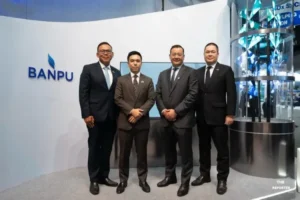

The President and Group CEO of PETRONAS delivered a stark opening address at the Energy Asia 2025 conference, defining the current global landscape as a “Poly-crisis” of intersecting geopolitical, economic, and technological shocks. He positioned Asia not merely as a participant but as the indispensable leader in a pragmatic and realistic global energy transition, stressing that massive investment, a diversified energy mix, and unprecedented collaboration are paramount to navigating a future where “there is no Net Zero without Asia.”
KUALA LUMPUR – In a high-stakes address that set an urgent and pragmatic tone for one of the continent’s most significant energy gatherings, the head of Malaysia’s state energy firm, PETRONAS, painted a sobering picture of a world grappling with a multifaceted “Poly-crisis.” Speaking before prime ministers, ministers, and industry titans from over 60 countries at the second edition of the Energy Asia conference, the President and Group CEO articulated a vision where Asia must steer the world through a complex energy transition, balancing the imperatives of economic growth and energy security with the pressing demands of climate action.
“If you cast your minds back to only three years ago, the world we lived in was actually quite different,” he began, reminding the audience of a brief period of global cooperation during the pandemic. “But today, as we convene at a time when there is unrelenting uncertainty, it casts a long shadow on the unique pathways that each of us had sought to travel towards our common destinations.”
Defining the “Poly-crisis”: A Storm of Interconnected Threats
The core of the CEO’s message revolved around the concept of a “Poly-crisis,” a term he used to describe the simultaneous and interconnected nature of the challenges facing the global energy system. This is not a series of isolated issues but a cascade of seismic shifts that are fundamentally reshaping markets and policies.
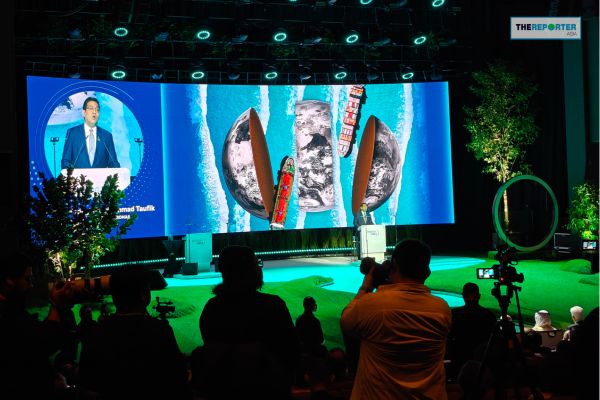
First among these are the protracted geopolitical conflicts that have “metastasized through neighboring regions.” He pointed directly to recent escalations near the Strait of Hormuz, a chokepoint through which approximately 20% of the total global oil supply flows daily. Such events trigger intense price rallies and threaten severe supply shocks, creating a volatile environment for both nations and industries.
This geopolitical instability is compounded by economic fragmentation. The CEO noted a “different type of confrontation which played out on the global stage we all call trade,” alluding to reciprocal tariffs and a move away from seamless globalization. This trend forces a reconfiguration of market behaviors and complicates the intricate global supply chains essential for both conventional and renewable energy projects.
Overlaying these challenges is the technological revolution driven by Artificial Intelligence (AI). While a catalyst for progress, AI’s voracious appetite for power presents an unprecedented challenge to energy grids. “AI is fast becoming an indispensable, foundational technology across all sectors,” the CEO stated. He provided stark figures to illustrate the point: “Electricity demand from data centers is set to reach 945 terawatt hours globally by 2030. This is more than double from the 415 terawatt hours registered in 2024.” This surge alone accounts for over 20% of popular demand growth between now and then, straining the entire energy system to its limits.
Finally, these forces are at play even as the world witnesses a “significant retracing of ESG policies which threaten to dismantle prior net zero ambitions.” These combined pressures—geopolitics, trade friction, technological disruption, and climate policy headwinds—have manifested in the Poly-crisis, a reality that demands a clear-eyed and collaborative response.
Asia: The Epicenter of Demand, Growth, and Disparity
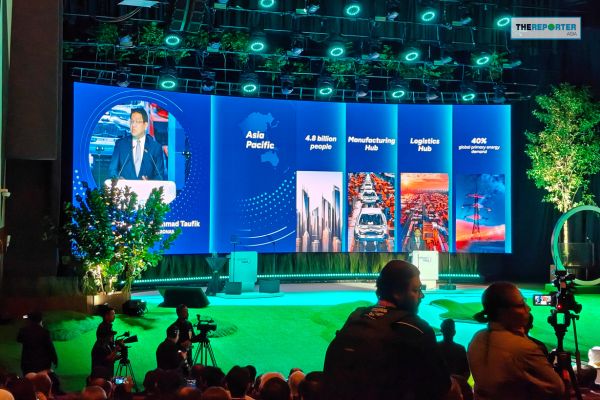
Amid this global turmoil, Asia emerges as the undeniable center of gravity. The Asia-Pacific region is home to 60% of the global population (4.8 billion people), three of the five largest economies, and the world’s most dynamic consumer markets. It is the world’s manufacturing hub, supplying critical goods from semiconductors to pharmaceuticals. “Make no mistake,” the CEO asserted, “this region has clear ambitions to drive its own fifth industrial revolution.”
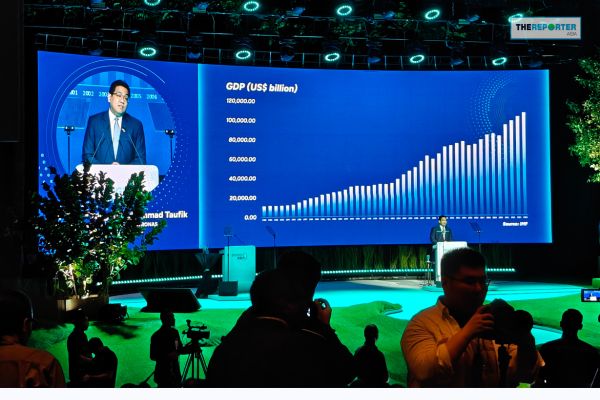
However, this rosy growth outlook belies stark internal disparities. The CEO highlighted the vast economic inequality, with GDP per capita ranging from a high of $93,000 to a low of $1,200. Furthermore, energy poverty remains a critical issue. “350 million people in Asia Pacific still have limited access to electricity; 150 million have no access at all,” he noted.
This reality ensures that for much of Asia, energy affordability and security remain the foremost priorities. Consequently, despite growing investments in renewables, fossil fuels still account for over 80% of the region’s energy mix. This context makes a one-size-fits-all, ideologically driven energy transition impractical and unjust for the region. The path for Asia must be different, acknowledging its unique challenges and its right to development.
A New, Pragmatic Paradigm: More Energy, Fewer Emissions, for a Growing World
The PETRONAS chief firmly argued that the twin goals of energy security and climate action are not mutually exclusive. “PETRONAS believes that these two priorities are not competing, but they are in fact complementary,” he declared. “However, we must all take a coordinated and considered approach…one that must be pragmatic and demonstrable with real outcomes.”
This pragmatic approach requires a new, more nuanced rallying cry. The old mantra of “more energy, less emissions” is no longer sufficient. “What we need now,” he proposed, “is more energy, less emissions, serving a growing population with a limited runway for the planet’s health.”
To meet this complex objective, Asia must lead. By 2050, the region is projected to represent 50% of global energy demand. Powering its economies, fueling AI adoption, and simply keeping the lights on for its 5.2 billion people will require an estimated $90 trillion in energy investment by mid-century. This staggering figure underscores the scale of the challenge and the opportunity.
A Three-Pillar Strategy for a Resilient Future
To conclude his address, the CEO outlined three crucial pillars of action, a strategic roadmap for navigating the Poly-crisis and building a sustainable energy future.
-
Diversify the Energy Mix: A resilient energy system requires a balanced portfolio. “All of us must work to diversify our energy mix,” he urged. This means embracing a full spectrum of solutions, including “more lower-emission barrels, sustainable fuels, liquefied natural gas, and indeed…lower or zero-carbon hydrogen.” Crucially, it also involves investing in emissions abatement technologies like carbon capture and storage (CCS) to reduce the impact of continued fossil fuel use where necessary.
-
Scale Up Energy Investments: The $90 trillion investment figure is not just a projection; it is a necessity. “Governments, financial institutions, and industries must work together to implement policies and frameworks that help unlock capital for energy projects, especially in emerging and developing economies where demand is already outpacing supply,” he stated. This requires urgent, collaborative action to de-risk projects and create stable investment climates.
-
Foster Unprecedented Collaboration: No single nation or company can solve this challenge alone. Drawing lessons from the global response to the pandemic, the CEO called for a united front. “We must foster regional collaboration,” he emphasized, noting the opportunity presented by Malaysia’s upcoming chairmanship of ASEAN in 2025 to amplify the region’s voice and drive collective action.
He closed with a powerful and unequivocal message that resonated through the hall: “At Energy Asia 2025, we believe this is the age of Asia. At Energy Asia, we believe that there is no Net Zero without Asia achieving Net Zero. We welcome all of you to help in delivering Asia’s energy transition.”
The speech has effectively framed the discourse for the days ahead, moving the conversation beyond simplistic binaries and towards a more sophisticated understanding of the trade-offs and synergies involved in building a secure, affordable, and sustainable energy system for the 21st century.
#EnergyAsia #EnergyAsia2025 #PETRONAS #CERAWeek #EconomicNews #EnergySector #EnergyTransition #NetZero #Asia #PolyCrisis #EnergySecurity #Investment #AI #Geopolitics