

In the face of a contracting automotive market and challenging economic headwinds, Ford Thailand has unveiled a robust, three-pronged strategy designed to solidify its market leadership, deepen customer loyalty, and drive sustainable growth. The comprehensive plan centers on pioneering products, unwavering consumer-centricity, and immersive experiential marketing, signaling the American automaker’s firm commitment to navigating the turbulent landscape and reinforcing its formidable presence in the nation’s competitive pickup and PPV segments.
BANGKOK, THAILAND – As the Thai automotive industry grapples with a significant downturn, Ford Thailand is confidently shifting into a higher gear, armed with a multi-faceted strategy aimed at winning the hearts and minds of Thai consumers. The company stands resilient, reaffirming its commitment to the market despite challenging conditions that have seen annual industry sales volumes fall from a peak of one million units to a forecasted 570,000 for the current year.
“The Thai automotive industry is in a particularly challenging period,” stated Mr. Matas Likitsajjakun, marketing director, Ford Thailand. “We’ve seen the market volume decrease significantly from its highs. This year, we anticipate a similar level to the last, which naturally intensifies competition across all segments.”
Despite this volatile environment, Ford has successfully defended its market position. The brand’s core offerings, the Ford Ranger and Ford Everest, have maintained a strong number three ranking in their respective pickup truck and PPV (Pickup-based Passenger Vehicle) segments. This achievement is particularly noteworthy given Ford’s focused portfolio, underscoring the effectiveness of a sharp, insightful, and meticulously executed strategic approach.
The Three Core Pillars: Ford’s Strategic DNA
At the heart of Ford’s operational blueprint are three foundational pillars that guide every aspect of its business, from product development to customer engagement. These principles are not merely corporate buzzwords but are the driving force behind the brand’s enduring success in Thailand.
- Product Pioneer: A relentless drive to lead the market by introducing groundbreaking products and technologies that set new industry benchmarks.
- Consumer-Centric: Placing the customer at the absolute center of every decision, ensuring that all products, services, and campaigns deliver tangible “value beyond price” and resonate with their genuine needs and aspirations.
- Experiential Marketing: A core belief that the true capabilities of a Ford vehicle can only be understood through direct, hands-on experience, leading to a focus on creating memorable and convincing brand interactions.
Pillar 1: Pioneering Products that Define the Market
Ford’s identity as a ‘Product Pioneer’ is deeply embedded in its 29-year history in Thailand. The company has a proven track record of not just participating in the market but actively shaping it. This legacy began in 1998 when Ford revolutionized the pickup segment by introducing the first-ever “Open Cab” model, a design that forever changed the utility and versatility of pickups in the country.
Two decades later, in 2018, Ford once again disrupted the industry with the launch of the Ford Ranger Raptor. This move created an entirely new “High-Performance Pickup” segment, a niche that, to this day, remains uncontested, cementing Ford’s reputation as a bold innovator.
This pioneering spirit continues unabated. The recent launch of the Ford Everest Platinum, equipped with a powerful V6 engine and priced over two million baht, was a calculated risk in a challenging market. The result was a phenomenal success: an initial lot of 350 units was completely sold out within a mere four hours at its motor show debut. This resounding response confirmed Ford’s insight that a significant customer base is willing to invest in superior performance and quality.
Looking ahead, Ford is preparing to make another seismic impact on the market with the announced arrival of the Ford Ranger Super Duty in 2026. This vehicle is engineered to be “Factory Ready” for the most demanding tasks, eliminating the need for aftermarket modifications. It will boast an immense towing capacity of 4.5 tons and a payload capacity of another 4.5 tons, managing a combined gross weight of up to 8 tons. This strategic launch is set to fill a critical gap in the market for commercial operators in sectors like agriculture, construction, and heavy-duty logistics who require uncompromising toughness and capability.
Pillar 2: A Deeply Consumer-Centric Approach
Ford’s second pillar ensures that its product innovations are perfectly aligned with market realities. The company’s strategy begins not with engineering, but with a deep, data-driven understanding of its customers. Recent demographic insights reveal a fascinating profile: over half of Ford owners are working-age individuals between 30 and 50. The gender split is surprisingly balanced at 60% male and 40% female, with key professions including business owners, company employees, and farmers.
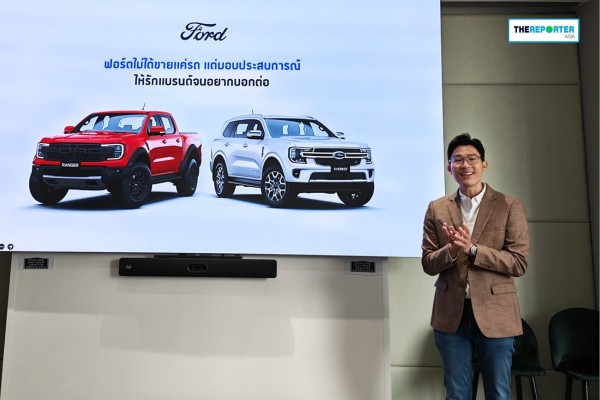
This granular understanding allows Ford to craft highly targeted and effective campaigns. A prime example is the introduction of the Ford Everest Trend at a special price point to penetrate the large sub-1.4 million baht PPV segment. The move resulted in a staggering 7.5-fold increase in sales for the model, proving the success of a strategy rooted in market affordability.
Furthermore, demonstrating a keen understanding of its agricultural customer base, Ford launched the “Pro Yim Kwang” campaign. Recognizing the seasonal income cycles of farmers, this program offers incredibly flexible financing, including a low 5% down payment and payment schedules tailored to post-harvest periods—every 3, 6, or 12 months. This initiative directly addresses and solves a key financial pain point for a vital customer segment.
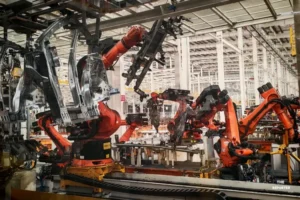
This “value beyond price” promise is physically manifested in the world-class quality of vehicles produced at Ford’s two manufacturing facilities in Rayong. These plants serve as a global production hub, exporting to over 180 countries. Quality is assured through state-of-the-art technology like the 3D Scan Box, which detects component deviations at a microscopic level. The commitment extends to comprehensive after-sales support, featuring a massive parts warehouse, the convenient FordPass application, and the customer-focused Mobile Service fleet that brings maintenance directly to the owner’s doorstep.
Pillar 3: Proving Performance Through Experience
Ford firmly believes that claims of toughness and capability are meaningless until they are proven. The third pillar, Experiential Marketing, is dedicated to translating brand promises into tangible reality. The company invests heavily in events that allow potential customers to test the full potential of its vehicles in challenging, real-world conditions.
Organizing off-road test drive events where customers can push the Ranger and Everest through grueling obstacles—from steep inclines to deep water wading—serves as the ultimate proof of the “Born Built Tough” slogan. These events not only leave a lasting impression on participants but also generate a powerful wave of organic, user-generated content across social media platforms.
The ultimate testament to this philosophy is Ford’s motorsport success. The company entered a factory-spec Ford Ranger Raptor in the grueling Asia Cross Country Rally. In a stunning display of innate capability, the production vehicle not only won its T2 class but also secured an incredible 3rd place finish overall, outperforming numerous purpose-built, heavily modified race cars. This achievement provides irrefutable proof of the superior engineering and robust DNA built into every Ford truck.
This experiential approach extended to the digital world. Ford worked closely with its nationwide dealer network to implement digital transformation. By training and empowering its sales teams to create video content and broadcast live, the brand was able to significantly expand its reach. Total monthly views across all dealers increased significantly, demonstrating the success of this modern, decentralized marketing model.
Navigating the Road Ahead
Looking forward, Mr. Methas acknowledges the persistent challenges of economic volatility, evolving consumer behaviors, and fierce competition. On the hot-button issue of electric vehicles (EVs), Ford is taking a measured and pragmatic approach for the Thai pickup market.
The company believes that for now, Thai pickup users, particularly those in upcountry and commercial sectors, have valid concerns regarding the durability of EVs for heavy-duty use, the availability of charging infrastructure in remote areas, and long-term battery maintenance costs. Ford is closely studying the market dynamics to identify the most opportune moment for an electric truck introduction.
In conclusion, Ford Thailand’s strategy is a masterclass in resilience and foresight. It moves beyond mere sales targets to build a sustainable foundation based on relentless innovation, genuine customer empathy, and undeniable proof of product superiority. It is this comprehensive, clear-eyed vision that demonstrates why Ford remains a dominant force in the Thai automotive landscape, fully equipped and ready to accelerate into the future, no matter how challenging the economic climate may be.
#FordThailand #MarketingStrategy #FordRanger #FordEverest #PickupTruck #PPV #AutomotiveIndustry #EconomicNews #AutoBusiness #FordSuperDuty