
Tetra Pak has achieved a monumental 25% reduction in greenhouse gas emissions across its entire value chain, a key finding from its 2024 Sustainability Report. This global success is now being aggressively implemented in Thailand, aiming to steer the nation’s food and beverage industry towards a tangible Net Zero future through cutting-edge processing and packaging innovations.
BANGKOK, THAILAND – As Environmental, Social, and Governance (ESG) principles increasingly shape the global business landscape, Tetra Pak (Thailand) Ltd. has reaffirmed its leadership in sustainability by unveiling the groundbreaking results of its 2024 Sustainability Report. At a major industry seminar, the company announced a historic 25% reduction in greenhouse gas (GHG) emissions across its value chain and an even more remarkable 54% decrease within its own operations compared to a 2019 baseline.
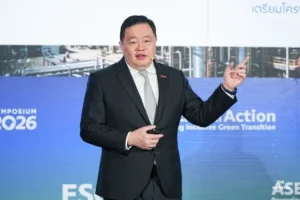
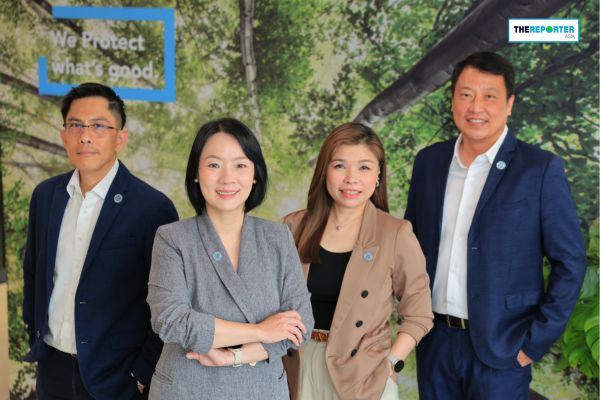
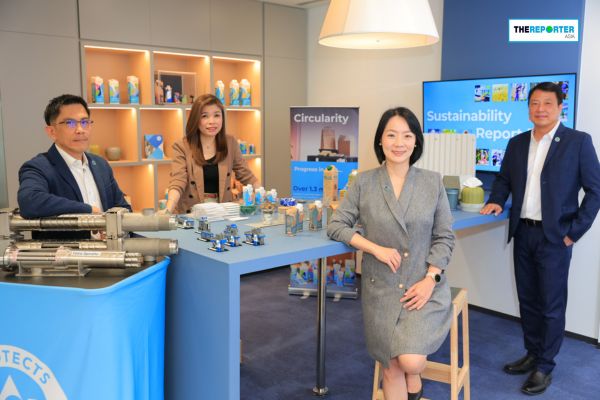
The event was led by a team of senior executives, headed by Ms. Ratanasiri Tilokskulchai, Managing Director for Tetra Pak Thailand. She emphasized that these global achievements are not just statistics, but a blueprint for accelerated sustainable action within Thailand. The company is leveraging its most advanced machinery and packaging solutions to drive the local food and beverage sector towards ambitious climate goals.
“Tetra Pak’s purpose, ‘PROTECTS WHAT’S GOOD™’, commits us to protecting food, people, and our planet,” Ms. Ratanasiri stated in her opening address. “In an era of complex challenges, from food security to climate change, we believe sustainability is not an optional extra; it is the core of everything we do. This report is more than just numbers; it’s a story of commitment, collaboration, and innovation. It proves that business growth and planetary stewardship can go hand-in-hand. Crucially, we are dedicated to adapting these global successes and knowledge to create maximum benefit within the Thai context.”
A Global Triumph with Local Impact
The 2024 Sustainability Report details significant progress on a global scale. The 25% reduction in value chain GHG emissions represents a major milestone, encompassing everything from raw material sourcing to post-consumer carton management.
However, the 54% reduction in emissions from the company’s own operations truly highlights the depth of its internal commitment. This has been driven by a comprehensive overhaul of manufacturing processes worldwide and a decisive shift towards renewable energy. Today, an impressive 94% of the electricity used in Tetra Pak’s global operations comes from renewable sources, solidifying its path towards achieving Net Zero emissions in its own operations by 2030.
Innovation by Design: Sustainable Processing and Packaging
At the heart of Tetra Pak’s strategy is the integration of sustainability into the very DNA of its products. Mr. Suraphong Kobprassertkul, Director of Processing Solutions, explained that the company’s innovation focuses on the customer’s ‘Total Cost of Ownership,’ making energy efficiency a standard feature, not a premium add-on.
“We understand that for food and beverage producers, reducing operational costs is paramount. Our innovations directly address this need,” said Mr. Suraphong. “A prime example, already implemented in Thailand, is our UHT sterilizer featuring Q-corrugation technology. This innovative heat exchanger tube design can reduce energy consumption by up to 40%. Similarly, our separators equipped with AirTight with Encapt™ technology minimize friction, delivering energy savings of up to 40%.”
He added, “These energy reductions translate directly into lower production costs and a significantly smaller carbon footprint for our customers. We are also pioneering the use of sustainable materials in our machinery. We have begun manufacturing our homogenizer frames with Circle Green® Stainless Steel, which has a carbon footprint up to 93% lower than the industry average, tackling environmental impact at the very start of the production chain.”
While processing machinery forms the factory’s core, packaging is the final guardian of the product. Ms. Praeporn Amornpanyapun, Director of Packaging Solutions, outlined the company’s ambitious vision.
“Our goal is clear: to create the world’s most sustainable beverage carton. This requires us to break traditional barriers,” Ms. Praeporn explained. “Our most exciting innovation is a paper-based barrier that replaces the aluminum foil layer, a standard in aseptic cartons for decades. This change increases the paper content of the package to 80%. Combined with plant-based plastics derived from sugarcane, our cartons now boast up to 90% renewable material content, resulting in a 33% reduction in carbon emissions.”
The Thai market is showing a clear and growing appetite for these sustainable solutions. “In 2024, our deliveries of plant-based caps surged by 41%,” she noted. “Furthermore, we have deployed over 40 million tethered caps in Thailand, primarily for export products. This innovation helps our customers comply with European environmental regulations on plastic waste reduction, ensuring their competitiveness in global markets and preparing them for future domestic regulations.”
From Policy to Practice: Driving a Circular Economy in Thailand
Creating sustainable products is only half the battle; building a functional ecosystem for resource circulation is the greater challenge. Mr. Patinya Silsupadol, Director for Sustainability, detailed Tetra Pak’s success in cultivating a circular economy in Thailand.
“We believe that action is what matters most. We don’t just stop at making recyclable packaging; we work tirelessly to build an efficient and accessible collection ecosystem,” Mr. Patinya stated. “Through close collaboration with our partners, we have established a collection network for used beverage cartons that now covers 49 provinces with 98 sorting centers nationwide. This has led to a dramatic leap in collection volumes, from 150 tons in 2022 to nearly 700 tons in 2024. It’s a powerful testament that when a proper system is in place, consumers are ready to participate.”
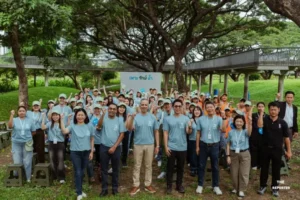
Tetra Pak has also integrated a crucial social dimension into its circular economy model by launching a program to support informal waste collectors (known as Saleng) and junk shops, who are vital links in Thailand’s recycling chain. “We are working with the Saleng association to improve quality of life, enhance safety, and provide training on topics like efficient sorting, hygiene, and business management. This is part of our social sustainability goal to create a positive impact and foster equitable growth within the community,” he added.
Concluding the seminar, Ms. Ratanasiri Tilokskulchai reaffirmed the company’s forward-looking vision. “All the achievements presented today—the global figures, the advanced innovations, and the local projects in Thailand—are possible only through the collaboration of all stakeholders: our dedicated employees, our business partners, our trusting customers, and the communities that embrace change. Tetra Pak Thailand remains steadfast in its commitment to our sustainability roadmap. We will continue to bring the world’s best innovations to Thailand and work closely with all sectors to build a truly sustainable food system and a circular economy. This is our promise to protect what’s good—food, people, and our planet—embodying the true spirit of our brand.”
#TetraPak #TetraPakThailand #Sustainability #NetZero #GHGreduction #CircularEconomy #Innovation #ESG #FoodIndustry #Protectswhatsgood #EconomicNews