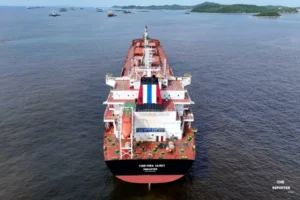

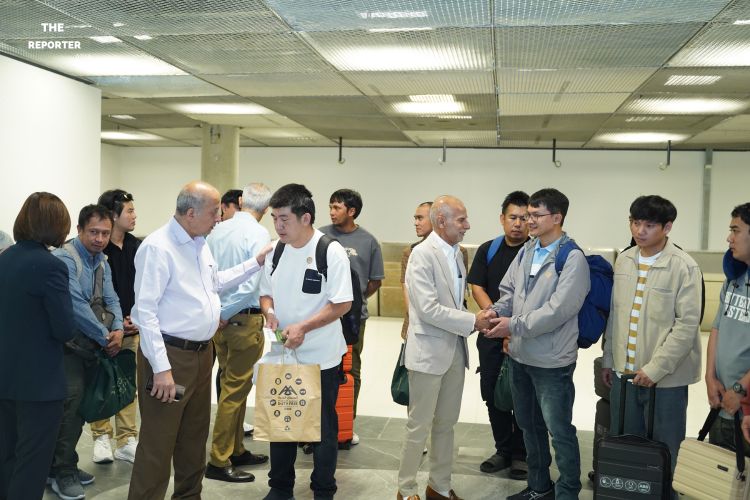
The atmosphere at Suvarnabhumi Airport was thick with emotion and a profound sense of relief as Precious Shipping Public Company Limited (PSL) officially welcomed 20 crew members from the vessel M.V. Mayuree Naree back to Thai soil. This homecoming marks a pivotal moment for the Thai maritime industry, showcasing a sophisticated level of corporate crisis management that resonates far beyond national borders. Senior executives from the company were present on the ground, personally overseeing the arrival and ensuring that the transition from the vessel to the heart of the capital was handled with the utmost dignity and efficiency.
This high-profile arrival serves as a testament to the complex logistical choreography required in modern international shipping. PSL’s leadership team coordinated extensively with a network of relevant authorities to facilitate a seamless return process for the seafarers. By prioritizing the physical presence of top-tier management at the airport, the company signaled a shift in corporate culture—one where the human element is placed at the very center of the economic engine, a move that is increasingly becoming the benchmark for global shipping giants in the post-2025 era.
The successful repatriation of these 20 individuals was not an isolated triumph but the result of a massive, multi-agency collaboration that spanned across continents. Various organizations, both within Thailand and on the international stage, provided critical support and assistance to ensure the crew’s safety. This level of synergy highlights Thailand’s growing integration into the global maritime safety net, proving that the nation is not just a destination for cargo, but a proactive leader in the welfare and protection of the global labor force that powers international trade.
The Economic Evolution of Human Capital in Maritime Logistics
The safe return of the Mayuree Naree crew underscores a significant evolution in how major shipping players like PSL view “Human Capital” within their economic frameworks. Following their arrival, the company immediately initiated a comprehensive welfare protocol that transcends basic administrative check-ins. This involves a structured arrangement of medical examinations and mental health assessments conducted by qualified specialists. In the modern economic landscape, the mental resilience of a crew is viewed as a vital asset, directly impacting the long-term operational viability and insurance standing of a fleet.
By implementing these rigorous health measures, PSL is aligning itself with the “S” (Social) in ESG (Environmental, Social, and Governance) standards, which have become a non-negotiable requirement for international investors and partners. These established welfare protocols are designed to ensure the holistic well-being of the crew, acknowledging that physical safety is only one half of the equation. This strategic focus on mental health is a clear indicator that Thai companies are now operating at a level of sophistication that mirrors the highest European and North American maritime standards, making them more attractive to global institutional investors.
Furthermore, this commitment to welfare acts as a powerful signal to the global labor market. In an industry currently facing a shortage of skilled seafarers, a company’s reputation for crew care becomes a competitive advantage. PSL’s proactive stance in providing specialized support demonstrates to potential international partners and labor unions that Thai shipping firms are reliable and ethical. This reputation is essential for securing high-value contracts with global conglomerates who demand transparency and ethical labor practices throughout their supply chains.
Strategic Global Partnerships and the Path to Industry Resilience
The successful resolution of this phase of the Mayuree Naree incident was made possible through an intricate web of international relations and inter-organizational support. PSL has been vocal in expressing its gratitude to the myriad of organizations and individuals whose assistance was instrumental in the safe return of the crew. For foreign investors and maritime technology firms, this level of successful international cooperation represents a fertile ground for new partnerships. It proves that the Thai maritime ecosystem is responsive, communicative, and capable of working within international legal and safety frameworks.
Thailand’s ability to coordinate with global authorities during a crisis provides a blueprint for future collaborations in areas such as maritime security, digital logistics, and green shipping initiatives. The transparency shown by PSL during this process invites foreign tech providers to offer solutions that can further enhance crew safety and vessel tracking. As the industry moves toward more autonomous and data-driven operations, the trust built through successful humanitarian coordination like this becomes the foundation for more technical and economic joint ventures.
The vibrancy of the Thai shipping industry is currently being redefined by its ability to handle adversity with professional grace. This event has sparked a renewed dialogue within the ASEAN maritime community regarding standardized safety protocols and collective bargaining for seafarer rights. By leading the charge in crew welfare and international cooperation, PSL is not just protecting its own employees; it is elevating the status of the entire Thai maritime sector, positioning the nation as a central hub for responsible and resilient shipping in the Indo-Pacific region.
The Ongoing Mission and the Future of Corporate Priority
While the return of the 20 crew members is a cause for celebration, PSL remains deeply focused on the gravity of the situation that still unfolds. The company has reaffirmed that its absolute highest priority remains the continued, tireless effort to locate the three crew members who are still missing. This unwavering commitment to every single member of the team, regardless of the complexity of the search, reinforces the company’s core values and maintains its integrity in the eyes of the global shipping community.
This ongoing search effort highlights the inherent risks of the maritime industry and the necessity for constant innovation in search and rescue (SAR) technologies. The dedication shown by PSL to find the remaining three individuals serves as a call to action for the industry to invest more heavily in real-time monitoring and advanced emergency response systems. For the global economic community, this persistence is a sign of a company that does not cut corners, ensuring that safety is a continuous process rather than a static goal.
In conclusion, the arrival of the Mayuree Naree crew members at Suvarnabhumi marks more than just a return home; it marks Thailand’s arrival as a mature player in the global “Blue Economy”. By balancing economic efficiency with a deep-seated commitment to human welfare, companies like PSL are setting a new standard for the industry. The eyes of the world remain on the ongoing search efforts, but the foundation of trust, safety, and international cooperation that has been built during this crisis will undoubtedly shape the future of Thai shipping for years to come.
#PSL #MaritimeSafety #MayureeNaree #ThaiEconomy #CrewWelfare #ShippingIndustry #ESG #Suvarnabhumi #GlobalTrade #CorporateResponsibility