
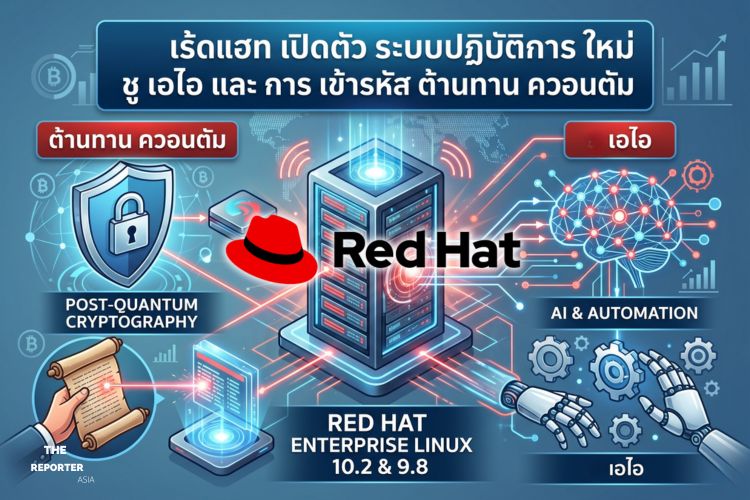
The global landscape of enterprise computing stands at a critical crossroads where the rapid acceleration of artificial intelligence meets the looming cryptographic challenges of the quantum era. In a decisive move to bridge this gap, Red Hat, the world’s leading provider of open source solutions, has announced the upcoming general availability of Red Hat Enterprise Linux (RHEL) 10.2 and 9.8. These latest iterations are engineered to provide a unified, strategic foundation for the hybrid cloud, specifically designed to address emerging security threats while fostering an environment where AI innovation can thrive without compromising operational integrity.
The announcement, made in Bangkok on May 13, 2026, marks a significant milestone for organizations navigating the complexities of modern IT infrastructure. By building upon the established innovation of the RHEL 10 platform, these new versions aim to minimize “operational drift” and provide the necessary guardrails for autonomous systems. This release is not merely a routine update; it represents a comprehensive overhaul of the operating system’s role in a world where container-based workflows and real-time data processing have become the standard for mission-critical production workloads.
As infrastructure evolves toward more sophisticated, containerized environments, the need for a durable and trusted operating system has never been more pressing. Red Hat Enterprise Linux 10.2 and 9.8 directly answer this call by integrating advanced AI assistance and quantum-resistant cryptography into the core of the OS foundation. This strategic release ensures that enterprises can maintain sovereignty over their data and systems, even as they push into the uncharted territories of high-velocity infrastructure management and next-generation computing.
Fortifying the Digital Frontier: Post-Quantum Readiness
The arrival of quantum computing brings with it a unique set of security challenges, most notably the “harvest now, decrypt later” threat where malicious actors collect encrypted data today to decrypt it once quantum technology matures. Red Hat is proactively addressing this by integrating National Institute of Standards and Technology (NIST) standards into its post-quantum cryptography framework. This integration ensures that systems are shielded against emerging threats, providing a level of future-ready security that is essential for maintaining long-term data integrity in both the public and private sectors.
Central to this defensive strategy is the Red Hat Certificate System 11.0, which introduces quantum-resistant signatures to help organizations transition to a more secure cryptographic posture. By embedding these protections within the OS foundation, Red Hat enables businesses to configure their AI and sensitive workloads with the confidence that their data remains shielded, even against the theoretical capabilities of future quantum computers. This approach to “foundational security” is critical for organizations that must adhere to strict privacy requirements and sovereign data controls while operating in the cloud.
Furthermore, the latest versions of RHEL enhance confidential computing capabilities, creating a trusted environment for AI workloads where sensitive information is protected while being processed in memory and the CPU. This hardware-rooted security is complemented by the introduction of “sealed images,” a new technology preview capability that allows customers to sign container images at the time of build. This ensures that systems only execute verified, trusted images, giving IT leaders greater choice and control over the integrity of their software supply chain.
AI-Powered Automation: Bridging the Skills Gap
One of the most persistent hurdles in modern IT is the widening gap between traditional system reliability and the rapid breakthroughs in AI and autonomous systems. Red Hat addresses this by deploying AI-guided automation that smooths complex upgrades and reduces the manual burden on IT teams. Through the use of Red Hat Ansible Certified Content and the new RHEL upgrade system role, the company has packaged years of accumulated best practices into a “fail fast then iterate” approach that significantly limits human error and downtime.
This automation is particularly vital for managing large-scale RHEL estates, where manual troubleshooting can become a bottleneck to innovation. The introduction of Model Context Protocol (MCP) servers for Red Hat Satellite, RHEL, and Red Hat Lightspeed offers an AI-ready approach to Linux management. These tools allow AI agents to securely tap into real-time system data, enabling administrators to manage their environments using natural language and automated, multi-step workflows that are backed by rigorous safety guardrails.
To further empower IT professionals, Red Hat has made “goose,” an open-source agent, available in its extensions repository. This tool connects multiple MCP servers into a single command-line assistant, helping teams transition from reactive troubleshooting to high-velocity, automated infrastructure management. By automating time-consuming and stressful upgrade processes, RHEL 10.2 and 9.8 allow IT personnel to shift their focus away from routine maintenance and toward supporting strategic, high-value architecture that drives business growth.
Streamlining Innovation: Image-Based Workflows and Visibility
The evolution of the operating system is increasingly tied to the efficiency of containerized image workflows. RHEL 10.2 and 9.8 introduce significant enhancements to “image mode,” a feature that drives consistency across the building, deployment, and management of the OS using container technologies. This allows administrators to treat the operating system with the same flexibility as a container, helping to contain system drift and maintain strict control over maintenance schedules across the hybrid cloud.
In addition to workflow innovation, Red Hat has focused on providing deeper visibility into potential threats. Through a partnership with CrowdStrike, RHEL customers now have access to over 2,300 new malware signatures, enhancing detection capabilities and enabling a more proactive security posture. This collaboration ensures that as organizations scale their AI workloads, they are not only faster but also more resilient against the ever-evolving landscape of digital malware and cyberattacks.
Operational control is further refined through the ability to pre-download updates using image mode. Administrators can now download platform updates without immediate application, giving them the precision management needed to determine the exact moment to apply patches. This level of control is essential for managing system uptime in mission-critical environments, ensuring that innovation does not come at the expense of stability or service availability.
The Executive Vision: Balancing Speed and Security
The leadership at Red Hat emphasizes that these updates are a direct response to the “balancing act” faced by modern enterprises. Gunnar Hellekson, vice president and general manager of Red Hat Enterprise Linux, noted that the current environment requires both the speed of AI innovation and the rigors of enterprise security. By turning complex operational hurdles into automated, repeatable processes, Red Hat is positioning its customers to move forward with confidence into a future defined by hybrid cloud scalability.
“Red Hat Enterprise Linux 10.2 and 9.8 directly address the balancing act between the speed of AI innovation and the rigors of enterprise security, turning complex operational hurdles into automated, repeatable processes,” said Gunnar Hellekson, vice president and general manager, Red Hat Enterprise Linux, Red Hat.
Hellekson further elaborated that by integrating post-quantum cryptography and AI-driven upgrade tools, Red Hat is helping customers defend against emerging threats while reliably scaling AI workloads. This vision focuses on providing an intelligent foundation that reduces friction between modern development and mission-critical operations. The goal is to ensure that the “world’s leading enterprise Linux platform” continues to serve as a strategic and durable asset for IT operations worldwide.
The commitment to long-term security is also reflected in the updates to Red Hat Satellite 6.19, which is now generally available. This management platform strengthens sovereign control with local vulnerability triage for air-gapped environments and introduces AI-assisted troubleshooting. To support organizations with long-term operational needs, Red Hat is also offering an optional extra 12 months of Extended Update Support (EUS), providing a stable and secure path for those managing sensitive, long-lived infrastructure.
A Future-Ready Foundation for Global Enterprise
As Red Hat Enterprise Linux 10.2 and 9.8 prepare for general availability in the near future, the company continues to solidify its role as the open hybrid cloud technology leader. The comprehensive portfolio—spanning cloud, AI, Linux, and automation—is designed to enable any application to run anywhere, from the centralized data center to the furthest reaches of the edge. This consistency is what allows transformative IT innovation to take root in diverse and challenging environments.
Red Hat’s investment in open ecosystems and communities remains the cornerstone of its strategy to solve tomorrow’s IT challenges. By collaborating with partners and customers, the company helps build, connect, and secure IT environments through a combination of cutting-edge software, consulting services, and award-winning training. This holistic approach ensures that the transition to AI-driven and quantum-ready infrastructure is not just a technical upgrade, but a sustainable evolution of the enterprise.
Ultimately, the release of RHEL 10.2 and 9.8 is a testament to the power of open source collaboration in addressing global security and operational needs. By providing the operational guardrails and precision management required for the modern era, Red Hat ensures that the next wave of IT breakthroughs—from autonomous systems to generative AI—is built on a foundation that is as secure as it is innovative. As the digital landscape continues to shift, these versions of RHEL stand ready to support the high-value architecture of the future.
#RedHat #RHEL #AIAutomation #QuantumSecurity #HybridCloud #CyberSecurity #EnterpriseLinux #OpenSource #TechNews #LinuxUpgrade #Innovation