
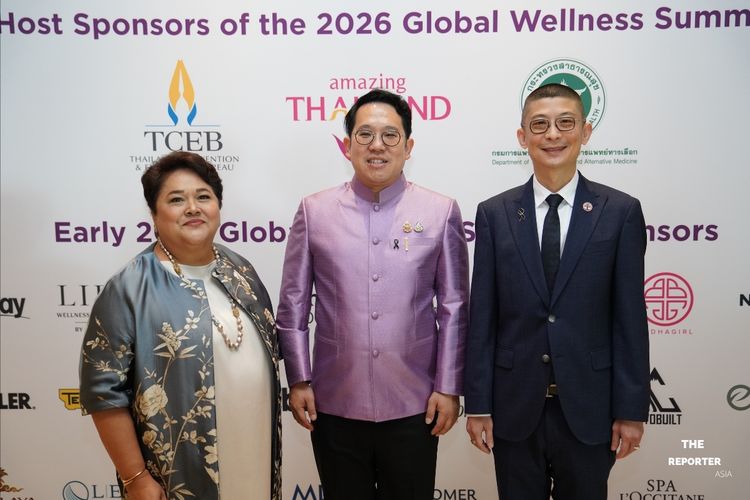
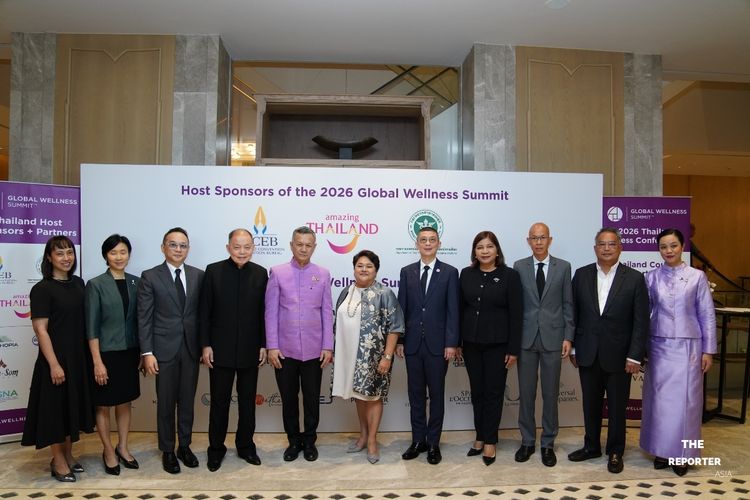
BANGKOK — The global wellness industry has reached a watershed moment, shifting from a luxury lifestyle trend into a formidable $6.8 trillion economic powerhouse that is actively reshaping global healthcare, travel, and urban design. At a landmark press conference hosted at the Dusit Thani Bangkok, international visionaries and Thai government officials gathered to map out the future of an industry now nearly four times larger than the global pharmaceutical sector.
With Asia emerging as the primary engine of this unprecedented growth, Thailand is preparing to take center stage as host of the 20th-anniversary Global Wellness Summit (GWS) at Angsana Laguna Phuket this November, signaling a major convergence between modern medical science and ancient holistic practices.
The $6.8 Trillion Global Boom and Asia’s Market Dominance
The scale of the global wellness economy has expanded rapidly over the past five years, swelling by 35% since 2019 to hit $6.8 trillion in 2024. According to historical data from the Global Wellness Institute (GWI), the industry is projected to accelerate at a compound annual growth rate (CAGR) of 7.6%, hurtling toward $9.75 trillion by 2029. This economic footprint already accounts for roughly 60% of total global health spending—which encompasses $11.2 trillion across consumer spending and public healthcare budgets combined—firmly establishing wellness as a cornerstone of preventive healthcare.
Central to this global expansion is Asia, which experienced a 9.3% market surge in 2024 to reach a total value of $2.03 trillion, representing a dramatic 74% increase compared to pre-pandemic levels in 2019. The Asian continent now leads the world in four major wellness sectors: traditional and complementary medicine ($379 billion), wellness real estate ($350 billion), healthy eating and nutrition ($347 billion), and thermal or mineral springs ($38 billion). Globally, wellness real estate and mental wellness represent the two fastest-growing sectors overall, expanding at annual rates of 19.5% and 12.4% respectively.
Highlighting this transformative momentum, Susie Ellis, Chair and CEO of the Global Wellness Summit, stressed that the industry is undergoing a fundamental structural evolution. “Our industry is at another pivotal moment, where advances in science, medicine and longevity are converging with a return to—but also a reinvention of—the timeless need for connection, creativity and purpose,” stated Ellis. “There’s no more perfect place to explore this future than Thailand, where ancient wellness traditions are being united with an impressive push to become the world’s newest medical-wellness and preventative health destination.”
Thailand’s Ascent as a Global Medical-Wellness Epicenter
Thailand’s domestic wellness economy has demonstrated remarkable resilience and momentum, rebounding from pandemic disruptions to reach $43 billion in 2024. This expansion places Thailand 24th globally overall and ranks it as the 7th fastest-growing wellness market worldwide with a 10% year-over-year surge. The country’s wellness travel market has proved particularly dominant, ranking 15th globally at $14.05 billion. Growing at a rapid 36.4% annually, Thailand stands as the third fastest-growing wellness tourism destination globally, trailing only India and the United Arab Emirates, while domestic sectors such as wellness real estate (+22.9%) and spas (+18%) continue to record steep upward trajectories.
By hosting the landmark 20th-anniversary Global Wellness Summit at Angsana Laguna Phuket from November 10–13, 2026, Thailand is capitalizing on its dual reputation for hospitality and traditional medicine. The three-day event will convene C-suite executives, medical doctors, academic researchers, investors, tech innovators, and policymakers from across the globe. The delegates will evaluate the sector’s historical growth while analyzing key shifts in precision health, neuroaesthetics, and sustainable tourism models.
Emphasizing the national strategy behind hosting the gathering, Patana Promphat, Thailand’s Minister of Public Health, detailed how the event aligns with the country’s broader economic vision. “The theme, The Science, Art and Soul of Wellness, truly reflects Thailand’s identity, heritage and way of life. For centuries, Thailand has embraced a holistic approach to health and wellbeing, one that connects body, mind, spirit, community and nature,” said Minister Promphat. “We’re proud to host the 2026 Global Wellness Summit in Phuket. This Summit reflects our commitment to advancing Thailand as a leading global wellness destination and a trusted partner in shaping the future of wellbeing.”
Bridging Medicine, Longevity Science, and Precision Health
A defining focus of the upcoming Summit will be the deep integration of clinical medicine with consumer wellness practices. Industry experts will debate how precision medicine and longevity science are moving toward radical personalization, with a primary focus on expanding “healthspan”—the period of life spent in good health—rather than simply extending chronological lifespan. This clinical evolution represents a key shift away from reactive disease management toward proactive, individualized longevity treatments.
The speaker lineup features premier figures in scientific and clinical research. Dr. Andrea Maier, MD, PhD, a world-renowned geroscientist at the National University of Singapore and founder of Asia’s first precision geromedicine clinic, Chi Longevity, will outline the cutting edge of age-reversal science. Complementing the clinical viewpoint, Dan Buettner, founder of the Blue Zones movement, will keynote on how community structure, daily movement, and cultural lifestyle habits outperform purely clinical interventions. Furthermore, Dr. George Gaitanos, Chief Operating and Scientific Officer of Chenot Group, will deliver a keynote advocating for broader protocols in lifelong preventative health, while Dr. Christopher Asandra, founder of AsandraMD in Beverly Hills, will address hormone optimization and the massive unmet market for personalized women’s health across Asia.
In tandem with these scientific discussions, the Global Wellness Institute will officially launch the 2026 Global Wellness Economy Monitor during the event. Serving as the definitive benchmark research for the $6.8 trillion industry, this new report will unveil regional data, growth projections, and sector-by-sector breakdowns across both global and Asian markets. The data aims to provide institutional investors and health policymakers with the quantitative clarity needed to navigate expanding medical-wellness opportunities.
Redefining Travel, Neuroaesthetics, and Lifestyle Innovation
Wellness travel in Asia has outpaced all other regional markets, growing 31% in 2024 to hit $215 billion. Asia has now surpassed Europe in total wellness trips, logging 563 million journeys in 2024 compared to Europe’s 348 million. The continent holds four of the top five fastest-growing national wellness tourism markets globally: India (57%), Thailand (36%), South Korea (36%), and China (35%). Leading hospitality figures at the Summit—including William E. Heinecke, Founder and Chairman of Minor International, Ingo Schweder, CEO of GOCO Hospitality, Cathy Feliciano-Chon of FINN Partners APAC, Ronald Akili of Potato Head Bali, and Huy Hoang of Japan’s Shishi-Iwa House—will explore how independent Asian brands are reshaping travel through cultural preservation and environmental sustainability.
Beyond travel metrics, the Summit agenda will examine the emotional, architectural, and creative drivers of wellbeing through the lens of neuroaesthetics. Susan Magsamen, executive director of the International Arts + Mind Lab at Johns Hopkins University School of Medicine and co-author of Your Brain on Art, will present research on how artistic expression, music, and built environments measurably alter brain chemistry and physical health. Additionally, Tal Danai, CEO of ArtLink, will unveil a new global film initiative celebrating traditional artisan craftsmanship as an essential element of mental wellbeing.
To translate these concepts into built infrastructure, the Summit will mark the launch of the Intentional Spaces Design Challenge. Developed in partnership with Johns Hopkins University’s Center for Applied Neuroaesthetics and real estate developer Aldar Properties, this first-of-its-kind competition will challenge architects and urban planners to apply neuroarchitecture principles in designing healthier residential buildings, commercial properties, and public spaces.
Strategic Business Frontiers and Cultural Traditions
As wellness penetrates mainstream commerce, corporate executives are exploring new avenues to merge lifestyle retail with guest experiences. A specialized panel titled New Frontiers in Wellness Business will examine how hospitality groups are driving customer engagement and non-room revenue. The session will feature insights from Singaporean designer Lisa Von Tang, Capella Hotel Group Vice President of Lifestyle Lexie Rodriguez, and Patience Lifestyle CEO Colin Low.
Taking a long-term view of consumer trends, marketing strategists will analyze two decades of evolution in beauty, brand strategy, and consumer behavior. Industry keynotes by BeautyMatter Founder Kelly Kovack, Free The Birds Founder Nick Vaus, GWI Vice President of Research Beth McGroarty, and Asia-focused marketing expert Dave McCaughan will contrast past industry practices with emerging consumer expectations through 2046.
Rooted in local context, the Summit will celebrate Thailand’s rich heritage, showcasing spiritual practices, traditional wellness rituals, and historic silk craftsmanship. Highlighted by a special stage performance, the award-winning Buddhist Chanting Team from Dhammajarinee Witthaya School will perform, showcasing an initiative that empowers underserved young women through education. Facilitated by Summit co-chair Jessica Jesse, CEO of Zen Collective and BuDhaGirl, the performance underscores how cultural wisdom and community empowerment remain vital components of the global wellness movement.
#GlobalWellnessSummit #GWS2026 #WellnessEconomy #ThailandWellness #MedicalWellness #LongevityScience #WellnessTourism #Neuroaesthetics #Phuket2026