
By eliminating upfront capital costs, Ally Logistic Property bets its monolithic automated facility will disrupt Southeast Asia’s traditional warehousing model and solve systemic supply chain bottlenecks.
The iPhone Moment for Southeast Asia Warehousing
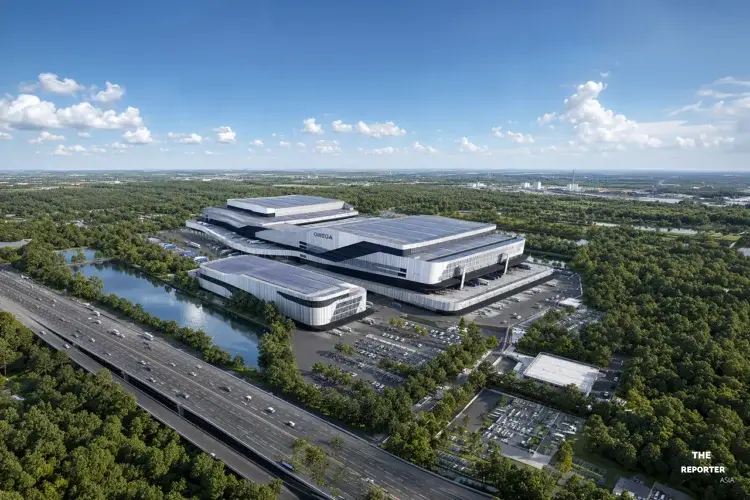
Warehouse automation across Southeast Asia has historically hit an insurmountable wall: prohibitive capital expenditure. Ally Logistic Property (Thailand) Co., Ltd. is dismantling that structural constraint with the official unveiling of OMEGA 1 Bangna, an automated mega-facility spanning more than 260,000 square meters. Positioned along Thailand’s high-growth Bangna–Eastern Economic Corridor (EEC) trade gateway, the facility stands as the largest smart warehouse development in Asia. Rather than functioning as a standard industrial landlord, ALP is introducing a zero-capital-expenditure Infrastructure-as-a-Service model to the region. Thai enterprise operators and regional supply chain managers can now deploy tier-one automated material handling systems without spending millions of dollars on proprietary mechanical installations.
The development arrives at a critical inflection point for the regional supply chain landscape. Shifting consumer expectations require near-instantaneous delivery turnarounds, yet warehouse operators struggle under escalating labor costs, persistent frontline hiring crunches, and fragmented multi-tier logistics networks. Traditional developers have long focused exclusively on standard land development, leaving tenants to figure out internal automation on their own. ALP approaches the asset class from an entirely inverted engineering perspective: design the integrated robotic architecture first, and then construct the external envelope around it. The outcome transforms static storage into a dynamic utility designed to eliminate systemic distribution waste.
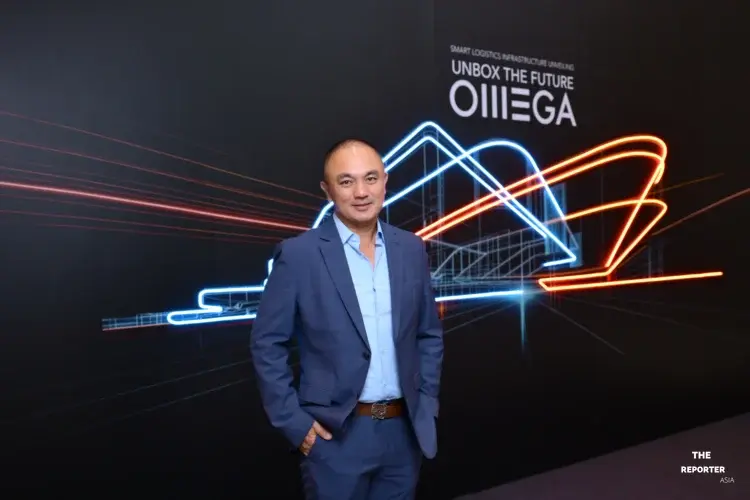
“Our customers do not need another building. They need infrastructure that runs their operation today and grows with it tomorrow,” said Mr. Charlie Chang, Co-Founder and Chief Executive Officer of ALP.
Elaborating on the company’s operational philosophy, Mr. Chang noted: “We are not a landlord. We invest — you operate. Traditional warehouse players have spent decades building real estate shells, but we look at logistics like consumer technology. The shift from manual storage to integrated automation is identical to the jump from a legacy Nokia keypad to an iPhone. Investors and forward-looking enterprises want to back the future, not deploy capital into obsolete platforms.”
Engineering Extreme Density with 40-Meter Vertical AS/RS
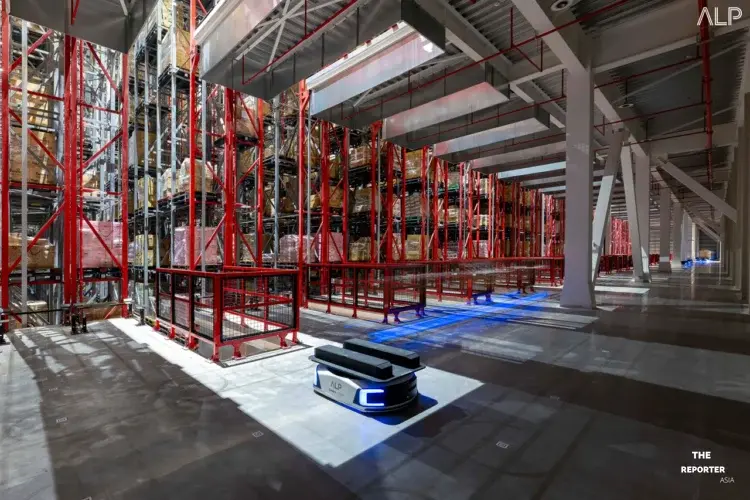
OMEGA 1 Bangna fundamentally breaks away from conventional logistics building blueprints across Southeast Asia. Standard Thai industrial sheds typically top out between 10 and 13 meters in clear height because manual forklift operators encounter severe stability and safety risks when hoisting heavy freight beyond that threshold. By engineering the facility specifically for robotic material handling, ALP elevated the storage clearance to 40 meters. This automated vertical high-bay framework accommodates over 160,000 pallet positions, concentrating unprecedented density on a single industrial footprint while delivering unmatched land-use efficiency in the congested Bangkok periphery.
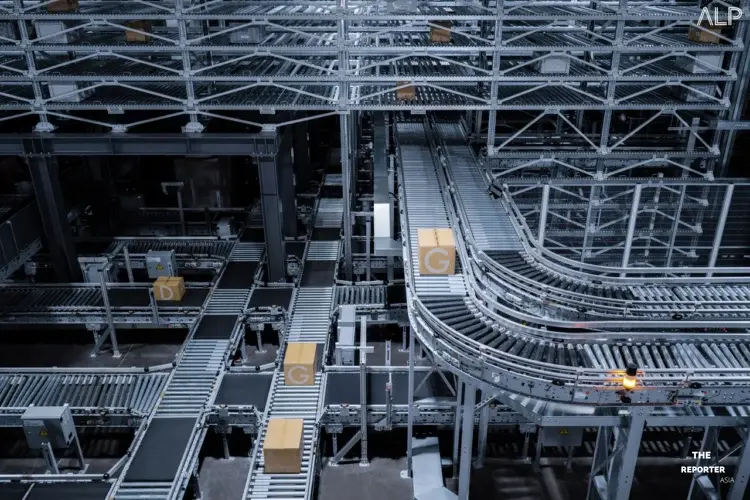
At the center of this facility sits a high-speed Automated Storage and Retrieval System (AS/RS) that moves pallets three times faster than conventional forklift operations. This automated throughput yields a 35 percent leap in overall facility handling efficiency, driving down systemic labor misallocations and human processing errors. Manual pallet handling carries high hidden operational expenses, as inventory misplacement often triples retrieval and reconciliation costs. Automation guarantees reliable retrieval accuracy while insulating warehouse operators from chronic frontline staffing churn and shifting cross-border labor dependencies.
“When you build a 40-meter vertical automated system, you unlock spatial and operational economics that conventional developers simply cannot match,” Mr. Chang explained.
“Manual forklift drivers face dangerous physical limits past 10 meters, which forces traditional facilities to spread out horizontally across precious land. By automating the vertical plane, our internal handling operates three times faster while keeping tenant operating fees pegged strictly to prevailing market rates. It makes zero economic sense to pay the exact same price for an outdated, manual space when an automated platform does not charge you a premium.”
Co-Location Commerce That Solves Bangkok Gridlock
A defining operational advantage of OMEGA 1 Bangna is its ability to eliminate redundant domestic transport miles. Bangkok’s suburban arterial corridors are notorious for heavy traffic congestion, which inflates fleet operational costs and drags down delivery schedules. In legacy distribution models, an upstream FMCG brand manufactures goods, trucks them to a private holding depot, and then hauls them again across town to a retailer’s fulfillment center. Every touchpoint adds handling charges, administrative friction, and accidental product damage risks.
OMEGA 1 Bangna operates as a shared, co-location commercial ecosystem. By accommodating major retail distribution arms alongside multi-category FMCG brands under a single roof, the facility enables instant internal ownership transfers of pallets via automated cranes. A beverage producer can transfer thousands of stock units to a national convenience chain through the AS/RS core without a single truck ever touching the highway. This dramatic supply chain compression keeps inventory moving fluidly, lowers localized transport emissions, and insulates corporate margins from external logistical bottlenecks.
“The ultimate way to strip friction out of any supply chain is to drastically shorten the physical route between upstream manufacturers and downstream retail networks,” said Mr. Chang. “In our Taiwan operations, we run facilities where convenience store distribution centers sit on one side while major global beverage brands occupy the other. Pallet ownership changes hands inside the AS/RS system, completely bypassing city gridlock. It cuts transport costs, preserves vehicle wear and tear, and delivers an immediate efficiency dividend back to the broader metropolitan logistics network.”
The Zero-CAPEX Infrastructure-as-a-Service Breakthrough
High upfront capital requirements have historically restricted enterprise automation to a handful of multinational balance sheets. Installing a bespoke high-bay automated racking and crane matrix requires extensive planning, specialized engineering vendors, and millions of dollars in non-recoverable capital. If business volumes fluctuate or supply chain contracts change, companies find themselves saddled with depreciating, inflexible assets. ALP completely eliminates this balance sheet strain by packaging complex hardware, warehouse execution systems, and long-term mechanical maintenance into an on-demand utility model.
Tenants entering OMEGA 1 Bangna lease dedicated storage and picking capacity on flexible commercial terms, mirroring the frictionless utility model of enterprise cloud infrastructure. ALP absorbs the capital risk, handles complex robotics procurement, and oversees all automated preventative maintenance. This structure opens advanced automation to mid-market enterprise brands, contract logistics providers, and high-volume third-party logistics (3PL) players who would otherwise struggle with internal automation budgets.
“Enterprise clients consistently told us they recognized the urgent need for automation, but they simply could not shoulder the massive upfront capital investment or the execution risk of unproven robotic installations,” Mr. Chang stated.
“We operate exactly like a high-density, automated co-working ecosystem for corporate logistics. The robotics, the cranes, the structural bays, and the software backbone are already turned on and optimized. Tenants simply step into the facility and utilize enterprise automation as a daily service, converting what used to be a crushing capital project into a flexible operational expense.”
Institutional Capital and Sustainable Infrastructure Execution
The execution of OMEGA 1 Bangna is supported by institutional capital partnerships across Asia. The development is backed by CapitaLand Investment Limited, a premier global real asset manager listed in Singapore, alongside Thai residential and commercial developer Pruksa Holding, Cathay Life Insurance, and Malaysia’s Employees Provident Fund (EPF). These partnerships draw from the CapitaLand Southeast Asia Logistics Fund established in 2022, a vehicle backed by SGD 400 million in equity capital to finance strategic industrial infrastructure across Singapore, Malaysia, and Thailand.
Over the past decade, ALP and its regional partners have directed a cumulative investment of USD 2 billion into transforming advanced logistics property networks. Built according to LEED Gold environmental certification standards, OMEGA 1 Bangna incorporates sustainable material specifications and energy-efficient building systems that lower carbon footprints across corporate supply chains. This institutional backing provides the runway needed to finance long-term, specialized infrastructure assets capable of withstanding broader macroeconomic volatility.
“Scaling this caliber of advanced infrastructure requires patient, sophisticated capital partners who understand long-term systemic transformation,” Mr. Chang noted. “CapitaLand, Pruksa Holding, Cathay Life, and EPF share our conviction that logistics infrastructure must modernize to support the next era of Asian commerce. We do not engage in speculative, cash-burning land grabs. We build profitable, highly engineered platforms that create tangible operating cash flow for our institutional partners while providing regional industries with world-class operational foundations.”
ALPOS and the Roadmap Toward AI Orchestration
The physical machinery at OMEGA 1 Bangna is driven by ALPOS, ALP’s proprietary operating platform. ALPOS bridges the operational divide between disparate enterprise warehouse management systems, robotic hardware, autonomous cranes, and picking workstations through a single unified digital architecture. The platform translates incoming client order streams into dynamic picking routes, manages inventory placement according to SKU velocity, and feeds live throughput analytics to enterprise managers via centralized web and mobile dashboards.
This connected software foundation positions ALP to integrate predictive artificial intelligence into daily operations. While the physical AS/RS hardware provides mechanical execution, ALPOS continuously gathers operational data on pallet movements, seasonal demand spikes, and fulfillment rhythms. ALP engineers are utilizing this real-time data to build predictive forecasting algorithms that help clients optimize inventory positioning ahead of major commercial events. The facility acts as a living, learning operational nervous system.
“Automation supplies the physical muscle, but proprietary software and artificial intelligence act as the guiding operational brain,” Mr. Chang emphasized. “You cannot effectively deploy enterprise AI across a manual warehouse running on paper manifests and manual forklifts. By deploying our integrated ALPOS system, we capture clean operational data from thousands of daily pallet movements. This enables our software to forecast volume shifts, predict mechanical maintenance needs, and refine supply chain velocity long before inefficiencies occur on the floor.”
Future-Proofing Southeast Asia with Autonomous Road Fleets
ALP’s long-term roadmap extends beyond warehouse perimeter walls to encompass broader freight transit corridors. The company is actively laying the groundwork for integrated autonomous trucking networks designed to connect distributed manufacturing nodes directly into its smart fulfillment hubs. By aligning warehouse dispatch logic with upcoming self-driving logistics regulations, ALP envisions an end-to-end autonomous corridor capable of transferring freight during off-peak night windows between 12:00 AM and 4:00 AM.
This multi-phase autonomous integration mirrors the company’s structured rollout across the Bangna site. OMEGA 1 Bangna is divided into three distinct operational phases. Phase 1, representing roughly one-third of the total planned footprint, initiates commercial tenant operations on October 1, with Phase 2 scheduled to follow in the first quarter of 2027 and Phase 3 slated for completion in the third quarter of 2027. Each successive phase expands the installation base for high-density multi-temperature ambient and cold-chain capacity.
“Smart warehousing is only the first foundational node in an evolving, fully connected logistics ecosystem,” Mr. Chang shared. “The next operational frontier is tying automated storage directly to autonomous line-haul freight networks. As regional autonomous transport regulations mature, our facilities will be engineered to dispatch freight to driverless fleets during midnight hours, maximizing equipment utilization and completely bypassing daytime road congestion. We are innovating continuously so our clients remain perpetually ahead of industry transformation.”
Workforce Upskilling for the Modern Robotics Era
The introduction of large-scale automation at OMEGA 1 Bangna is redefining the operational profile of frontline logistics employment in Thailand. Rather than eliminating human labor, the deployment of intelligent robotics shifts industrial workforce demands away from grueling, repetitive manual handling toward specialized, high-value technical careers. The facility is built around the Thai workforce, establishing dedicated operational pipelines to ensure local technicians drive modern material handling systems.
To support this transition, ALP is rolling out comprehensive training and skills development curriculums for local technical teams. Thai engineers, systems operators, and facility technicians are being trained to calibrate sophisticated AS/RS cranes, manage complex programmable logic controllers, and maintain proprietary digital operating networks. This knowledge transfer cultivates a deep bench of local technical expertise capable of supporting Thailand’s ambitious Industry 4.0 industrial transformation targets.
“Our investment in Thailand is fundamentally an investment in expanding local workforce capabilities for the automated era,” said Mr. Chang. “Automation replaces repetitive, injury-prone physical lifting, but it elevates the need for skilled technicians who can program, troubleshoot, and maintain advanced mechatronics. We are training local Thai talent to oversee complex robotic infrastructure, empowering them with lifelong engineering capabilities that will underpin the digital future of Southeast Asian commerce.”
Scaling a Pan-Asian Smart Logistics Network
From its founding in Taiwan in 2014, ALP has grown from an innovative property developer into an international technology and infrastructure pioneer. As of early 2026, the company manages more than 20 advanced warehouse facilities across Asia, totaling over 1.3 million square meters of operational space. The launch of OMEGA 1 Bangna anchors an aggressive multinational rollout, supported by groundbreaking ceremonies in Singapore, project developments in Malaysia, and imminent pipeline expansions into Japan, Australia, and the United States.
ALP’s long-term blueprint calls for the development of 48 smart warehouses across eight major international markets. This target will expand ALP’s managed operational footprint past 8 million square meters, backed by an aggregate capital deployment exceeding USD 8 billion. By treating logistics real estate as a scalable, standardized technology product, ALP is methodically building the physical backbone required to power modern, resilient cross-border trade.
“We perfected this technology model across the demanding commercial landscape of Taiwan, and we are now deploying it at full scale across Southeast Asia and global trade hubs,” Mr. Chang concluded. “OMEGA 1 Bangna proves that large-scale robotic infrastructure can be delivered under simple, smart, and sustainable commercial terms. We are not merely constructing physical warehouse space along an industrial highway; we are establishing the modern operating standard for pan-Asian supply chains for the decades ahead.”
#SmartWarehouse, #OMEGA1Bangna, #AllyLogisticProperty, #SupplyChainInnovation, #LogisticsAutomation, #ASRS, #ThailandEEC, #InfrastructureAsAService, #CapitaLand, #FutureOfLogistics