
Cathay Pacific’s iconic cabin crew uniforms reveal eight decades of aviation evolution, cultural identity, and high-fashion craftsmanship.
The enduring charm of international air travel extends far beyond basic passenger transportation and destination excitement, remaining deeply intertwined with the elegance and professionalism of airline cabin crew members. For Hong Kong-based premium carrier Cathay Pacific, this lasting visual impression has been carefully cultivated across an eighty-year legacy marked by continuous aesthetic transformation.
The evolution of the airline’s flight attendant attire serves as a living canvas, capturing the changing intersection of global fashion trends, corporate maturity, and regional cultural identity. From the post-war era to the modern jet age, each wardrobe redesign has reinforced the carrier’s commitment to hospitality while asserting its position in international commercial aviation.
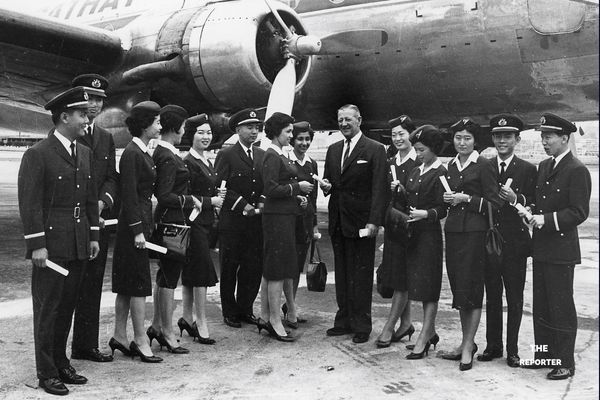
Thai passengers first encountered Cathay Pacific’s distinctive crew aesthetic in 1946 when the airline initiated historic flight operations at Don Mueang International Airport along the Hong Kong-Singapore route via Bangkok. Early designs drew direct structural inspiration from post-war military garments, establishing an immediate atmosphere of authority, discipline, and refined professionalism. The foundational uniform featured a tailored Air Force blue wool gabardine jacket complete with double-breasted buttoning, an A-line skirt, and a structured box hat.
As civil aviation expanded into the early 1950s, the attire adapted to prioritize crew mobility without compromising modesty, introducing belted linen dresses in muted Air Force blue shades. By the mid-1950s, the design transitioned into a feminine navy suit paired with a tailored skirt, signaling growing brand confidence and a solidified commercial presence throughout Asia.
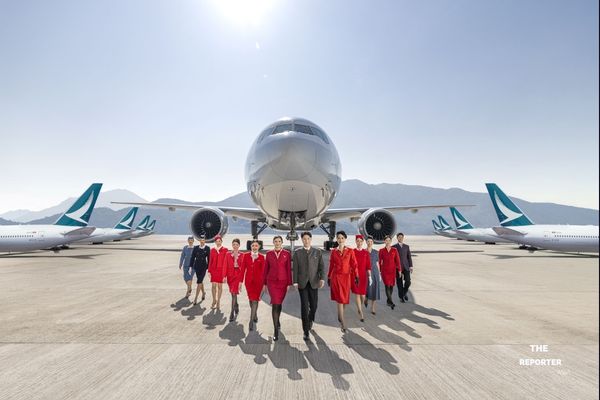
The commercial aviation landscape shifted dramatically during the 1960s as jet-powered aircraft revolutionized long-haul travel, making intercontinental journeys faster and more accessible. In 1962, Cathay Pacific marked a major brand turning point by debuting its very first red uniform, establishing a vibrant color identity that remains central to its brand image today.
The striking rose-red suit incorporated subtle Eastern design influences, featuring traditional Chinese-style buttons on a crisp white blouse alongside a pencil skirt with cheongsam-inspired side slits. This combination symbolized warmth, hospitality, and cultural pride, successfully projecting the airline’s heritage to a rapidly growing global audience. Toward the end of the decade, the airline embraced the era’s playful fashion culture by rolling out a red-orange mini dress complemented by a cropped jacket and a distinctive mushroom-shaped hat.
During the final quarter of the twentieth century, Cathay Pacific elevated its global image by initiating strategic creative partnerships with iconic international haute couture houses. In the early 1970s, French designer Pierre Balmain unveiled a brown-orange uniform featuring the intricate “Tung Hoi” or Eastern Sea pattern, blending traditional Asian aesthetics with European tailoring.
The 1980s saw French luxury house Hermès craft a refined red ensemble paired with a blouse patterned with Cathay Pacific’s tailfin logo, marking the airline’s first crew uniform without a hat. Continuing this high-fashion trajectory into the 1990s, designer Nina Ricci crafted a red-orange attire characterized by a streamlined long jacket and patterned blouse, tailored specifically for the modern career woman.
A monumental evolution occurred in 1999 when Cathay Pacific partnered with legendary Hong Kong designer Eddie Lau to create the design foundation used by the airline today. Lau’s iconic creation integrated a white blouse emblazoned with the trademark Brushwing logo alongside a sleek red jacket featuring an upright collar inspired by an aircraft in ascent.
This distinctive silhouette underwent subtle refinements in 2004 and 2011 to optimize crew comfort, update color tones, and support daily operational demands without losing its architectural signature. Across eight decades of continuous stylistic development, Cathay Pacific’s uniforms remain a testament to Asian craftsmanship, storytelling, and elevated hospitality.
#CathayPacific #AviationHistory #CabinCrew #FlightAttendantUniforms #FashionEvolution #HongKongAviation #AirlineIndustry #TravelAndTourism #AviationFashion